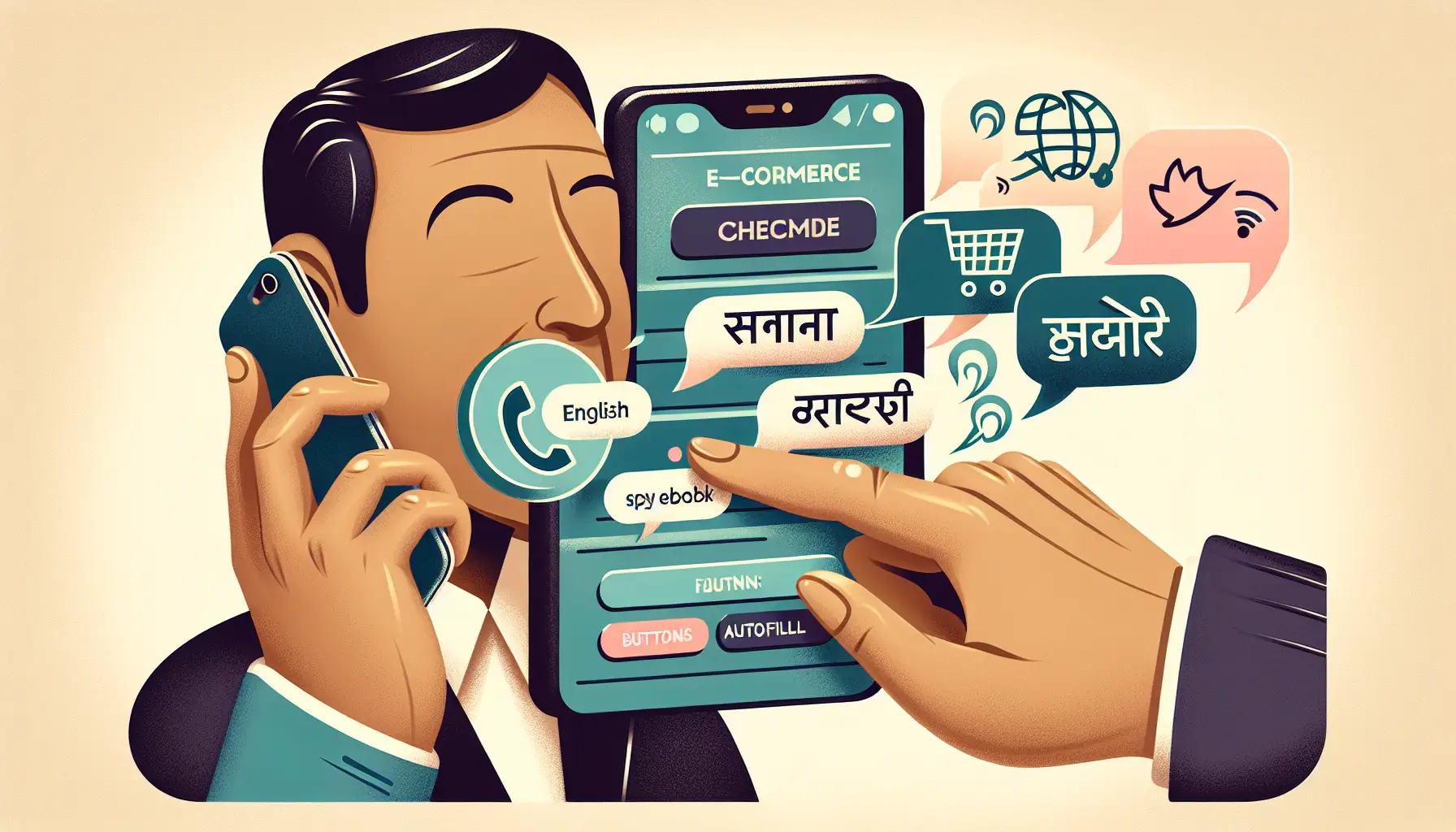
Here's a problem most voice AI companies ignore: 500 million new internet users prefer voice interaction, especially when they're code-switching between languages mid-sentence. And current solutions don't help them do anything useful.
AnveVoice is tackling this directly. Not by building another chatbot that answers questions, but by creating voice AI that can navigate websites, fill forms, and click buttons on your behalf.
Why This Matters
Most voice AI stops at conversation. You ask a question, it gives an answer. Maybe it searches something for you. But that's where it ends.
The gap between "tell me about this product" and "add it to my cart and complete checkout" is enormous. Voice assistants can do the first part. But the second part - the actual transaction, the form-filling, the multi-step process - that's where they fail.
For the 500 million people coming online in the next few years, many of whom are more comfortable speaking than typing, that gap is a real barrier. It's not about convenience. It's about access.
Code-Switching as a Design Constraint
What makes AnveVoice interesting is its focus on multilingual code-switching. Not just supporting multiple languages, but handling the way people actually talk - mixing languages within a single sentence.
"I want to buy a shirt, blue colour ka, size medium, aur delivery kab hoga?"
That's not broken language. That's how millions of people communicate. And most voice systems fail completely when you mix English, Hindi, and colloquial phrasing in one breath.
Building for this audience means understanding that language is fluid, context-dependent, and often multilingual by default. It's a harder problem than supporting multiple languages separately. But it's also the real problem.
Taking Actions, Not Just Answering Questions
The technical challenge is significant. Voice AI that can navigate a website needs to understand layout, identify form fields, handle errors, and complete multi-step processes - all through voice commands.
It's not enough to recognise "add to cart". The system needs to find the add-to-cart button, click it, verify the action succeeded, navigate to checkout, handle form validation, deal with error messages.
This is web automation guided by natural language. And it's messy. Websites are inconsistent. Forms break. Error messages are vague. Building a system that can handle this variability while maintaining a natural voice interface is genuinely hard.
The Business Case
For e-commerce platforms, the value proposition is clear. Every friction point in checkout is lost revenue. If voice can reduce that friction for a significant portion of users, it's worth integrating.
For service providers - booking systems, government portals, healthcare platforms - the accessibility argument is even stronger. Voice-driven form completion isn't a nice-to-have; it's a way to serve users who struggle with traditional web interfaces.
The question for businesses considering this technology: is your user base growing more diverse linguistically? Are you seeing higher drop-off rates on mobile? Are younger users expecting voice interaction as standard?
If the answer to any of these is yes, systems like AnveVoice move from interesting experiment to practical necessity.
What Developers Should Watch
If you're building web applications, voice-driven interaction isn't optional for much longer. The question is whether you build it in-house or integrate third-party solutions.
The technical requirements are non-trivial. You need robust speech recognition that handles accents and code-switching. You need natural language understanding that maps commands to actions. You need web automation that's reliable across different layouts and frameworks.
More importantly, you need to rethink user flows. What makes sense for mouse and keyboard doesn't always translate to voice. Some interactions are faster with voice, some are slower. Knowing which is which requires testing with real users in real contexts.
AnveVoice is solving a real problem for a real audience. Whether it becomes the standard solution or inspires better ones, the direction is clear. Voice isn't just for search anymore. It's for action.