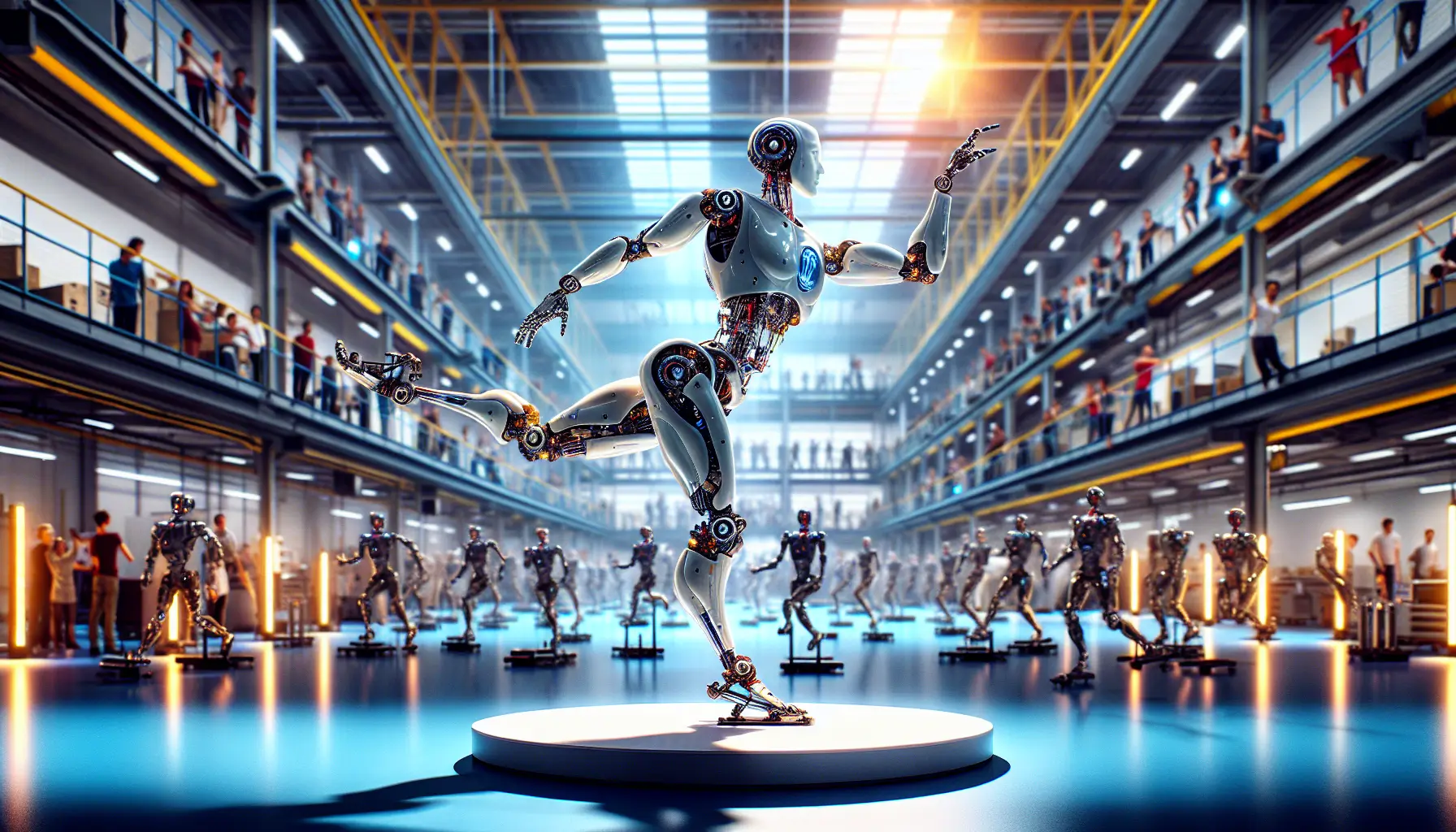
There's a workshop happening in Barcelona that might change how we think about teaching robots to move. Not through millions of lines of code, but through something closer to how we train athletes - trial, error, and reinforcement.
The Humanoid Robots Reinforcement Learning Training isn't your typical academic conference. It's hands-on. Participants work directly with humanoid robots, including the Unitree G1, teaching them to walk, balance, and respond to their environment through reinforcement learning.
Why Reinforcement Learning Matters
Traditional robotics has relied on precise programming. Every movement scripted, every response anticipated. It works, but it's brittle. Change the environment slightly and the robot fails.
Reinforcement learning takes a different approach. The robot learns by doing. It tries to walk, falls, adjusts, and tries again. Over thousands of iterations, it develops a kind of intuition about movement - what works and what doesn't.
What makes this workshop significant is the focus on whole-body control. Not just getting a robot to walk in a straight line, but coordinating dozens of joints simultaneously. Reaching while balancing. Turning while carrying. The messy, complex movements that define natural motion.
Vision-Language Models Meet Physical Movement
Here's where it gets interesting. The training includes vision-language models - teaching robots to understand commands like "pick up the red box" or "move to the left side of the table" and translate those into physical actions.
This isn't about voice recognition. It's about grounding language in physical reality. The robot needs to know what "left" means in relation to its body, what "pick up" requires in terms of grip strength and arm positioning, what "red box" looks like in varying light conditions.
For anyone building robotics applications, this combination of reinforcement learning and vision-language understanding represents a practical path forward. Not perfect, not science fiction, but genuinely useful.
The Unitree G1 as Training Ground
The choice of the Unitree G1 is telling. It's not the most advanced humanoid robot available, but it's accessible. Relatively affordable, well-documented, and increasingly common in research labs.
This matters because the bottleneck in robotics isn't hardware anymore - it's training. How do you teach a robot to move naturally when every environment is different? How do you make that training transferable from lab to factory floor, from smooth surfaces to uneven ground?
By focusing on reinforcement learning techniques that work on accessible hardware, the workshop participants are solving a practical problem. Not how to build the perfect robot, but how to make existing robots more capable.
What This Means for Developers
If you're working on robotics projects, the trend is clear. Hard-coded movement libraries are giving way to learned behaviours. The question isn't whether to adopt reinforcement learning, but when and how.
The Barcelona workshop represents something broader - a shift from robotics as mechanical engineering to robotics as a training problem. How do you create the right incentives? How do you structure the learning environment? How do you validate that what works in simulation will work in reality?
For business owners considering robotics solutions, this has real implications. The robots being deployed in 2025 and beyond won't just follow instructions - they'll adapt. They'll learn your specific environment, your particular constraints, your unique workflows.
The gap between demonstration and deployment is narrowing. Worth keeping an eye on.