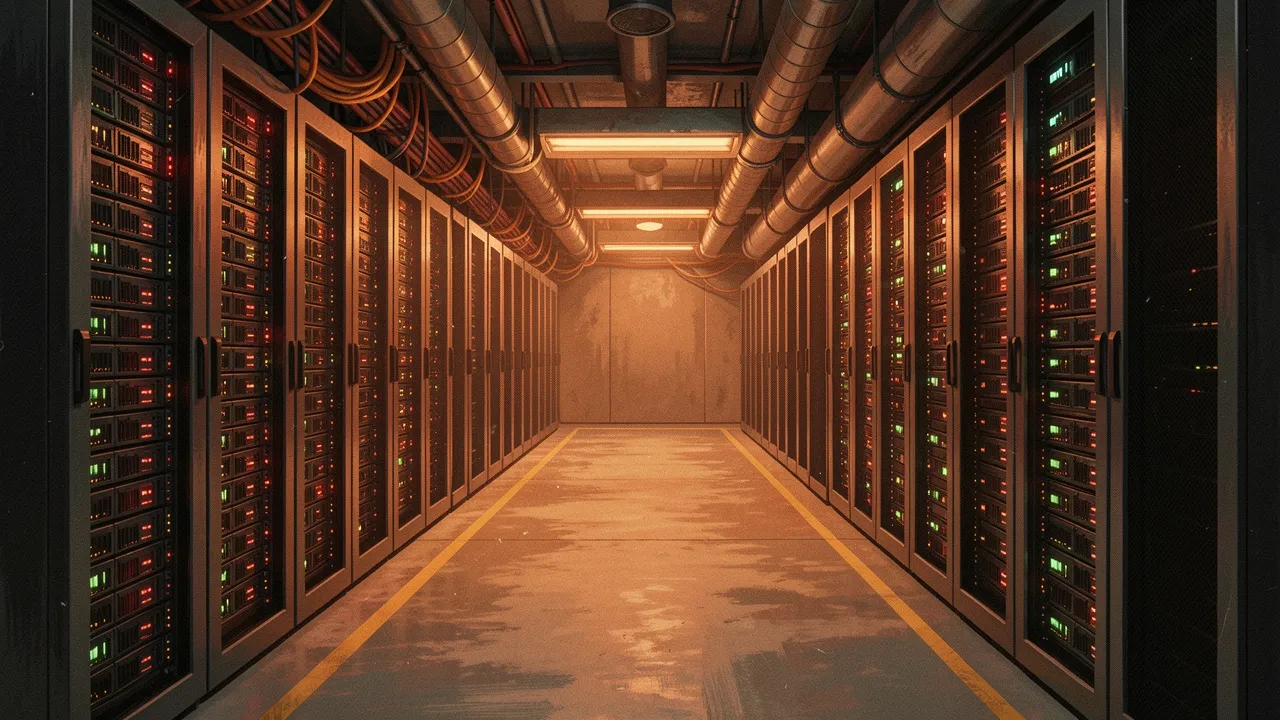
Anthropic is spending $5 billion per year leasing compute from xAI's Colossus 1 supercluster. That number - broken down by Latent Space's analysis - tells you where the AI race is actually being fought. Not in model architecture. In infrastructure access.
The deal involves 300 megawatts of power. To put that in perspective, that's enough electricity to run a small city. And Anthropic's usage grew 80x faster than projected. They've already doubled Claude's code generation limits. The infrastructure can't keep up with demand.
Why Models No Longer Matter Most
Here's what changed: model capabilities have largely converged. GPT-4, Claude, Gemini - they're all within spitting distance of each other on benchmarks. The differentiation now is who can serve the most requests, at the lowest latency, with the highest reliability.
That's an infrastructure game. Anthropic doesn't manufacture chips. They don't run data centers. They lease compute. And the terms of those leases - who gets priority access, what the power allocation looks like, how quickly capacity can scale - those determine who wins.
The Colossus partnership with xAI matters because it's guaranteed capacity. Not cloud credits that might get throttled during peak demand. Not spot instances that disappear when someone else pays more. Dedicated hardware, dedicated power, at scale.
The 8000% ARR Growth Problem
Anthropic's annualized revenue run rate is growing at 8000%. That's not a typo. That's what happens when Claude becomes useful enough that businesses build core workflows around it. But infrastructure doesn't scale at 8000% per year. Power grids don't. Chip manufacturing doesn't. Data center construction doesn't.
This creates a different kind of moat. If you're early and you lock in capacity, you can serve demand competitors can't. If you're late, you're stuck waiting for NVIDIA to manufacture more H100s and utilities to bring more power online. That's a 2-3 year lag.
The doubled code generation limits for Claude are a direct result of having more compute to throw at the problem. Not better models - more hardware. That's the constraint. Every AI lab knows how to build models that would be better if they could serve them. They can't serve them because there aren't enough GPUs.
What This Means for Builders
If you're building on AI infrastructure, this matters more than model benchmarks. Reliability and availability beat capability when your product is in production. A slightly less capable model that never throttles you is better than the best model in the world that returns 503 errors during your launch.
Watch the infrastructure partnerships, not just the model releases. Anthropic securing xAI capacity. OpenAI's Microsoft Azure relationship. Google owning their own data centers. These determine who can actually deliver at scale.
For startups, the calculus is shifting. Building on OpenAI means competing for allocation with every other GPT customer. Building on a smaller provider might mean more reliable access but fewer capabilities. There's no clean answer, which is why multi-model strategies are becoming standard.
The Power Question Nobody's Solving
300 megawatts for one AI lab. Multiply that across OpenAI, Google, Meta, and everyone else racing to scale. The power grid becomes the bottleneck. Data centers are being built next to power plants because transmission is the limiting factor.
This isn't an abstract infrastructure problem. This determines which companies survive the next 24 months. If you can't serve your users, they leave. If you can't scale, someone else will. The winners are being decided right now by who signed the best compute deals in 2023 and 2024.
The AI race didn't slow down. It just moved from research labs to data centers. From model weights to megawatts. And the companies that figured that out first are the ones securing billion-dollar infrastructure deals while everyone else is still optimizing loss functions.