Today's Overview
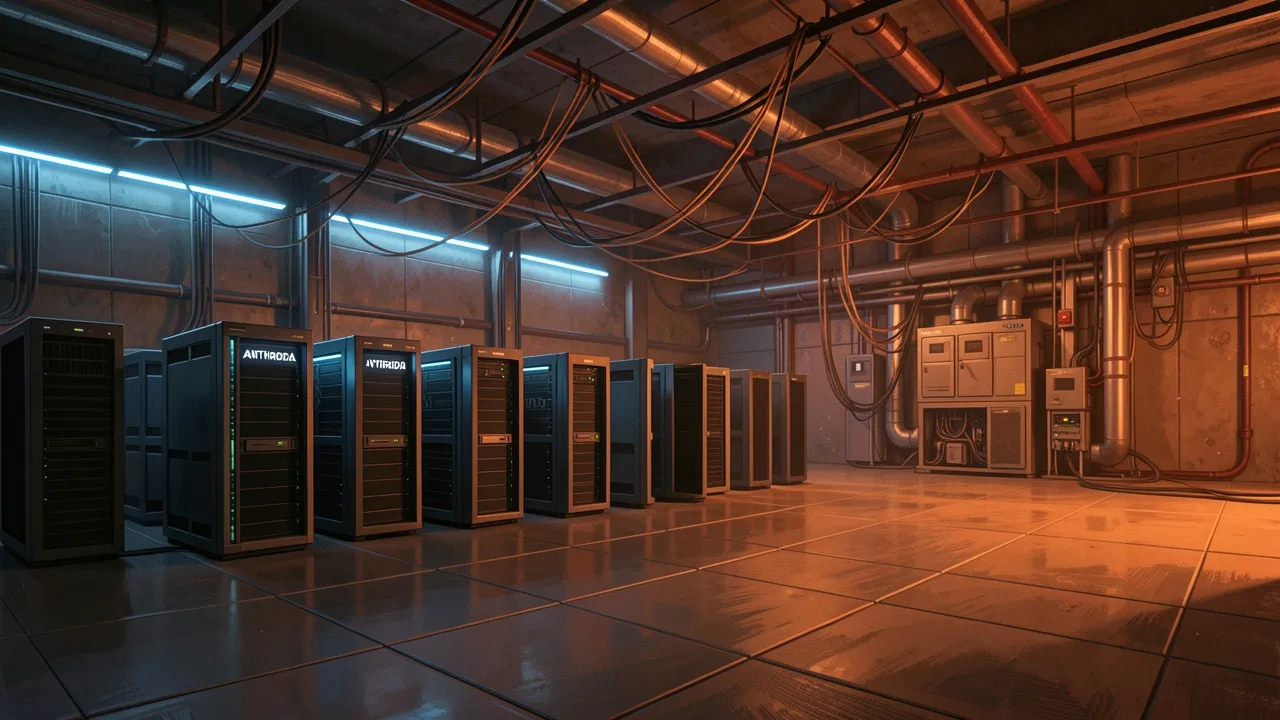
This week revealed something many suspected but few admitted: frontier AI companies are running out of chips. Anthropic just signed a massive deal with SpaceX to lease capacity on Colossus 1-reportedly 300 megawatts and over 220,000 NVIDIA GPUs-for roughly $5 billion a year. The deal is already moving: Claude's 5-hour rate limits just doubled for Pro, Max, and Team users. Peak-hour throttling is gone. Opus API limits jumped. This wasn't a product announcement. It was a supply chain crisis solving itself in real time.
Why it matters: Usage grew 80x faster than Anthropic expected. That's not a scaling problem-that's validation. But it exposed something uncomfortable: having the best model means nothing if you can't serve users. Anthropic was constrained not by engineering or capability, but by physical infrastructure. Now it's renting from a competitor. Welcome to the era of compute as the real moat.
Building robots that don't need a nervous system
Cornell researchers published a breakthrough in flapping-wing flight this week that could reshape how we build flying robots. Their computational model showed that insect morphology-wing-to-body mass ratio, wing loading, hinge position, flap frequency-creates what they call a "five-dimensional morphological space." Within that space, there are stable configurations where insects can maintain flight with almost no active control. No complex neural circuitry required. Just physics.
Most robots treating every control problem as a computational one. These researchers found something simpler: design the wing correctly, and stability emerges for free. That shifts robot design from "build the brain" to "build the right shape." For roboticists stuck on feedback control loops, that's a different game. The team already identified explicit formulas for stability, which means designers can tune a robot's wing before building it, not after crashing it dozens of times.
The rest: agents, memory, and code at scale
Anthropic's developer conference showed where the real work is now: moving beyond single-turn chat to persistent, multi-agent systems. Memory (they call it "Dreaming") and outcome evaluation (they call it "Outcomes") turned from research concepts into product features. Meanwhile, n8n published deep technical guides on AI agent architecture patterns-orchestrator-executor, sequential chains, parallel fan-out-with explicit failure modes for each. The takeaway: LLM capability is table stakes. The real differentiation is in orchestration, state management, and graceful degradation when models hallucinate.
In robotics, tactile grasping is moving from simulation into the real world. ROBOTIS shared source code for their HX5-D20 hand with tactile feedback, letting developers integrate touch-based manipulation into ROS 2 workflows. And underwater robotics teams are finally documenting synchronization best practices for multi-sensor systems-sonar, camera, IMU-something that's been tribal knowledge for too long.