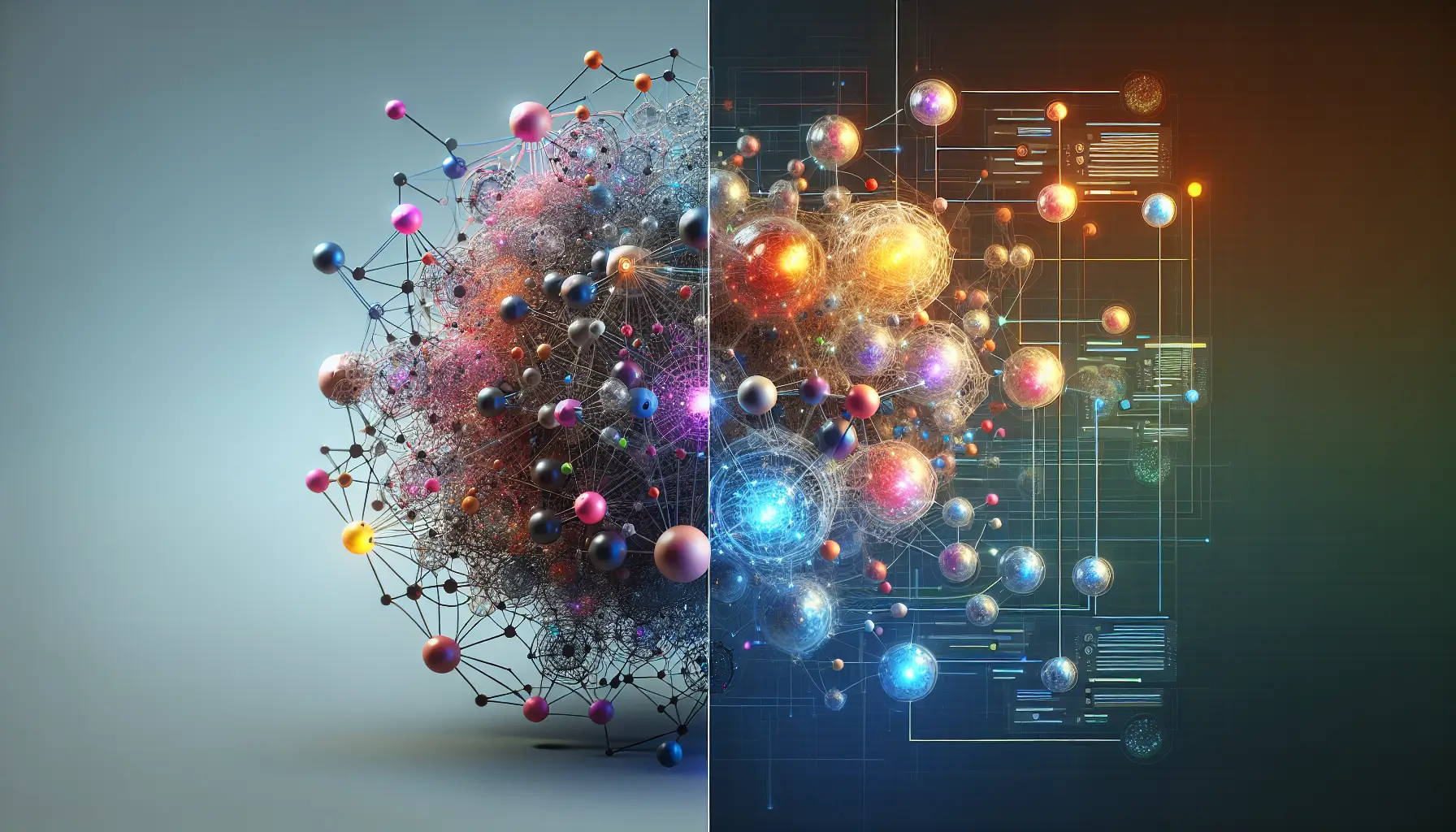
Modern AI systems pack thousands of neural network layers into architectures of staggering complexity. Yet for all this sophistication, the gap between what AI can do in the lab and what it actually does in daily business operations remains stubbornly wide.
The number 5,127 isn't arbitrary - it represents the kind of layered complexity that defines today's most advanced AI models. These systems can process language with remarkable fluency, generate images from text descriptions, and even write code. But complexity alone doesn't guarantee adoption.
The Implementation Reality
Business owners face a different set of challenges than AI researchers. A system that works brilliantly in controlled conditions might fail completely when confronted with messy, real-world data. Or it might work perfectly but require technical expertise that small teams simply don't possess.
Consider voice recognition technology. The underlying AI can achieve near-human accuracy in laboratory conditions. But deploy it in a busy restaurant or construction site, and performance degrades rapidly. The gap isn't in capability - it's in the transition from ideal to actual operating conditions.
This pattern repeats across industries. Healthcare AI that can diagnose conditions with impressive accuracy still struggles with integration into existing hospital workflows. Financial AI that can detect fraud patterns perfectly often generates so many false positives that staff ignore its recommendations entirely.
The Adoption Puzzle
The challenge isn't just technical - it's deeply human. Every AI implementation requires people to change how they work. To trust systems they don't fully understand. To adapt processes that have worked for years.
The most sophisticated AI in the world becomes useless if people won't use it. And people won't use systems that make their jobs harder, more confusing, or less reliable than current methods.
This creates a peculiar situation where AI capabilities advance at breakneck speed while practical adoption moves at a more cautious pace. Companies announce revolutionary AI features while users continue relying on familiar, simpler tools that just work.
Bridging the Divide
The solution isn't to slow down AI development or oversimplify complex problems. Instead, it requires building bridges between capability and usability. This means designing AI systems with implementation challenges in mind from the start, not as an afterthought.
Successful AI adoption often happens through gradual integration rather than wholesale replacement. Tools that enhance existing workflows rather than revolutionising them. Systems that provide clear value without requiring extensive retraining or process overhaul.
The most impactful AI applications in the coming years likely won't be the most technically impressive. They'll be the ones that solve real problems while fitting seamlessly into how people actually work. Sometimes the path forward isn't through more layers, but through better understanding of the layers that matter most - the human ones.