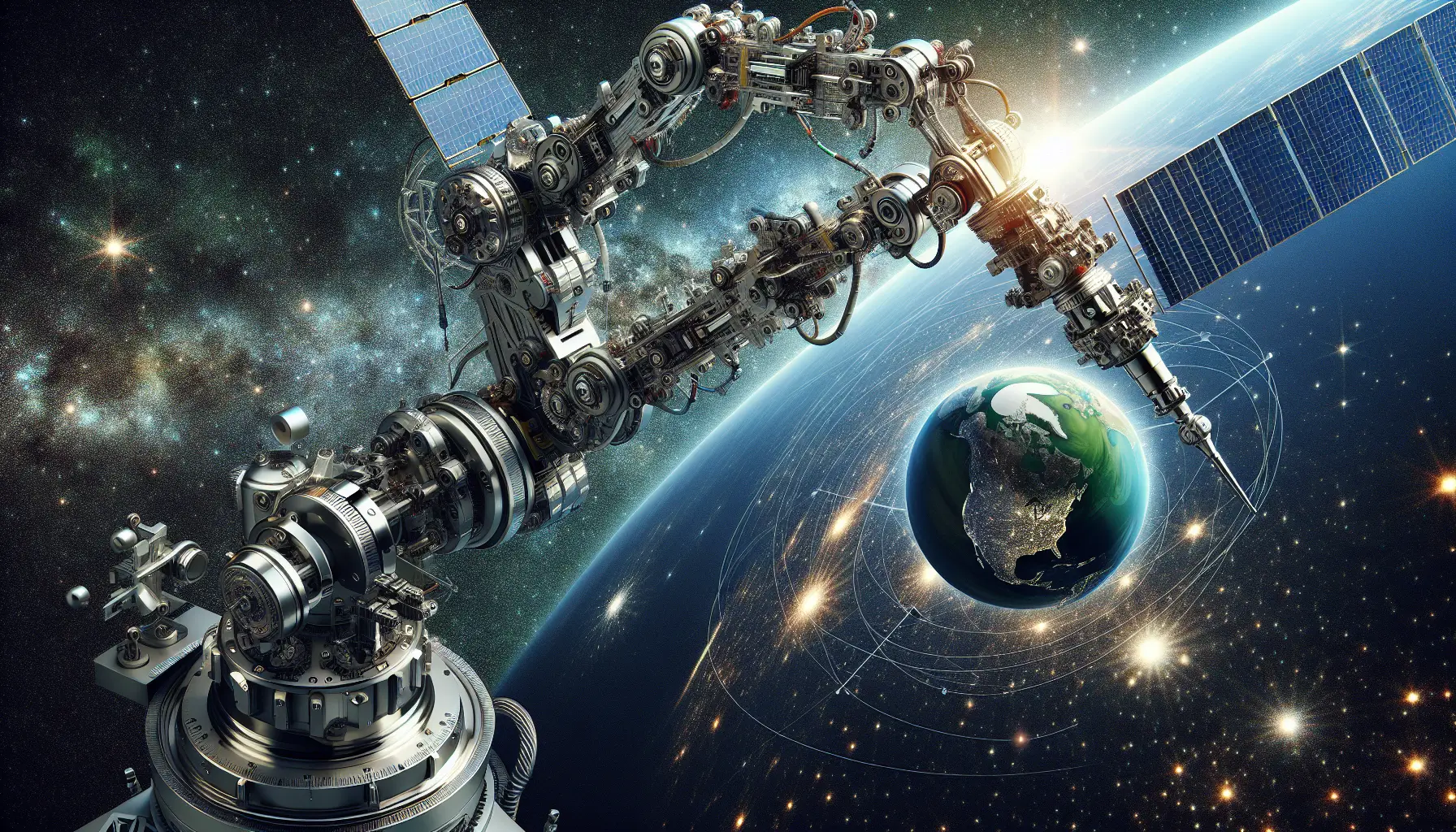
When you're 400 kilometres above Earth and something goes wrong, you can't exactly pop down to the hardware shop. NASA's latest robotic collaboration with PickNik Robotics and Motiv Space Systems tackles a problem that sounds simple but becomes mind-bendingly complex in zero gravity: how do you teach a robot to grab things in space?
The Orbital Challenge
Space presents unique challenges for robotic manipulation. On Earth, gravity helps - drop something and it falls predictably. In orbit, everything floats. Push against something and you push yourself away. The physics we take for granted simply don't apply.
PickNik Robotics brings their MoveIt motion planning software to this challenge - technology that's already helping robots navigate complex movements on Earth. But Motiv Space Systems adds the crucial space-hardened hardware that can survive radiation, extreme temperatures, and the vacuum of space.
This isn't about building a better robot arm. It's about creating systems that can perform delicate operations in an environment where traditional approaches fail spectacularly.
Beyond Maintenance
The implications stretch far beyond fixing satellites. Consider asteroid mining - a concept that's moved from science fiction to serious commercial planning. Robots that can manipulate objects in zero gravity become essential for extracting resources from space rocks.
Or think about Mars missions. Every tool, every component sent to Mars costs millions. A robot capable of sophisticated manipulation could assemble habitats, repair equipment, or even construct new tools from raw materials.
The partnership represents something more significant than technical advancement - it's infrastructure building. The unglamorous but essential work of making space operations routine rather than heroic.
The Earth Connection
What develops in space doesn't stay in space. The motion planning algorithms being refined for orbital operations will find their way into manufacturing, healthcare robotics, and domestic applications. When you solve manipulation in the most challenging environment imaginable, everywhere else becomes easier.
Space robotics has always been a forcing function for innovation - demanding reliability, precision, and autonomous decision-making that pushes the entire field forward. This NASA collaboration continues that tradition, but with commercial speed and scale.
For anyone building robotic systems, watching this partnership offers insight into where manipulation technology is heading. The techniques developed for grasping objects in orbit will eventually help robots handle delicate surgery, complex assembly, or simply navigating around your kitchen more gracefully.