Today's Overview
If you watched this week, you'd think robots had finally arrived. They did. Figure AI ran a 24-hour autonomous sorting livestream with no human intervention. Unitree showed a manned mecha robot that walks on two legs, switches to four, and smashes through walls. The demos are real. The uptime numbers are real. What matters now isn't whether robots work-it's what happens when they work everywhere at once.
The sorting revolution and what it means
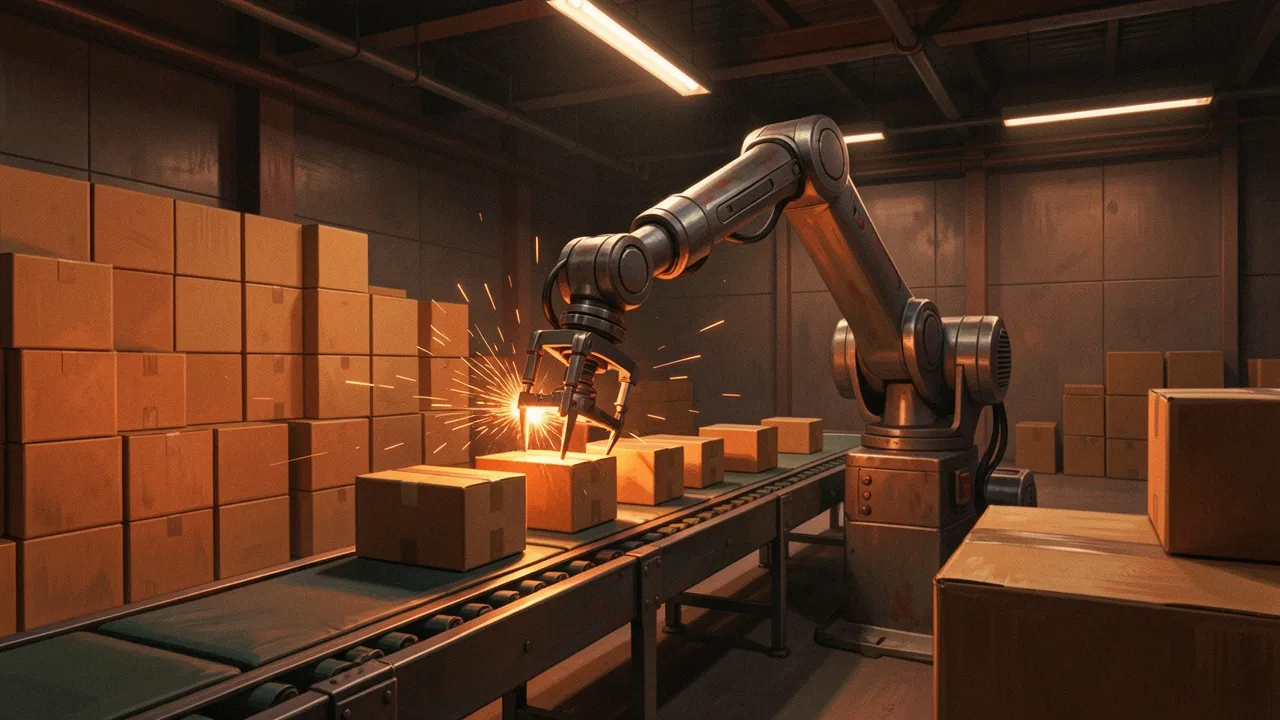
Figure's Helix-02 hit human-parity throughput on small-package sorting and didn't fail for a full day. That sounds mundane until you realise it's running entirely onboard with automatic recovery for edge cases. No teleop. No babysitting. The company claims this is the clearest continuous-uptime demo the robotics community has seen, and the internet split between skeptics about Figure specifically and believers about robotics as a category. The honest read: skepticism about one company doesn't change what just happened to the category. When you can run a robot unsupervised for 24 hours on a real production task, the conversation shifts from "can it work" to "what labour does this replace and when."
Unitree's GD01 landed differently-a production-ready manned mecha that can carry a human pilot inside. It transforms between two-leg and four-leg modes and can apparently punch through walls. It's a different problem than autonomous sorting, but it's also different proof: the supply chain and engineering talent to build humanoid systems at scale now lives in China, and companies there are shipping hardware faster than we're debating policy.
Cerebras and the inference moment
Cerebras Systems went public this week, and the stock popped 107% on the first day. That kind of move usually signals irrational exuberance. Azeem Azhar read it differently: Wall Street is finally grasping that AI inference-actually running trained models in production-is where the real demand lives. The company makes massive chips optimised for AI workloads. They've been quiet about it for years. The IPO wasn't hype. It was recognition that the bottleneck has moved from training models to serving them, and hardware companies with solutions to that problem matter more than anyone expected.
Coding agents are becoming the operating system
Codex rolled out in ChatGPT's mobile app this week. You start a task on your laptop, then steer it from your phone while Codex keeps running on your devbox. Approve commands. Check progress. Keep working when you step away. GitHub announced their Copilot App as a desktop environment for parallel workstreams and PR lifecycle management. VS Code shipped a multi-agent window. The pattern is clear: coding agents aren't replacing developers. They're becoming infrastructure. The IDE is becoming the operating system for agentic work, and every company with a code editor is racing to own that layer.
What ties these threads together is velocity. Robots that work unsupervised for days. Hardware companies pivoting to inference. Agents baked into the tools you use daily. None of this feels significant in isolation. Together, it feels like the ground shifted.