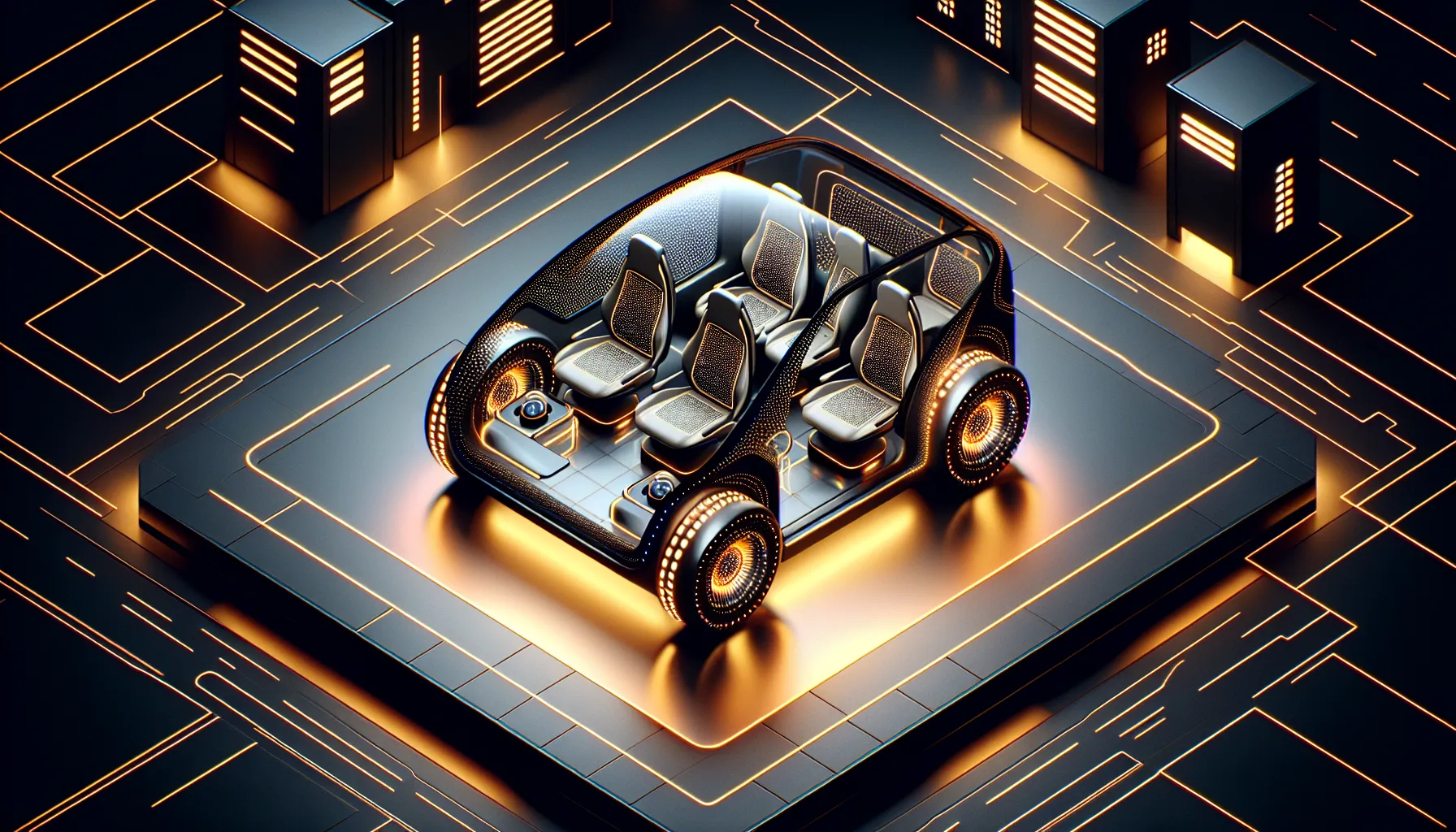
Amazon's Zoox just announced expansion into Austin, Miami, Las Vegas, and San Francisco - not with retrofitted Teslas or adapted consumer cars, but with vehicles designed from scratch for autonomous ride-hailing. After logging 2 million autonomous miles and 350,000 passenger trips in Las Vegas, they're betting that purpose-built beats bolted-on.
The numbers tell the story. Two million miles is not a pilot programme - it's operational scale. 350,000 paying passengers means they've moved beyond tech demos into actual service. And now they're expanding nationally, which suggests the unit economics are working.
Why Purpose-Built Matters
Most robotaxi companies started by retrofitting sensors and computers into existing cars. Waymo uses Jaguars. Cruise used Chevy Bolts. The logic made sense - use existing manufacturing, focus on the software, get to market faster.
Zoox took the opposite approach. Their vehicle has no steering wheel, no pedals, bidirectional driving (it moves forward and backward equally well), and a symmetrical design. Four seats face each other. The sensor suite is integrated into the body, not bolted on top. Everything about it says "this was designed for autonomy, not adapted for it".
That decision delayed their launch - designing and manufacturing a new vehicle takes years longer than adapting an existing one. But now that they're scaling, the advantages are showing up. Lower maintenance costs because there's no legacy steering or braking system. Better sensor integration because the hardware was designed around the sensors, not the other way around. And a passenger experience that feels genuinely different, not like sitting in a self-driving Uber.
The Las Vegas Validation
Las Vegas was the testing ground, and the data matters. According to The Robot Report, Zoox has been running commercial service there long enough to work through the operational challenges that kill most pilots. Weather conditions. Night driving. Pedestrian density. Construction zones. Emergency vehicle interactions.
Two million miles means they've seen edge cases that don't show up in simulations. The kind of scenarios that only emerge when you're running a real service, with real passengers, in real conditions. And 350,000 passenger trips means people are actually using it - not just early adopters chasing novelty, but repeat customers who've decided it's a viable option.
That's the validation that matters. Not the technology demonstration. Not the regulatory approval. The market signal. People paying for rides, repeatedly, at scale.
National Expansion Changes the Calculation
Austin, Miami, Las Vegas, and San Francisco are not random choices. Each city represents a different operational challenge. Austin's sprawl and highway-dependent layout. Miami's dense urban core and aggressive driving culture. San Francisco's hills, narrow streets, and cyclist density. Las Vegas as the proven baseline.
This is not a company tiptoeing into new markets. This is a company that believes its system works across varied conditions and is ready to prove it simultaneously in four very different environments. That's either confidence or hubris, and the Vegas numbers suggest it's confidence.
The competitive dynamic just shifted. Waymo has been methodically expanding across Phoenix, San Francisco, and Los Angeles. Cruise pulled back after safety incidents. Tesla keeps promising Full Self-Driving that remains perpetually "next year". And now Zoox - backed by Amazon's capital and logistics expertise - is going national with a fundamentally different vehicle architecture.
What This Means for the Industry
The robotaxi market has been stuck in a pattern: impressive demos, limited deployments, slow scaling, regulatory uncertainty. Every company promises transformation but delivers incrementalism. Zoox's expansion doesn't guarantee success, but it changes the conversation.
If purpose-built vehicles scale better than retrofits, that's a structural advantage that compounds over time. Lower operating costs mean more competitive pricing. Better passenger experience means higher utilisation rates. Integrated design means faster iteration on hardware improvements.
For business owners watching this space, the signal is clear: autonomous ride-hailing is moving from "interesting pilot" to "operational reality". The question is no longer whether it works, but who builds the dominant platform. And the answer might be the company that threw out the playbook and started from scratch.
Robotics stories usually end with "we'll see". This one ends with: they're already seeing. Two million miles. Four cities. A vehicle that looks like it came from a different decade. The future's here - it's just getting into more Ubers.