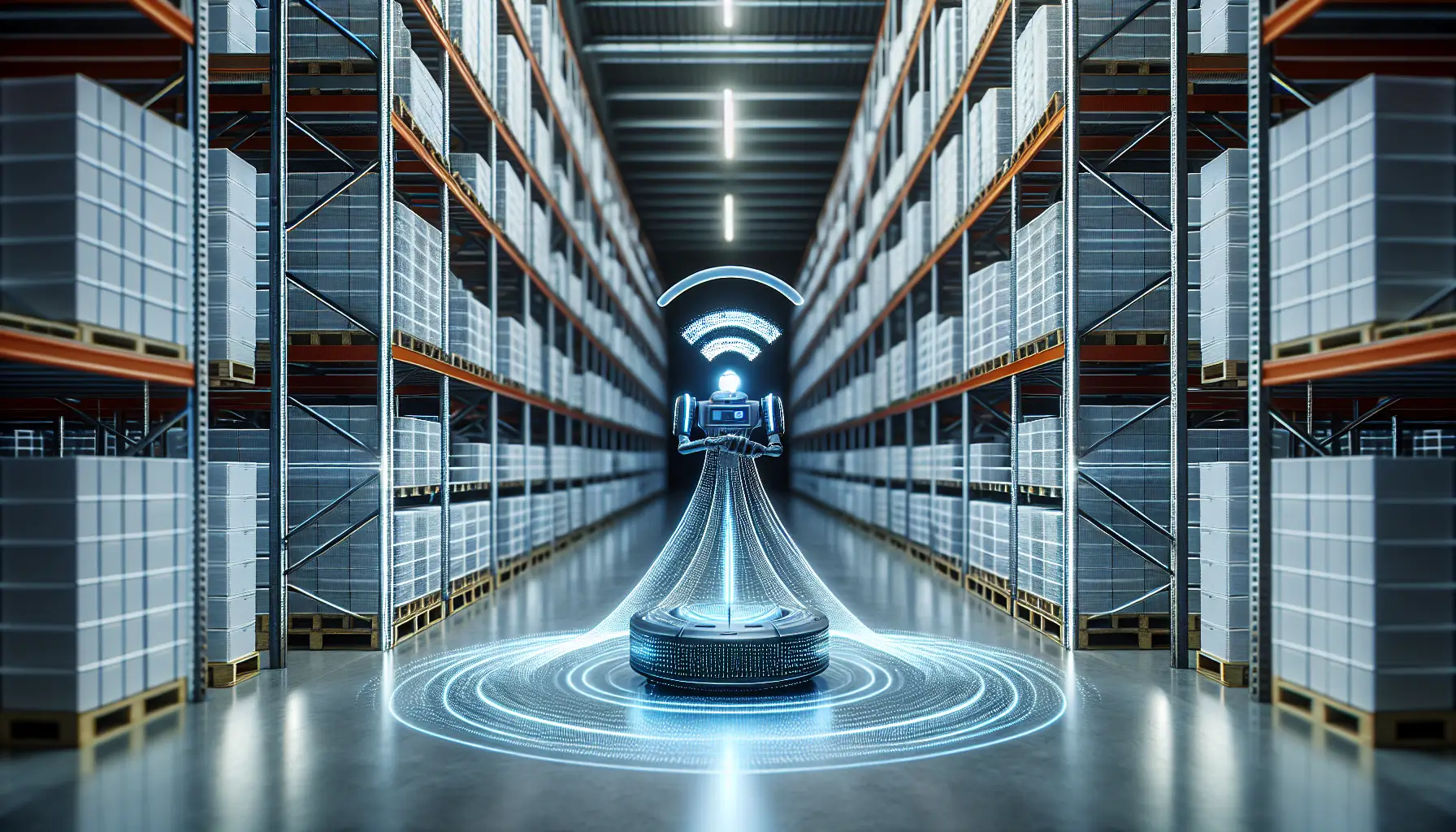
A startup called ZaiNar just raised over $100 million to solve a problem you probably didn't know existed: robots can't reliably figure out where they are indoors.
GPS works brilliantly outdoors. Inside a warehouse, factory, or hospital? Not so much. And when you're building autonomous systems - whether that's delivery robots, warehouse automation, or anything that needs to move without constant human supervision - not knowing your precise location is a fundamental blocker.
ZaiNar's solution is unexpectedly elegant. Instead of installing expensive new infrastructure (LiDAR stations, beacon networks, specialised sensors), they've built a platform that uses the wireless networks already in place. WiFi. Bluetooth. The infrastructure that's already there, powering every connected device in a building.
Sub-metre accuracy from existing hardware
The technical claim here is worth unpacking. ZaiNar says their system delivers sub-metre positioning accuracy using standard wireless signals. That means knowing where something is to within less than a metre - continuously, in real time, without adding specialised hardware to the environment.
For context: warehouse robots today often use a combination of approaches. Some follow magnetic strips on the floor (inflexible, expensive to change). Others use LiDAR mapping (works, but requires constant environmental scanning and struggles with dynamic spaces). Many rely on visual markers or QR codes at key waypoints (brittle, maintenance-heavy).
What ZaiNar is proposing is a continuous positioning system for physical AI - not just "where am I now?" but "where am I, moment to moment, as I move through this space?" And they're doing it by extracting positioning data from wireless signals that are already everywhere.
Why this matters for physical AI
The term "physical AI" keeps appearing in robotics announcements. It's slightly annoying as jargon goes, but it points at something real: autonomous systems that need to make decisions in the physical world, not just process data in the cloud.
Physical AI needs three things to work reliably: perception (what's around me?), positioning (where am I?), and planning (what should I do next?). The perception layer has improved dramatically - vision models are genuinely good now. Planning is advancing through reinforcement learning and simulation. But positioning? That's been the awkward middle child.
ZaiNar's platform addresses this by turning positioning into something that just... exists. A utility layer. If you can assume continuous, accurate positioning without thinking about it, you can focus on building the perception and planning layers. The same way you assume internet connectivity exists when building a web app.
The $100M+ question
Emerging from stealth with over $100 million in funding suggests serious backing - the kind of capital that expects deployment at scale, not lab demos. The question for ZaiNar is whether their approach works across the messy variety of real environments.
Warehouses with metal shelving that reflects signals unpredictably. Hospitals with thick walls and interference from medical equipment. Retail spaces that get reconfigured constantly. Construction sites where the environment changes daily. These are the places autonomous systems need to work, and they're all hostile to wireless positioning in different ways.
If ZaiNar can deliver reliable sub-metre accuracy in those conditions using existing infrastructure, this genuinely removes a fundamental constraint. Not just for big robotics companies, but for anyone building autonomous systems - delivery bots, inspection drones, collaborative factory robots, automated retail systems.
The practical test will be deployment. Can a business install this without shutting down operations? Does it work alongside existing wireless systems without interference? How much configuration is needed per environment? Those answers will determine whether this becomes infrastructure or remains an expensive niche solution.
But the core idea - that positioning for physical AI should be a solved, boring utility rather than a custom engineering challenge for every deployment - that's the right direction. And if ZaiNar can make it work at scale, the $100M bet starts to make sense.