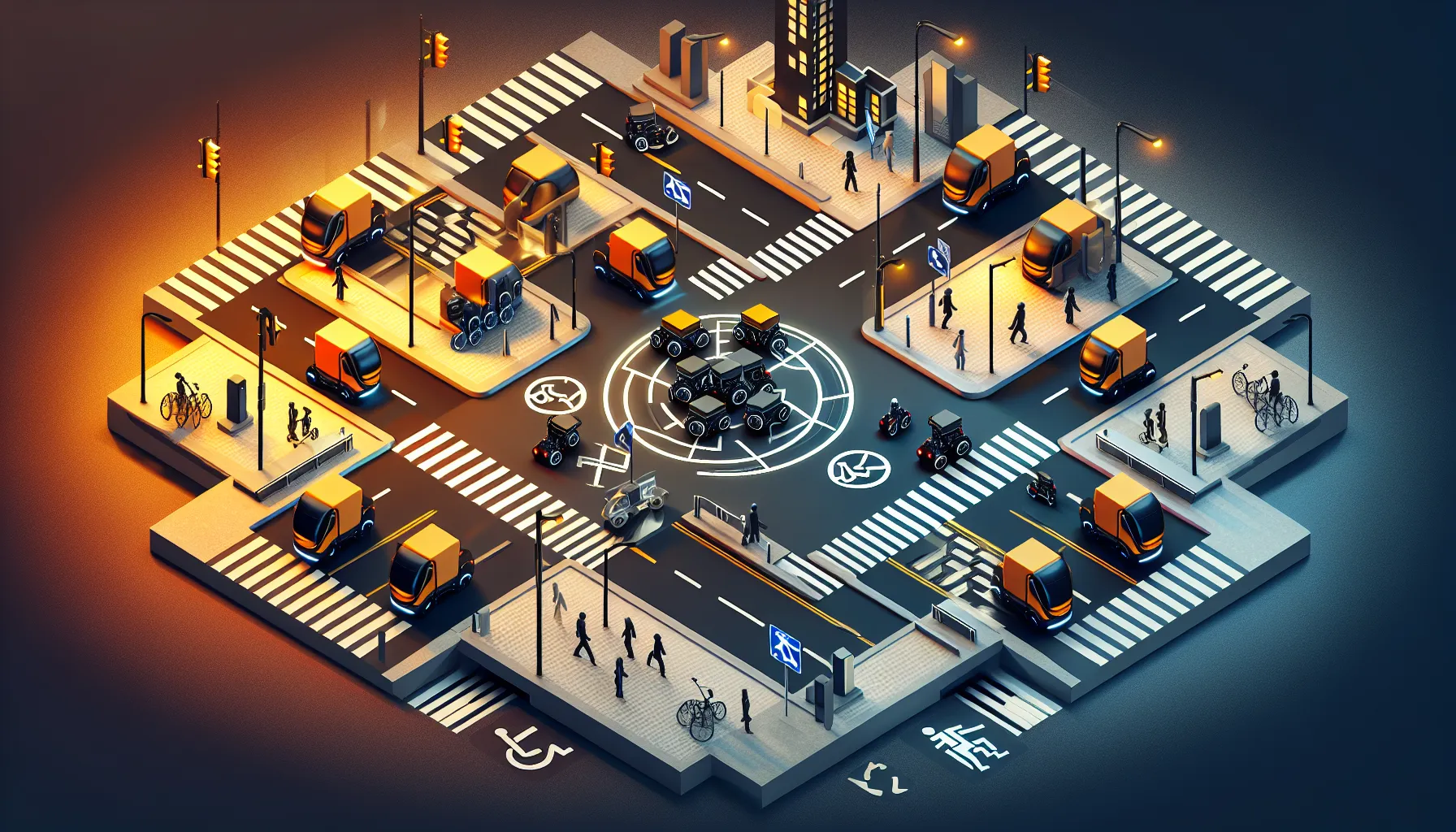
A delivery robot stops in the middle of a pavement. A wheelchair user can't get past. Who do you call? The manufacturer? The company using it? The local council that approved the trial? Right now, nobody knows - and that's the problem.
ASTM International, NIST, and the Urban Robotics Foundation just released a framework for governing robots in public spaces. It's not about the technology - that bit works. It's about the messy, fragmented reality of deploying robots in cities where regulations were written for cars and pedestrians, not autonomous machines navigating shared spaces.
The Governance Gap
The barrier to scaling public robotics isn't engineering. It's accountability. When a robot malfunctions or causes harm, the chain of responsibility gets murky fast. Is it the software developer's fault? The operator who deployed it? The municipality that granted permission? The company that owns the robot?
Every city has different rules. Some allow delivery robots on pavements. Others ban them outright. Some require permits. Others have no process for issuing them. A company trying to scale across multiple cities faces a patchwork of incompatible regulations, each written without consideration for the others.
This framework aims to fix that - not by imposing top-down rules, but by creating shared language and principles that cities, manufacturers, and operators can build on. It's a starting point for consistent governance.
What the Framework Actually Does
The document addresses the practical mess of deploying robots at scale. It covers liability structures, insurance requirements, data privacy standards, and accessibility obligations. It asks questions like: What happens when a robot's sensors fail in heavy rain? Who ensures the robot doesn't block accessible routes? How is incident data shared between operators and cities?
One of the most useful parts is the stakeholder mapping - identifying every party with skin in the game. Manufacturers, operators, cities, accessibility advocates, residents, emergency services. Each has different concerns and different leverage. The framework gives them a common structure to negotiate from.
It also tackles data governance. Robots collect vast amounts of environmental data as they navigate - video feeds, sensor logs, location tracking. Who owns that data? Who can access it? Can police subpoena it? Can cities use it for urban planning? These aren't theoretical questions. They're negotiations happening right now in pilot programmes across the world.
Why This Matters for Builders
If you're building robotics systems - delivery bots, cleaning robots, inspection drones - this is the regulatory groundwork being laid beneath you. The decisions made now will shape what's permissible in five years.
The framework doesn't mandate specific technologies or designs. It sets expectations around transparency, accountability, and public safety. That means you need to build with auditing in mind from day one. Can your system log its decision-making process? Can it explain why it chose a particular route? Can it prove compliance with accessibility standards?
For operators, this changes the economics of deployment. If every city requires bespoke compliance work, scaling becomes prohibitively expensive. A shared framework reduces friction - assuming cities adopt it. That's not guaranteed. But the fact that ASTM, NIST, and the Urban Robotics Foundation are aligned suggests this has institutional weight behind it.
The Real Test
The barrier was never "can we build a robot that delivers parcels?" We crossed that line years ago. The barrier is "can we deploy 10,000 of them across 50 cities without creating legal chaos?" That's a governance problem, not an engineering one.
This framework is an attempt to answer it. Whether it succeeds depends on adoption - by cities, by manufacturers, by insurers. The technology is ready. The regulations are catching up. The question is whether they catch up fast enough, or whether we end up with another decade of fragmented pilots that never scale.
For anyone building in this space, the message is clear: the rules are being written right now. If you're not part of that conversation, you're leaving your fate in someone else's hands.