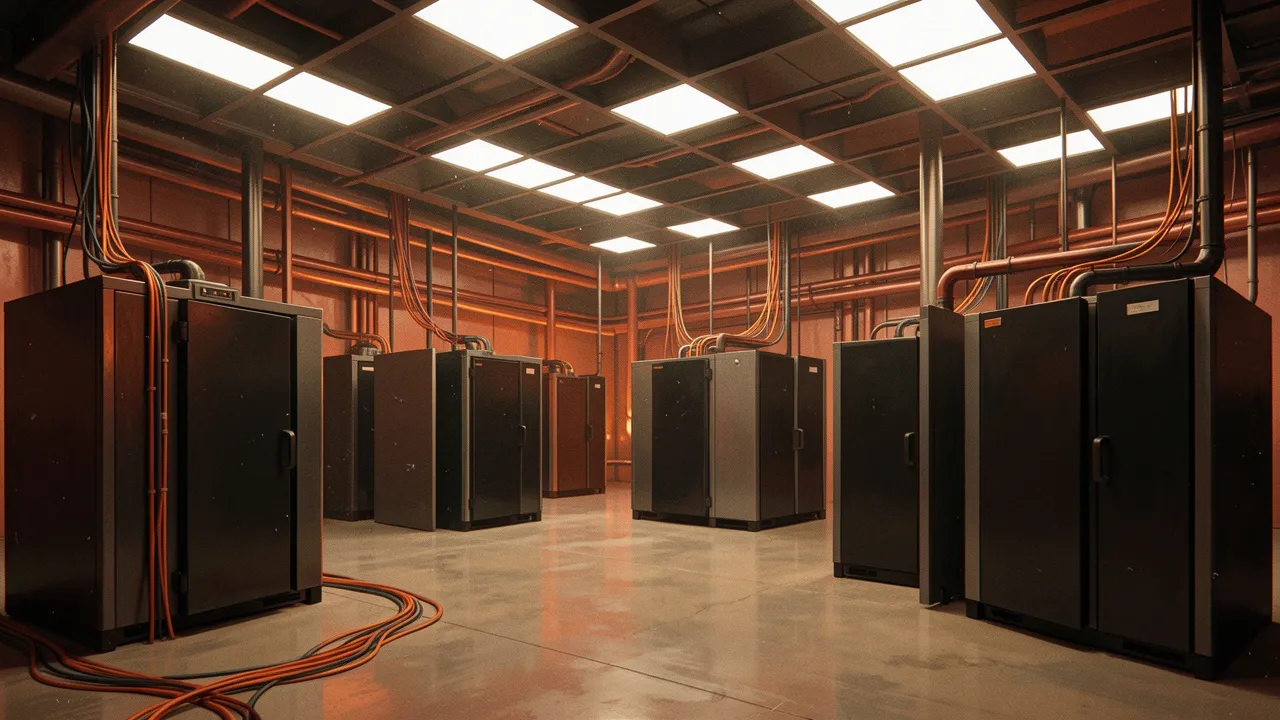
The quantum computing industry just absorbed over $3.5 billion in government and commercial capital in a single week. The US CHIPS Act distributed $2 billion across nine semiconductor firms, with IBM taking $1 billion for a quantum-focused foundry. France announced a €1.5 billion quantum investment programme. Saudi Arabia's Aramco partnered with Pasqal to launch a cloud quantum platform.
This isn't research funding. It's infrastructure funding. The signal: quantum is moving from labs to data centres.
Where the US Money is Going
The CHIPS Act allocations prioritise manufacturing capacity, not just R&D. IBM's $1 billion will expand its New York foundry to produce quantum processors at scale. The facility will manufacture not just IBM's own chips, but serve as a foundry for other quantum companies who need advanced packaging and cryogenic integration.
This matters because quantum hardware has been bottlenecked by custom manufacturing. Most quantum startups design chips but rely on academic cleanrooms or commercial fabs that don't specialise in the cryogenic and superconducting requirements of quantum devices. A dedicated quantum foundry changes the access equation. It won't make quantum chips cheap, but it will make them available.
The remaining $1 billion is split across eight firms working on adjacent semiconductor challenges: photonics, advanced packaging, and materials science. Quantum systems don't just need qubits - they need room-temperature control electronics, ultra-low-noise RF chains, and high-speed classical co-processors. The CHIPS funding targets the whole stack.
France's National Quantum Push
France's €1.5 billion quantum investment spans five years and covers the full pipeline: basic research, hardware development, software tools, and workforce training. The funding prioritises three quantum modalities: superconducting qubits, neutral atoms, and photonics. France already has Pasqal (neutral atoms) and Quandela (photonics) as domestic champions. This funding backs them to scale from prototypes to commercial systems.
The French approach differs from the US. Where the CHIPS Act focuses on manufacturing infrastructure, France is backing multiple hardware platforms in parallel. The bet: it's too early to pick a winner, so fund them all and let the market decide. This hedges technical risk but spreads capital thin. Whether that's smart or wasteful depends on whether any of these platforms reach commercial viability in the next decade.
Aramco and Pasqal: Quantum Goes to the Gulf
Saudi Aramco's partnership with Pasqal brings neutral-atom quantum computers to the Middle East via a cloud platform. This is Aramco's first quantum computing initiative, and it's aimed squarely at oil and gas optimisation problems: reservoir simulation, seismic data processing, and logistics scheduling.
Neutral-atom systems like Pasqal's have an advantage here: they scale to hundreds of qubits more easily than superconducting systems, and they're better suited to optimisation problems than gate-based quantum algorithms. Aramco isn't betting on quantum supremacy. They're betting on quantum being good enough, soon enough, to beat classical optimisation on specific industrial problems.
The cloud deployment model is significant. Aramco isn't buying hardware - they're buying access. This is the same shift that made cloud computing viable: let someone else own the infrastructure, pay for what you use, and focus on the application layer. If quantum computing follows the same trajectory, cloud platforms will matter more than who builds the best qubit.
Hardware Moves Into Data Centres
Three separate hardware announcements this week signal quantum's migration from research labs to commercial data centres. RacQ introduced a modular rack system for quantum computers that fits standard 19-inch data centre racks. PACU launched a cryogenic packaging platform that reduces the physical footprint of dilution refrigerators. And researchers demonstrated the first 6nm quantum dot devices fabricated using EUV lithography - the same process used for leading-edge classical chips.
The common thread: quantum systems are being re-engineered to fit into existing infrastructure. Data centres run on standardised rack units, power supplies, and cooling systems. If quantum computers need custom facilities, they'll stay in labs. If they can plug into the same racks as GPU clusters, they'll deploy everywhere GPUs deploy.
The 6nm quantum dots are particularly interesting. EUV lithography is the most advanced chip-making process in production, used for Apple's M-series chips and Nvidia's latest GPUs. If quantum devices can be fabricated on the same process, they inherit decades of manufacturing optimisation. The yield, reliability, and cost curves all improve instantly. This is the difference between a PhD student hand-assembling qubits under a microscope and TSMC cranking out millions of devices per wafer.
What This Week's Funding Means
$3.5 billion in one week is a statement of intent. Governments and corporations are moving quantum from R&D budgets to infrastructure budgets. That shift changes the incentives. Infrastructure spending demands timelines, milestones, and commercial return. It's not patient capital anymore.
For the quantum industry, this is both an opportunity and a test. The funding will accelerate hardware development and make systems more accessible. But it also raises expectations. If quantum computing absorbs this much capital and doesn't deliver commercial value within five years, the funding dries up. The industry has been promising practical quantum advantage for a decade. Now it has to deliver.