Most LLM Thinking Is Wasted; Quantum Gets Real Money
Today's Overview
Large language models spend 61 to 93 percent of their reasoning time on redundant steps, according to new research quantifying what casual observation had always suggested: these systems overthink problems in ways that don't change the final answer. Frontier models on MATH-500 show the same pattern even on the hardest problems. The research proves this isn't a bug in individual models-it's structural. Any length-agnostic reward system incentivises this behaviour, meaning the problem isn't solvable by tweaking existing approaches. For teams using reasoning-capable models in production, this matters: you're paying for compute that doesn't improve outcomes.
What's Actually Being Used
Meanwhile, research into confidence calibration in LLMs reveals they're overconfident on hard tasks (like humans), but underconfident on easy ones. This matters for deployment: a model confident it's wrong when it's actually right will ask for human review it doesn't need. Teams building on top of these models need to measure this rather than assume calibration improves with scale.
On infrastructure, developers are learning hard lessons about what slow actually means. One detailed post on cutting CI time for a FastAPI backend with 1,826 tests found the real bottleneck wasn't parallelism, caching, or database setup-it was the 20-second cold import of the application itself. The team dropped xdist and went with four serial shards instead, cutting total CI time from 20 minutes to 10. The pattern: measure before optimising; the obvious culprit is usually not the real one.
Quantum's Inflection Point
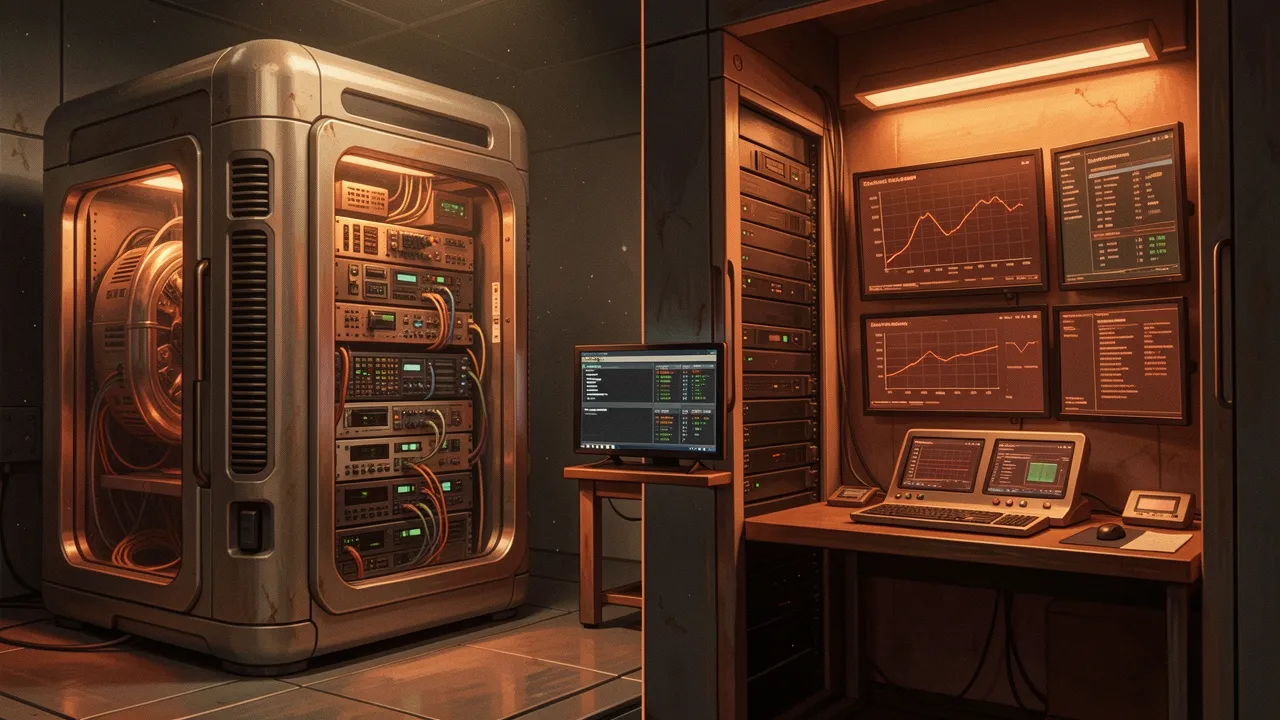
Quantum computing moved from research theatre to capital allocation this week. The US committed $2 billion in CHIPS Act funding to nine firms including a $1 billion IBM partnership for a 300mm foundry in Albany. France announced €1.5 billion in quantum and microelectronics investment. Meanwhile, hardware makers are shipping: Equal1 and Dell unveiled RacQ, the first rack-mounted quantum computer that runs from standard wall power. Imec printed silicon quantum dot qubits with 6nm gaps using production EUV lithography. ParityQC and IBM hit a 52-qubit quantum Fourier transform record. The narrative switched from "when will this work?" to "how do we manufacture this at scale?"
The infrastructure story is worth watching. Quantum systems are moving into data centres, not just labs. That requires control electronics, cryogenics, software, and support-the stack that made classical computing useful. Companies selling into that stack (cooling, control, validation) are as important as the qubit makers.