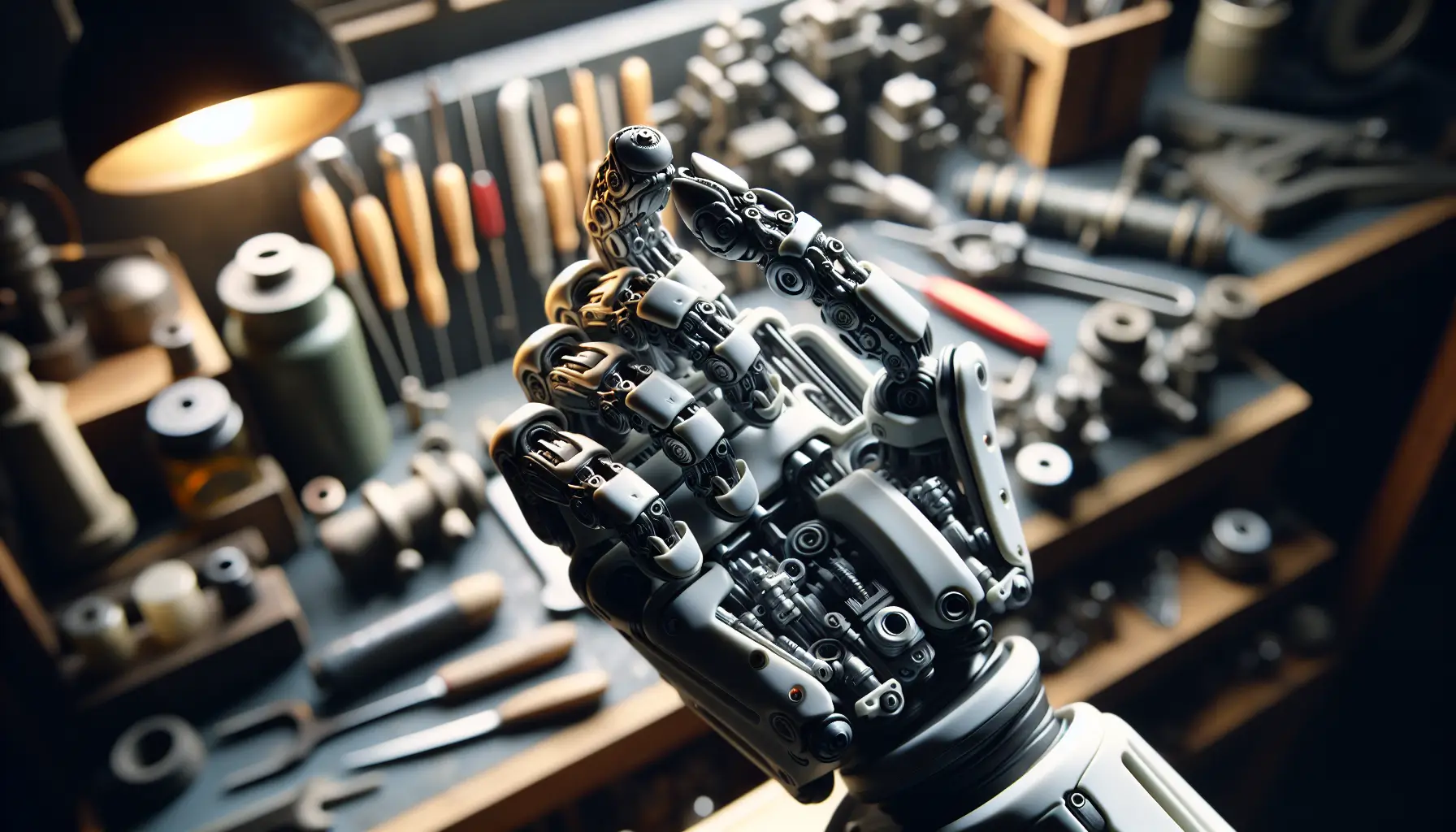
Tesollo's new DG-5F-S robotic hand doesn't look like much in photos - no chrome finish, no dramatic press shots. Just a compact, lightweight gripper designed to fit onto humanoid robots. But that's exactly the point.
This isn't a research prototype. It's a production-ready component you can actually buy and integrate into real systems. Available in two versions - a 20 degree-of-freedom model for complex manipulation tasks, and a simpler 15 DoF variant - the DG-5F-S addresses something most robotics coverage glosses over: the gap between what labs build and what businesses can actually deploy.
Why hands matter more than you'd think
Humanoid robots get attention for their walking gaits and their vaguely unsettling ability to navigate human spaces. But hands are where most real-world tasks either work or fail. Picking up objects without crushing them. Manipulating tools designed for human grip. Operating equipment that wasn't built with robots in mind.
The challenge isn't just mechanical - it's economic. Custom robotic hands are expensive to develop, difficult to integrate, and often over-engineered for practical applications. Small manufacturers and research institutions hit the same wall: they can't afford bespoke hardware, but off-the-shelf options either don't exist or require significant customisation.
Tesollo's approach is deliberately modular. The hand integrates with existing humanoid platforms without requiring extensive mechanical rework. That matters when you're a business trying to build a functional system, not publish a research paper.
Real-world feedback shaped the design
What makes the DG-5F-S interesting isn't the technology itself - the underlying principles of robotic manipulation aren't new. It's that Tesollo iterated based on customer feedback from actual deployment scenarios.
The 15 DoF variant exists because not every task needs 20 degrees of freedom. Simpler mechanisms mean fewer failure points, easier maintenance, and lower cost. For applications like warehouse picking or repetitive assembly tasks, the stripped-down version does the job without the complexity.
The emphasis on being lightweight and compact addresses another practical concern: weight distribution on humanoid platforms. Add too much mass to the end of a robotic arm and you compromise balance, increase power consumption, and limit operational duration. These aren't academic concerns - they're the difference between a robot that works for four hours versus one that needs constant recharging.
Reducing barriers for smaller players
The robotics industry has a scale problem. Large companies can afford custom solutions. Research institutions publish papers about theoretical capabilities. But the businesses and developers in between - the ones actually trying to build functional systems - often get stuck.
Commercialising a production-ready hand component won't solve that gap overnight. But it does represent a shift from "look what we built in the lab" to "here's something you can integrate this quarter."
For small and medium-sized businesses exploring robotics, having standardised, available components changes the calculation. You're not starting from scratch on mechanical design. You're not waiting months for custom fabrication. You're integrating a tested component and focusing on the application layer.
That's not dramatic. It's not going to feature in glossy concept videos. But it's how technology actually moves from prototype to deployment.
What this signals about humanoid robotics
The broader trend here is worth noticing. We're starting to see robotics companies shift from selling complete systems to offering modular components. Hands, vision systems, control software - each becoming a discrete product that different integrators can combine.
This is how industries mature. Early-stage technology tends towards vertical integration - one company builds everything because the components don't exist yet. As the field develops, specialisation emerges. Companies focus on doing one thing well and making it available to others.
Tesollo's hand isn't going to grab headlines the way a new humanoid robot demo does. But for the developers and businesses trying to build practical robotic systems, having a reliable, affordable gripper component available matters more than another impressive lab demonstration.
The real test will be adoption. Can small manufacturers actually integrate this into their workflows? Do research institutions choose it over custom solutions? Does it hold up under operational stress?
Those answers will take months to emerge. But the fact that the component exists, is commercially available, and was designed based on real-world feedback is itself a marker of progress. Not every advance in robotics involves teaching a robot to do backflips. Sometimes it's just making the basic components accessible to the people who need them.