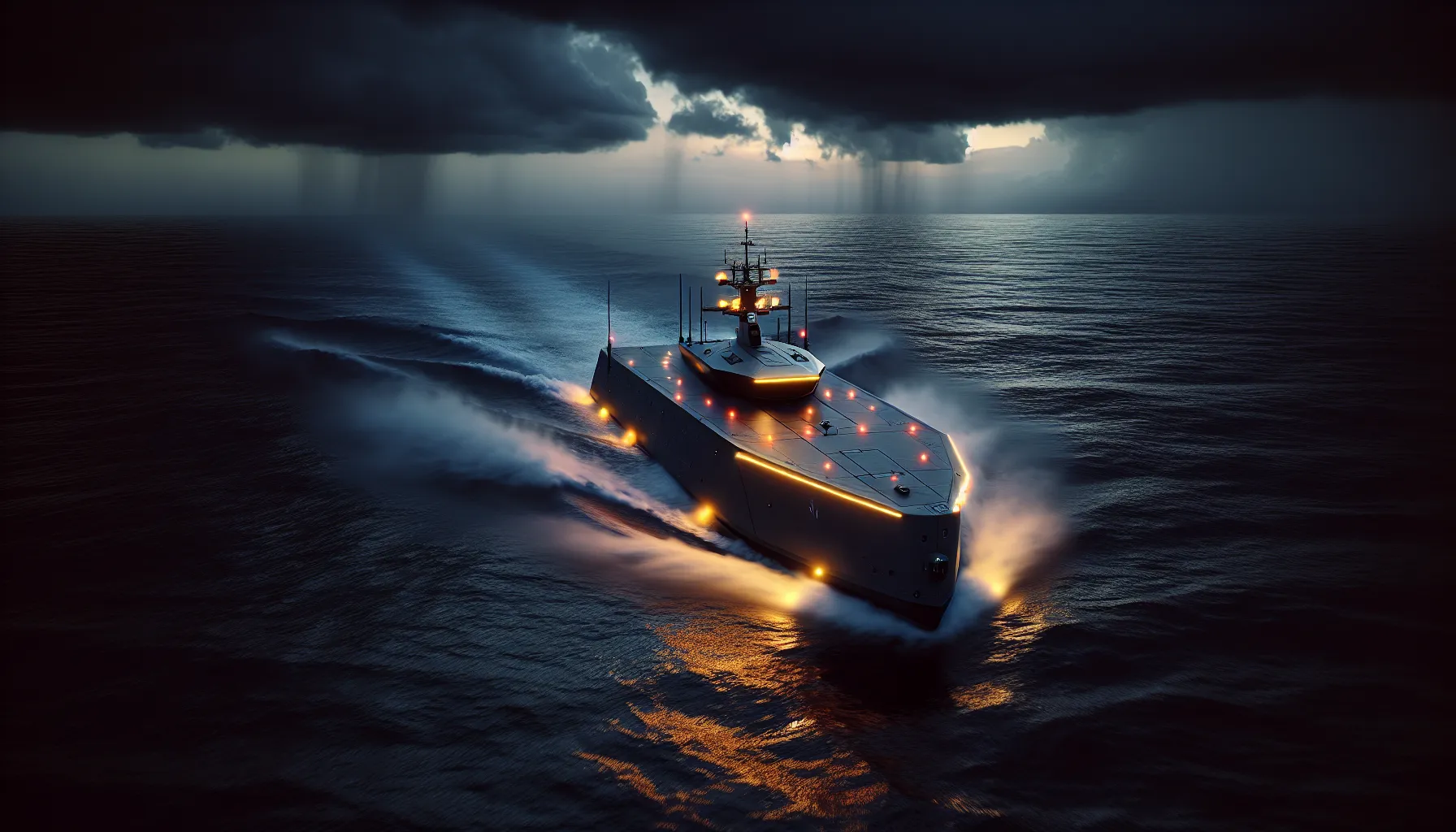
An autonomous shipbuilder just raised more money in a single round than most defence tech companies see in their lifetime. Saronic pulled in $1.75 billion in Series D funding, valuing the company at $9.25 billion. That's not a typo. A company building autonomous surface vessels - ships that navigate themselves - is now worth nearly ten billion dollars.
The money isn't going into PowerPoints about the future of naval warfare. It's going into shipyards, manufacturing infrastructure, and the kind of production capacity the US hasn't seen since World War II. Saronic is building a fleet of autonomous ships designed to operate without human crews, using AI to navigate, patrol, and respond to threats.
Why Autonomous Ships Matter Now
The defence industry has been talking about autonomous vessels for years. Saronic is actually building them. The company's approach is autonomy-first design - not retrofitting existing ships with AI, but designing vessels from the ground up to operate without humans onboard. That changes everything about how you build a ship.
Without crew quarters, life support systems, or the safety requirements of manned vessels, these ships can be smaller, faster, and cheaper to produce. More importantly, they can operate in environments where risking human lives doesn't make sense. Patrol missions in contested waters. Long-duration surveillance. High-risk reconnaissance near hostile territories. These are missions where autonomous vessels aren't just useful - they're the only practical option.
The US Navy has been vocal about needing more ships, faster. Traditional shipbuilding is slow, expensive, and constrained by decades-old infrastructure. Saronic is betting that modern manufacturing - modular design, faster iteration, autonomy from day one - can deliver vessels at a pace the industry hasn't seen in 80 years.
The Real Challenge: Maritime AI
Building the physical ship is the easy part. Teaching it to navigate open ocean autonomously is the hard part. Maritime environments are messy - changing weather, unpredictable traffic, radio interference, GPS denial zones. An autonomous ship needs to handle all of it without human intervention.
Saronic is advancing maritime AI capabilities to solve this. The company's vessels use sensor fusion - combining radar, lidar, cameras, and satellite data - to build a real-time picture of their surroundings. The AI doesn't just follow waypoints. It makes decisions. Avoid that cargo ship. Navigate around that storm system. Respond to that unidentified contact. The system needs to be robust enough to handle edge cases, because there's no crew to take over when things get weird.
This is where the $1.75 billion comes in. Training maritime AI requires real-world data - thousands of hours at sea, in every condition imaginable. It requires infrastructure to test, iterate, and deploy updates to a growing fleet. And it requires the kind of engineering talent that doesn't come cheap.
What This Means for Shipbuilding
The interesting bit isn't just that Saronic is building autonomous ships. It's that they're building them at scale. The company is constructing modern manufacturing facilities designed for volume production. Not one-off prototypes. Not slow, artisanal shipbuilding. Volume.
If they succeed, it changes the economics of naval power. A fleet of autonomous vessels costs a fraction of traditional ships to operate - no crew salaries, no life support, lower maintenance. That means more ships, more coverage, more presence. For the US Navy, facing a larger Chinese fleet and stretched resources, that matters.
For the broader robotics industry, it's a proof point. Autonomous systems aren't just for warehouses and delivery routes. They're moving into high-stakes, high-consequence environments where failure isn't an option. Maritime autonomy is harder than ground-based robotics - the stakes are higher, the environment is harsher, and the regulatory scrutiny is intense. If Saronic can make it work at scale, it opens the door for autonomy in other challenging domains.
The $9.25 billion valuation suggests investors believe they can. Whether that confidence is justified depends on execution - building the ships, proving the AI, and delivering capability the Navy actually wants. But the ambition is clear. Saronic isn't just building autonomous ships. They're rebuilding US shipbuilding around autonomy. That's a bigger bet than the funding round suggests.