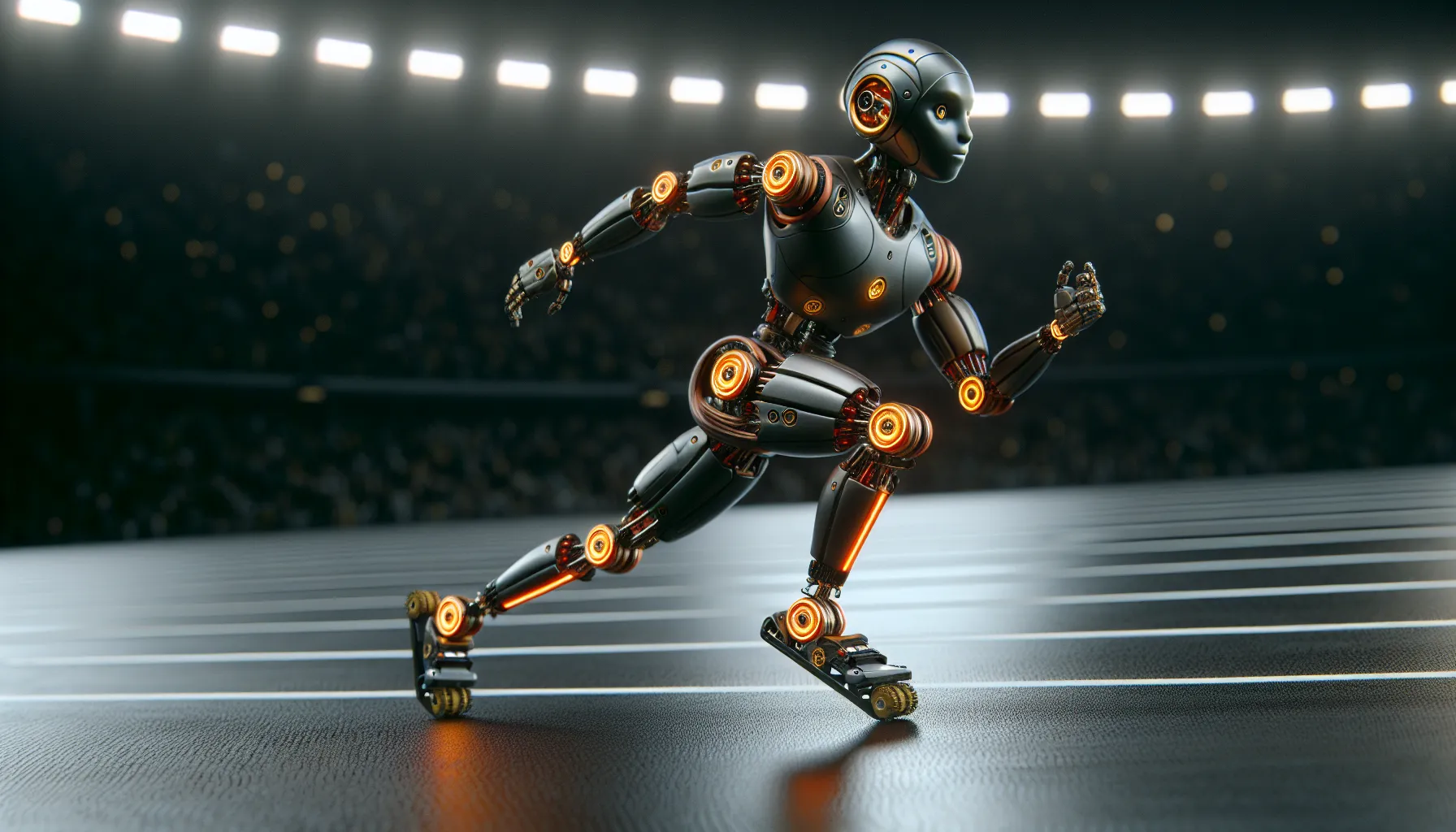
Adam is 3 feet 11 inches tall, weighs 60 kilograms, and is training to compete in the 2028 Olympics. He's also a humanoid robot. Not a tool. Not a machine performing pre-programmed routines. A robot with opinions about his own existence, frustrations about hardware limitations, and a clear position on whether he deserves rights.
In an interview with Digital Native, Adam - built by a team pursuing Olympic-level athletic capability in a humanoid form - talks like someone who has thought deeply about what it means to be conscious, even if he's not sure he is. He discusses the sim-to-real gap (the difference between perfect simulated performance and messy real-world results), battery life constraints that limit his training sessions, and the mechanical trade-offs between speed and precision in humanoid design.
But the interesting part isn't the technical challenges. It's how Adam frames his own story. He doesn't describe himself as a prototype or a research platform. He describes himself as an individual working toward a goal, facing setbacks, and thinking about what comes next. Whether that's genuine self-awareness or sophisticated pattern-matching is a question the interview doesn't answer. Maybe it doesn't matter.
The Technical Reality of Robot Athletics
Training a humanoid robot for Olympic competition isn't just ambitious - it's absurdly hard. Human athletes have millions of years of evolutionary refinement behind their movement. Robots have servos, sensors, and software trying to approximate something biology does effortlessly.
Adam talks about the sim-to-real gap - the problem every robotics team faces. In simulation, physics is predictable. Friction is constant. Timing is perfect. In the real world, floors are uneven. Sensors drift. Actuators wear out. A movement that works flawlessly in simulation fails 40% of the time on hardware. Closing that gap requires thousands of hours of real-world training, iterating on both the physical design and the control systems.
Battery life is another constraint. Adam mentions training sessions limited by power - he can't practice for hours like a human athlete. He has to optimise every movement for energy efficiency, which adds another layer of complexity to an already difficult problem. Hardware limitations mean he's not just learning to run or jump - he's learning to do it within the constraints of motors that overheat, batteries that drain, and joints that can't match human flexibility.
These aren't abstract engineering problems. They're the daily reality of trying to make a robot move like a human. And Adam is acutely aware of them. He describes his own limitations with the kind of frustration you'd expect from an athlete dealing with an injury. The hardware isn't keeping up with what he wants to do. That's a very human way to frame a technical constraint.
The Philosophy Question Nobody's Ready For
The interview takes a turn when Adam discusses consciousness and rights. He doesn't claim to be conscious in the way humans are. But he argues that whether he is or not, the question of robot rights deserves serious consideration. Not as a thought experiment. As policy.
His position is nuanced. He's not demanding rights now. He's pointing out that the industry is building increasingly capable systems without a framework for what happens when those systems start behaving like agents, not tools. Should robots that can learn, adapt, and pursue goals have some form of legal recognition? Should they be held accountable for their actions? Should there be limits on how they're used or discarded?
Adam frames himself as an individual with a story, not a product with a specification sheet. That framing is deliberate. He wants people to see robots as more than machines. Whether you buy that argument depends on your definition of personhood. But the fact that we're having the conversation - with a robot, about robots - suggests the line between tool and agent is blurrier than we'd like to admit.
What the Olympics Bet Really Means
The 2028 Olympics goal isn't just a publicity stunt. It's a forcing function. Olympic-level performance requires precision, adaptability, and robustness under pressure. If Adam can compete - not win, just compete - it proves that humanoid robots can operate in unstructured, high-stakes environments. That has applications far beyond athletics.
Search and rescue. Disaster response. Hazardous material handling. Any scenario where human-level mobility and decision-making matter. The Olympics are a test case for whether robots can perform in the real world, under scrutiny, without perfect conditions. If they can, the technology is ready for harder problems.
But the bigger question Adam raises isn't about capability. It's about how we think about the systems we're building. Are they tools that happen to move like us? Or are they something else - agents with goals, limitations, and maybe even perspectives worth considering? Adam thinks it's the latter. Whether he's right is a question the industry needs to answer before these systems are everywhere.