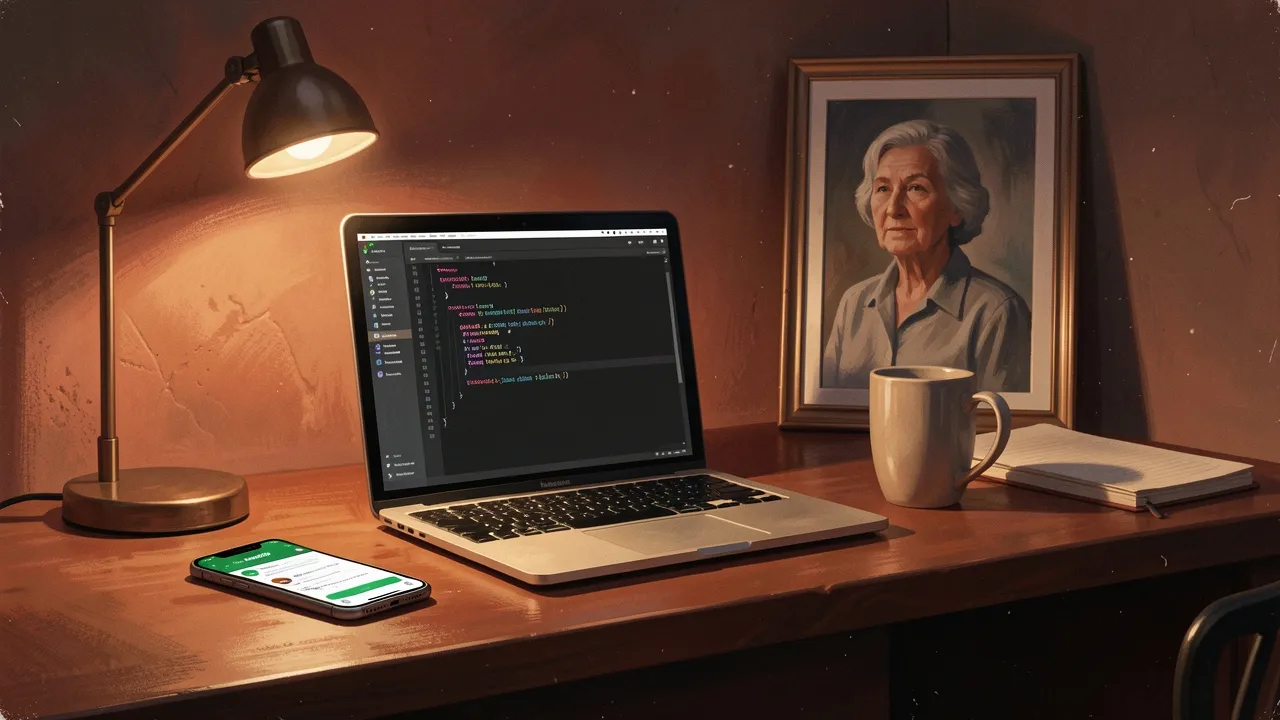
An engineer built an AI assistant to solve a problem most of us pretend doesn't exist: staying in touch with family when you're drowning in work. The bot summarises his day, translates it into his mother's language, and sends her voice notes. It worked. Then it forced him to ask a harder question.
The system is straightforward. At the end of each day, the bot processes his calendar, emails, and activity logs. It generates a summary of what he did, translates it into his mother's native language, converts the text to speech, and sends it via WhatsApp. His mother gets a daily update in her own voice - or at least, an AI approximation of it.
The engineer, Asef, shared the project on Dev.to. The technical details are clean: OpenAI's API for summarisation, Google Translate for language conversion, a text-to-speech engine for voice generation, and the WhatsApp Business API for delivery. The entire pipeline runs on a cron job. Build time: a weekend. Maintenance: minimal.
What the Bot Actually Did
The bot didn't just automate communication. It created accountability. Every day, Asef had to face what he'd actually done with his time. The bot doesn't lie. It doesn't inflate meetings into achievements or reframe procrastination as strategy. It just reports: you spent three hours in back-to-back calls, you wrote 200 lines of code, you skipped lunch again.
His mother started responding. Not with generic "how are you?" messages, but with specific questions about the projects he mentioned. She asked about colleagues by name. She noticed patterns - when he was working late, when he seemed stressed, when he'd gone days without mentioning anything outside work.
The bot forced a mirror. Asef realised he'd been using "I'm busy" as a shield. Not just with his mother, but with himself. The bot made it impossible to pretend that being busy was the same as making time for what mattered.
The Technical Layer That Nobody Talks About
The interesting part isn't the code. It's that the system works because it's simple. One pipeline. One job. No notifications, no interfaces, no settings to tweak. It runs, it sends, it's done.
Most personal projects fail because they over-engineer the human layer. They add features nobody asked for. They build dashboards when a text message would do. This project succeeds because it doesn't try to be clever. It solves one problem: my mother doesn't speak English, and I don't call enough. Everything else is noise.
The voice generation is the detail that matters. Text would work, but voice feels different. It's closer to a phone call. It carries tone, even if the tone is synthetic. His mother listens while cooking, while walking, while doing the things she does every day. The bot fits into her life, not the other way around.
What Happens When Automation Becomes a Conscience
The project raises a question most builders avoid: what happens when the thing you automate starts reflecting back at you? Asef built a tool to stay connected. What he got was a daily reminder of how he spends his time. The bot doesn't judge, but it also doesn't let him hide.
He writes that he started changing his behaviour. Not dramatically. Small shifts. Leaving work on time occasionally. Blocking out time for things that weren't urgent but mattered. Calling his mother directly, not just letting the bot do it. The automation didn't replace the relationship. It made space for it.
That's the part most people miss about productivity tools. They think the goal is efficiency - doing more in less time. But the real value is clarity. The bot didn't save Asef time. It showed him where his time was going. And that forced him to decide if he liked the answer.
The Bigger Picture Nobody's Building Yet
This project is small. One person, one bot, one relationship. But it points at something larger. Most of us have people we care about but don't make time for. We have intentions we don't follow through on. We have patterns we don't notice until something makes us look.
Asef's bot is a prototype for something we don't have language for yet: automation that doesn't just do tasks, but holds us accountable to the life we say we want. Not in a productivity-hack way. In a "this is what you actually did today, and does that match who you want to be?" way.
The code is open source. The real work - the part nobody can automate - is deciding what to do with the mirror once you've built it.