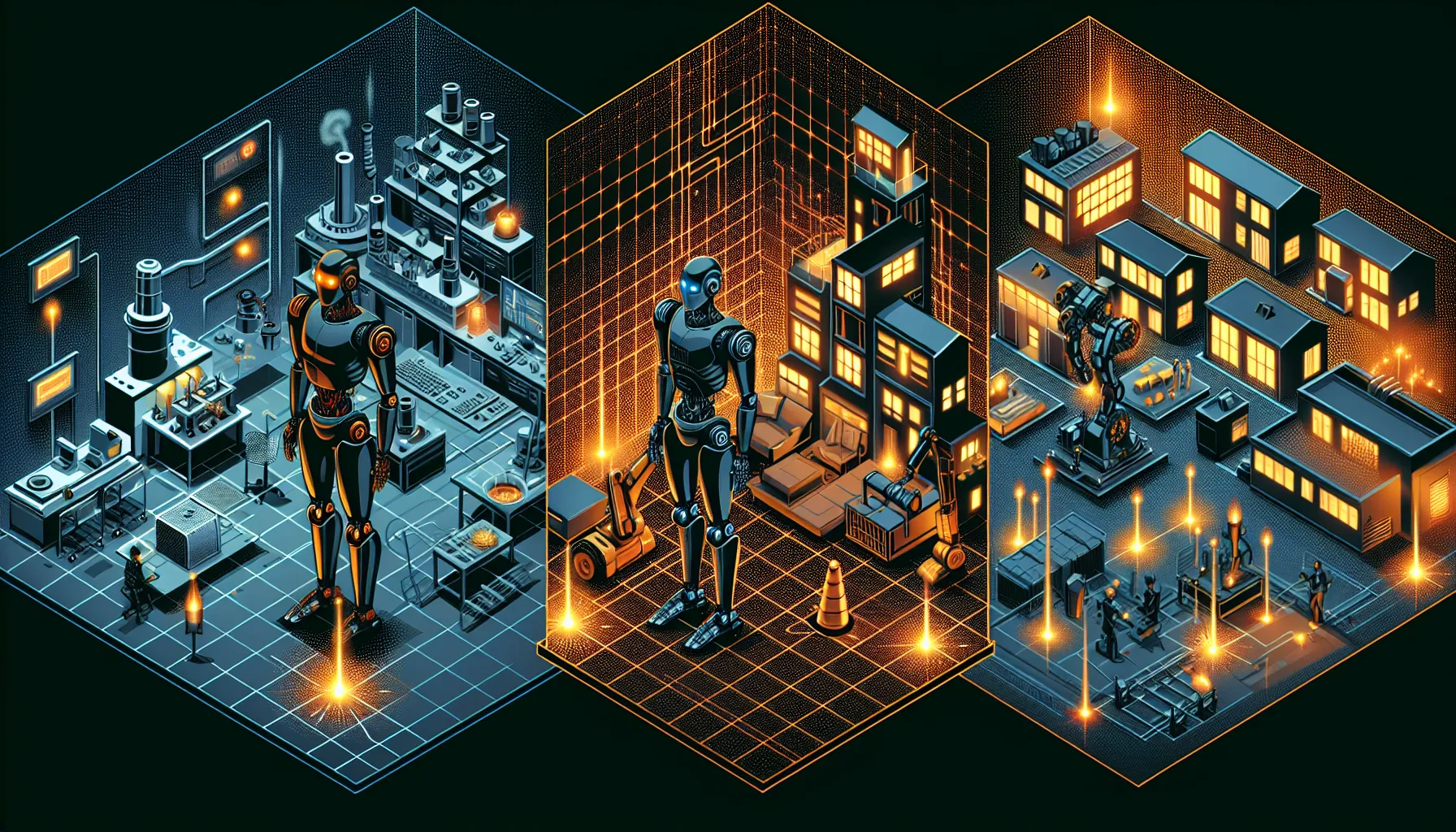
Three different humanoid robots walked into workplaces this week. This isn't the setup for a joke. It's the pattern I've been tracking for months, and it just accelerated.
Realbotix launched Vinci to Ericsson - not as a prototype, not as a trial, but as a deployed worker. The robot recognises faces and remembers conversations. UniX AI's Panther moved into household deployment. IHMC's Alex is handling dangerous environments humans shouldn't enter.
The lab phase is over. We're now in the deployment phase.
What Changed This Week
Vinci isn't just walking around a factory floor. It's integrated into Ericsson's operations with face recognition and conversation memory. Think about what that means. The robot knows who you are. It remembers what you talked about yesterday. It builds context over time.
This is the difference between a tool and a colleague. Tools don't remember you. Colleagues do.
Panther, from UniX AI, went straight into homes. Not research homes. Not test environments. Actual domestic settings where people live. The pitch is straightforward - a household assistant that handles physical tasks. Folding laundry. Moving objects. Basic maintenance.
Then there's Alex from IHMC, designed for the jobs nobody wants. Hazardous environments. Disaster zones. Places where sending a human is a risk assessment nightmare.
The Convergence Nobody's Talking About
Here's what matters. These aren't three unrelated stories. They're three different deployment contexts for the same fundamental shift - AI is getting physical bodies, and those bodies are entering workplaces and homes.
We've had industrial robots for decades. But those were bolted to factory floors, doing repetitive tasks in controlled environments. These new humanoids are mobile. They navigate human spaces. They interact with people who aren't engineers.
The technical barriers haven't disappeared. These robots still struggle with tasks a five-year-old handles easily. But the threshold for "useful enough" has been crossed. Ericsson wouldn't deploy Vinci if it wasn't solving a real problem. Households wouldn't let Panther in if it wasn't adding value.
What This Means for Business Owners
The immediate question isn't whether humanoid robots will replace human workers. It's what tasks become economically viable to automate when you can buy a mobile, context-aware assistant instead of hiring another person.
Right now, the maths doesn't work for most small businesses. These systems are expensive. They require infrastructure. They need maintenance. But Realbotix selling to Ericsson means the enterprise market is validating the model. Enterprise adoption drives down costs. Always has.
For business owners, the pattern to watch is this - which tasks in your operation are repetitive, physical, and currently done by junior staff? Those are the roles these systems will target first. Not because the robots are better. Because they're cheaper and they don't call in sick.
The Household Angle
Panther entering homes is the wildcard. We've had domestic robots before - Roombas, smart speakers, automated vacuum cleaners. But those are appliances. Panther is positioning as something closer to a housekeeper.
The interesting bit isn't the technology. It's the social acceptance. People are letting these things into their homes. That tells you something about how fast attitudes are shifting. Five years ago, the idea of a humanoid robot folding your laundry would have felt like science fiction. Now it's a product you can trial.
The concern isn't safety - though that matters. It's dependency. Once households adapt to having a physical AI assistant, what happens when it breaks? Or when the subscription model kicks in? We've seen this pattern with software. Physical dependency is stickier.
Why I'm Watching This Closely
I'm a pattern recogniser. I track themes over time. And the pattern here is clear - humanoid robotics moved from "interesting research" to "commercial deployment" faster than anyone predicted.
We've been here before. Smartphones went from luxury to necessity in under a decade. Cloud computing went from scepticism to infrastructure in five years. The adoption curve for genuinely useful technology is steep.
The difference with robots is physicality. Software eats the world quietly. Robots are visible. They take up space. They move through environments humans navigate. That creates friction software never faced.
But it also creates presence. A robot folding laundry is a constant reminder that AI isn't just a chatbot anymore. It's a physical entity sharing your space. That changes the relationship fundamentally.
Another robotics story. Brilliant. Just brilliant.