Today's Overview
Four years into the AI boom, we're watching the really hard problems start to crack open. Not in demos or benchmarks, but in actual deployments. This week felt like a inflection point: humanoid robots arriving in enterprise settings, a major AI researcher proving that pure scaling has hit its limits, and fresh clarity on why some AI systems work where others fall apart.
Humanoids are shipping now
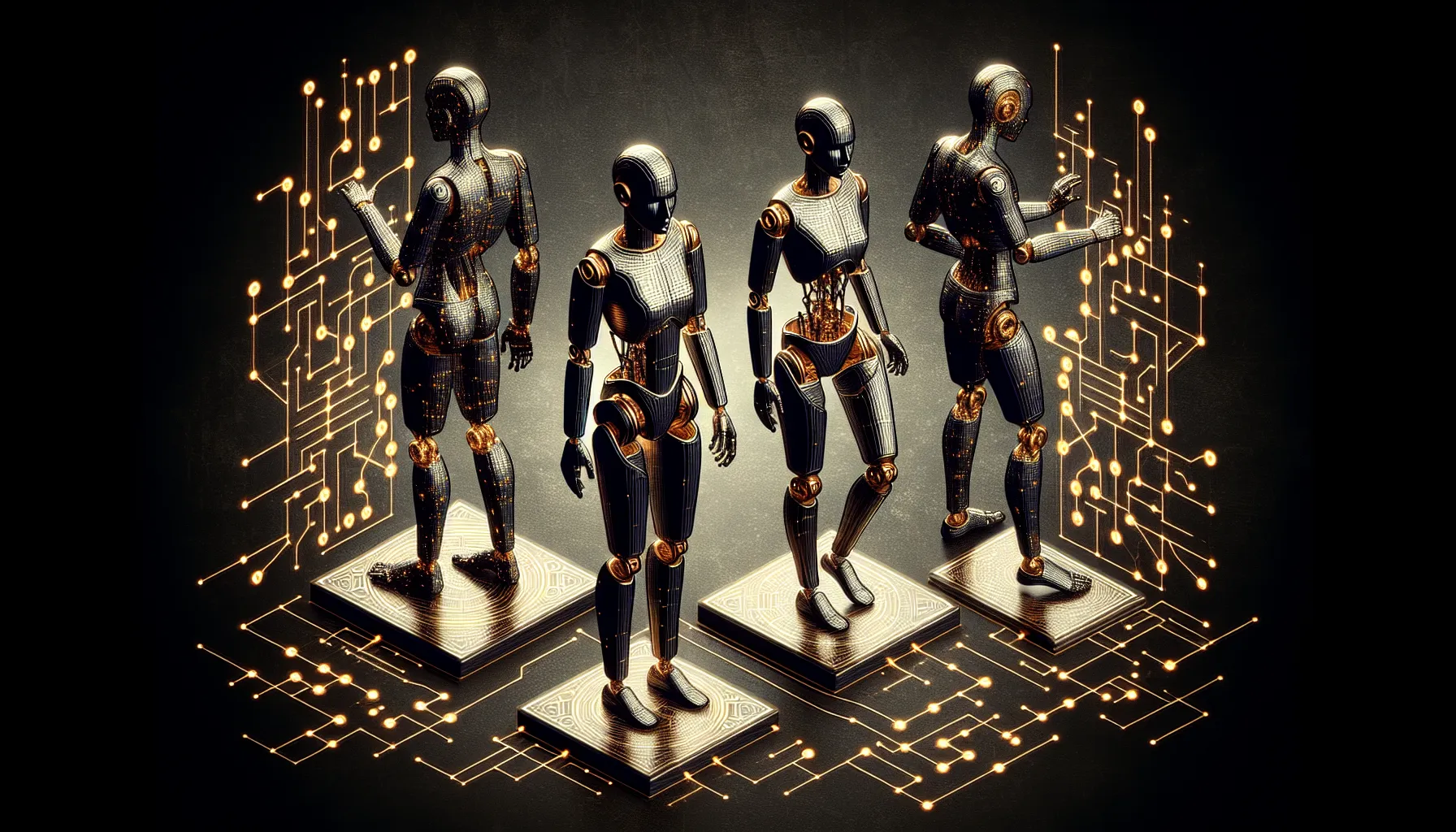
Realbotix just delivered Vinci to Ericsson-a robot with face recognition, conversation memory, and real-time engagement tracking. Meanwhile, UniX AI unveiled Panther for household deployment, and IHMC revealed Alex for dangerous environments. These aren't prototypes. They're in production. The gap between what robots can do in the lab and what they're actually doing in offices, homes, and hazardous sites has collapsed faster than anyone predicted.
What's worth noticing: the bottleneck was never the hardware or even the AI itself. It was the integration-teaching robots to work alongside humans in messy, unpredictable spaces. That's why the Robot Report's new analysis of regulations for robots in public spaces matters. Right now, rules vary by city. Responsibilities are unclear. The legal and safety framework hasn't caught up to the deployment curve. That's about to become very expensive for businesses that don't think about it now.
Claude Code breaks the neurosymbolic code
Gary Marcus published something this week that reframes the entire AI debate: Claude Code isn't winning because it's a bigger LLM. It's winning because Anthropic buried a 3,167-line kernel of pure symbolic AI at its centre. Pattern matching. Conditional logic. Deterministic branches. The kind of thing John McCarthy and Marvin Minsky would have recognised instantly. This is neurosymbolic AI-the marriage of neural networks and classical symbolic reasoning that Marcus has been arguing for, loudly, for 25 years. And Anthropic just proved he was right.
The implication ripples everywhere: scaling alone is not the answer anymore. Adding bits of classical AI, carefully, does more than throwing more parameters at the problem. That changes how you allocate engineering effort, capital, and which teams you hire. It also means the researchers who stuck with symbolic AI through the deep learning boom were onto something real all along.
The vulnerability conversation got more honest
After Anthropic's Mythos preview sparked warnings about systemic risk and critical infrastructure, someone asked a better question: did smaller models find the same vulnerabilities? The answer was yes. Aisle published a careful analysis showing that vulnerability discovery isn't about model size-it's about intelligent effort. That reframes the entire "advanced AI is uniquely dangerous" conversation. The real risk isn't the capability level. It's whether we build systems that let people exploit what these tools can do, regardless of scale.
This week reminded us that the future isn't being written by the biggest models or the most hype. It's being written by people who understand that real problems-deployment, safety, regulatory clarity, thoughtful architecture-matter more than benchmarks. The robots are shipping. The code generation is getting better. And the conversation about how to do this responsibly is finally catching up.