Stack Overflow just published an interview with Neo4j's CTO about Graph RAG, and buried in the technical discussion is a practical insight: most AI accuracy problems aren't model problems. They're context problems. The model doesn't know what it doesn't know, and vector search alone won't fix that.
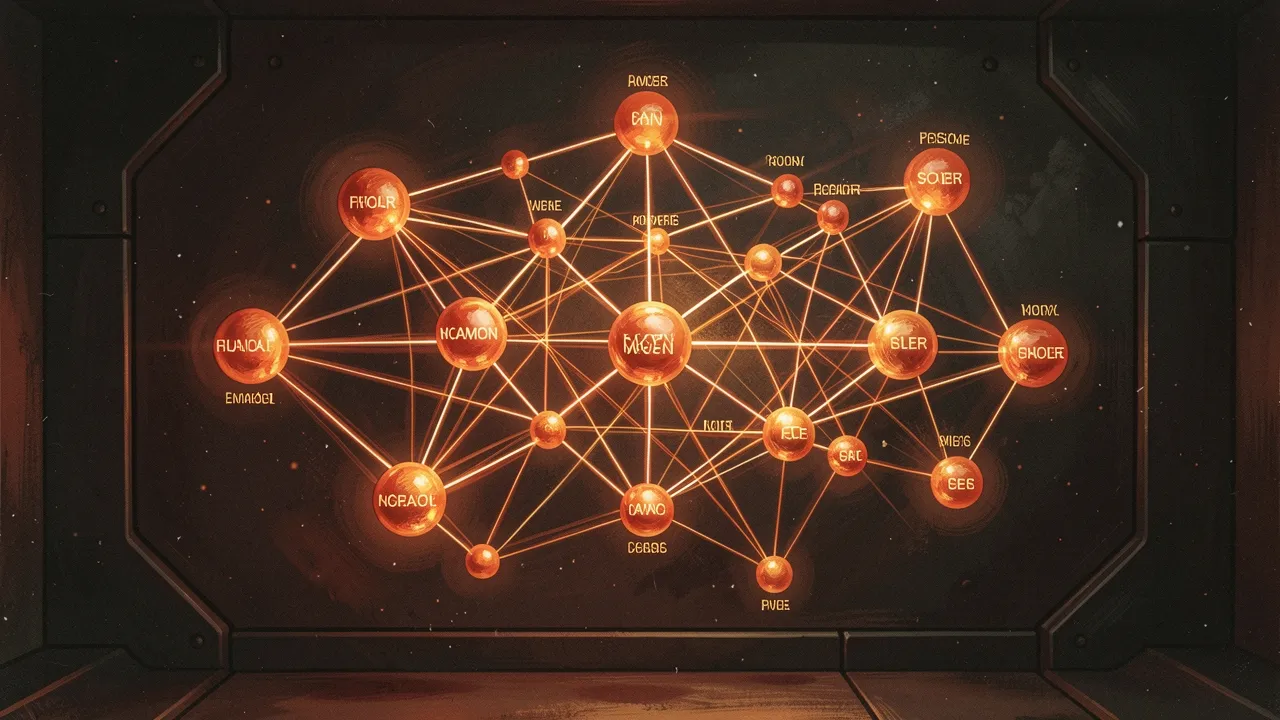
Graph RAG combines vector embeddings with knowledge graphs. Instead of retrieving disconnected chunks of text based on semantic similarity, you retrieve connected information - facts that link to other facts, with explicit relationships preserved. That structural context is what stops AI from confidently generating nonsense.
The Limits of Vector Search
Standard RAG (Retrieval-Augmented Generation) works like this: you embed documents into a vector space, then find chunks similar to the user's query and feed them to the model. It's better than relying on the model's training data alone, but it has blind spots.
Vector similarity is based on semantic proximity, not logical relationships. Two sentences can be semantically similar but factually unrelated. Or worse, contradictory. The model doesn't know which retrieved chunk is current, which is outdated, or how they connect to each other. It just sees a pile of text that happens to match the query.
The result is what Neo4j's CTO calls context rot. The retrieved information degrades in usefulness because it lacks structure. The model can't tell if it's looking at a complete picture or a random sample. So it fills in gaps with plausible-sounding fabrications.
How Graphs Change the Retrieval Game
A knowledge graph encodes relationships explicitly. Not just "these concepts are related" but how they're related. Person A works at Company B. Product C is built with Technology D. Policy E was superseded by Policy F in March 2025.
When you query a graph, you don't just retrieve nodes - you retrieve paths. The answer to "What database does Product C use?" isn't just "PostgreSQL" - it's "PostgreSQL, because Product C is built with Technology D, and Technology D requires PostgreSQL 15 or higher, as specified in ADR-047."
That's the difference. The model gets not just facts but the structure connecting those facts. It can trace dependencies, check for consistency, and reason about relationships in a way that flat vector retrieval doesn't support.
Graph RAG in Practice
The Neo4j interview walks through a real example: a support agent trying to diagnose a customer issue. With standard RAG, the agent retrieves documentation chunks that mention the error message. But those chunks might describe different product versions, different configurations, or solutions that worked six months ago but don't anymore.
With Graph RAG, the agent queries the graph: "What causes this error in version 3.2 for customers in the EU region?" The graph returns not just text snippets but a subgraph - nodes representing the error, the affected version, the regional configuration, and the known solutions, all with explicit edges showing how they relate.
The model sees the full picture. It knows version 3.2 has a specific edge case for EU deployments that was patched in 3.2.1. It can recommend the patch with confidence because the graph encodes the version history and the fix timeline. No hallucination. No outdated advice. Just accurate information drawn from structured context.
The Technical Implementation
Graph RAG isn't a replacement for vector embeddings - it's an enhancement. You still embed text for semantic search, but you also extract entities and relationships from your documents and store them in a graph database.
When a query comes in, you do two things in parallel: run a vector search to find relevant text, and run a graph query to find relevant structures. Then you combine the results before feeding them to the model. The model gets both semantic matches and relational context.
Neo4j's tools automate most of this. You point them at your documentation, and they extract entities (products, people, technologies, policies) and relationships (builds, requires, replaces, reports to). The graph becomes a live map of your knowledge base, updated as documents change.
When This Actually Matters
Graph RAG makes the most difference when your knowledge base has high interconnectedness. If your documents are standalone FAQs with no dependencies, vector search is probably fine. But if your domain has products with versions, APIs with dependencies, policies with revision histories, or teams with reporting structures, the graph layer pays off quickly.
The Neo4j CTO points to customer support and internal knowledge management as the low-hanging fruit. Both domains have rich relational structure. Both suffer from the "old documentation" problem - answers that were correct last year but aren't anymore. Graphs let you encode temporal relationships: "This policy was valid until March 2025, then replaced by this policy."
Development teams using AI coding assistants hit the same problem. The model suggests a library that was deprecated. Or it generates code that worked in version 2.x but breaks in 3.x. With Graph RAG, the model knows the current version, the migration path, and the breaking changes. It generates code that's not just syntactically correct but contextually accurate.
The Accuracy Boost
Neo4j cites internal tests showing Graph RAG reduces hallucinations by 40 to 60 percent compared to vector-only retrieval. That's a significant jump. The mechanism is straightforward: when the model has structured context, it has fewer gaps to fill with guesses.
For teams deploying AI agents in production, that accuracy improvement is the difference between "useful assistant" and "liability we have to monitor constantly." Forty percent fewer wrong answers means fewer escalations, fewer corrections, and more trust from users.
Where This Is Heading
The interview touches on a broader trend: AI systems are moving from retrieval to reasoning. Early RAG just fetched relevant text. Graph RAG fetches relevant structure. The next step is letting the model traverse the graph itself - following relationships, checking constraints, and building answers from first principles rather than pattern-matching on text.
That's already possible with some graph databases. You give the model a graph query language and let it explore. The model can ask follow-up questions, drill into specifics, and verify its reasoning by checking the graph for contradictions. It's a different level of reliability.
For developers building AI-powered tools, the practical takeaway is simple: if your system relies on accurate retrieval from a complex knowledge base, adding a graph layer isn't optional anymore. It's the difference between a tool people trust and a tool they second-guess.