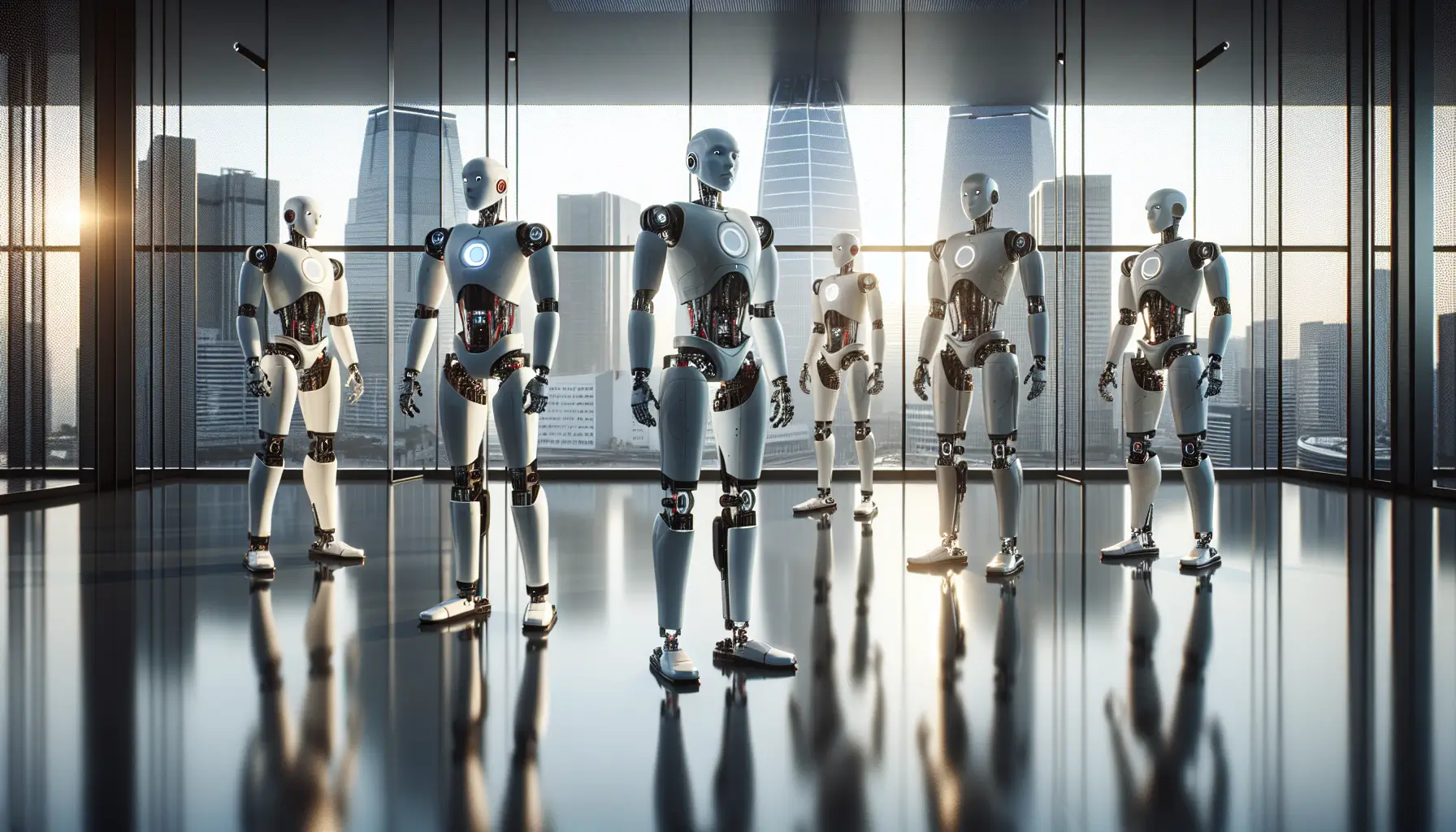
Next week, something unusual happens in Seoul. Five of China's leading humanoid robot manufacturers - AGIBOT, Fourier, Huawei, Leju, and Unitree - will exhibit together at Automation World. It's the first time they've done this outside China. And they're not bringing concept videos. They're bringing working robots.
This matters because it signals a shift from prototype theatre to actual product. For years, robotics conferences have been heavy on promises and light on demos you could buy. That appears to be changing.
Why Seoul, why now
The timing is deliberate. South Korea has been making serious commitments to robotics investment, and these manufacturers are positioning themselves for partnership and export opportunities. The fact that they're exhibiting together rather than separately suggests coordination - possibly government-backed - to establish China as the credible centre of humanoid robotics manufacturing.
Unitree has already demonstrated robots that can navigate complex terrain and perform basic manipulation tasks. Fourier's rehabilitation robots are in clinical use. AGIBOT has shown warehouse automation systems. These aren't vaporware companies. They're building things that work, today, at price points Western manufacturers struggle to match.
The commercialisation question
The conference agenda includes discussions on commercialisation strategy, which is where this gets interesting. The technical capability exists. The manufacturing infrastructure exists. What hasn't existed - until recently - is a clear path to market beyond pilot programmes and research installations.
That's changing. Manufacturing facilities in China need automation to address labour shortages. Logistics companies need warehouse robots that can work alongside humans. Healthcare providers need rehabilitation and mobility assistance. The market is there. The question is whether these robots can deliver reliable ROI in real operating conditions, not just controlled demos.
For business owners watching from outside Asia, this matters. If Chinese manufacturers crack the commercialisation puzzle - reliable robots at competitive prices with real after-sales support - the dynamics shift quickly. Western robotics companies have traditionally competed on sophistication and precision. If Chinese competitors can deliver "good enough" performance at half the cost, procurement decisions get simpler.
What this means for the robotics market
Market consolidation is happening. Not through acquisition, but through credibility. Companies that can demonstrate working products, consistent manufacturing, and genuine commercial deployments separate themselves from the dozens of well-funded robotics startups showing impressive videos.
The Seoul exhibition is essentially a statement: we're ready for international business. Whether international buyers are ready to commit to Chinese robotics suppliers - with all the geopolitical and supply-chain considerations that entails - remains the open question.
What's clear is that the conversation is shifting from "can humanoid robots work?" to "who can deliver them reliably, and at what cost?" That's the transition from research to industry. And it's happening faster than most people expected.