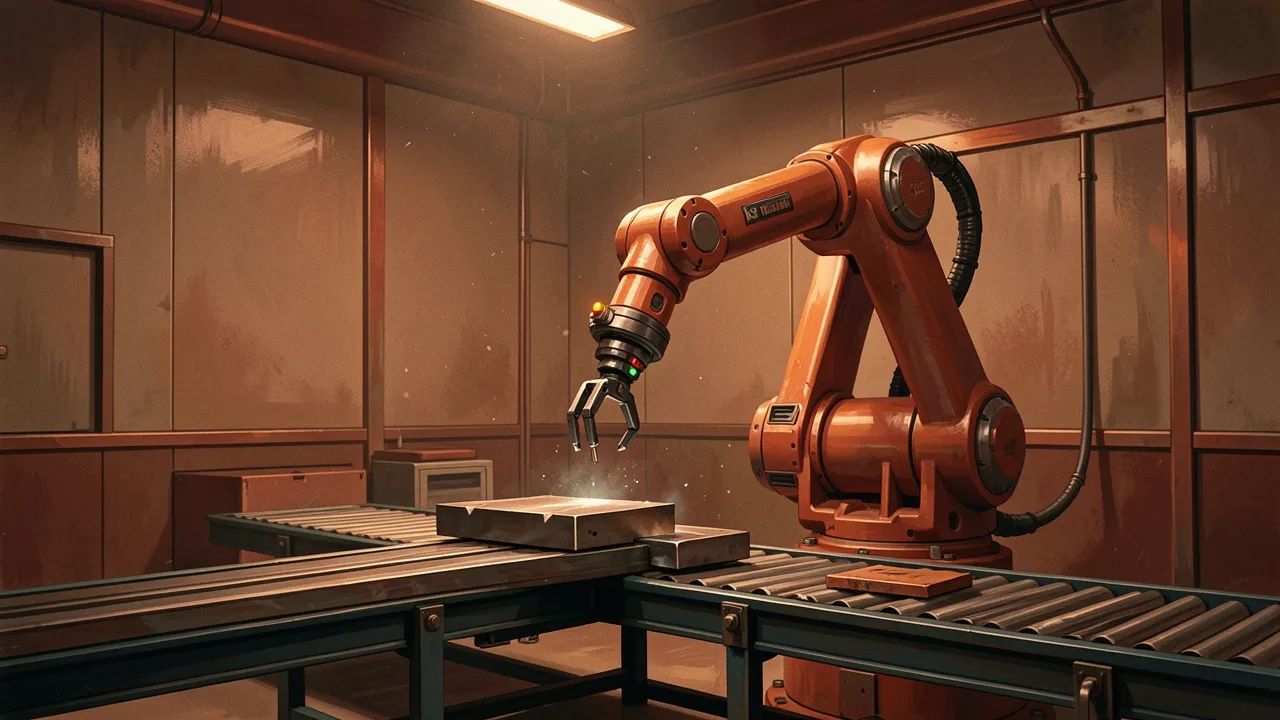
Manufacturing has a problem. Traditional collaborative robots are safe enough to work alongside humans, but too slow for industrial work. Industrial robots are fast, but need cages and safety zones. ABB's new PoWa cobot family is designed to split the difference.
The specs tell the story: payloads up to 30kg, speeds reaching 5.8 metres per second, and one-hour setup times. That's significantly faster than existing cobots while maintaining the collaborative safety features that let them work in shared spaces. ABB is targeting manufacturers who need automation without the complexity of traditional industrial robots.
The Market Gap
The collaborative robot market is growing at 20% annually, but most cobots are optimised for light assembly work. Pick small parts, place them carefully, repeat. They're brilliant at precision tasks where speed doesn't matter. But manufacturers running palletising operations or moving heavier components have been stuck choosing between slow cobots and caged industrial robots.
PoWa - short for Power and Watts, apparently - is ABB's attempt to serve that middle ground. The 30kg payload capacity puts it in range for tasks like loading CNC machines or handling automotive components. The speed means cycle times that actually make sense for production environments.
The one-hour setup claim is significant. Traditional industrial robots can take days to program and commission. Even existing cobots often need specialist integrators. If ABB has genuinely made setup simple enough for in-house teams to handle in an afternoon, that changes the maths for mid-sized manufacturers.
Safety Without Cages
The technical challenge here is maintaining collaborative safety ratings at industrial speeds. Cobots work alongside humans because they have force-limiting features and collision detection. When something goes wrong - a person steps into the work envelope, a part shifts unexpectedly - the robot stops before anyone gets hurt.
At 5.8 metres per second, that's harder to guarantee. The robot needs faster sensors, better prediction algorithms, and more responsive braking. ABB hasn't published the technical details yet, but the safety certification process for collaborative robots at these speeds is rigorous. They'll have done the work.
The practical benefit is flexibility. A PoWa cobot can handle morning shifts doing heavy palletising work, then switch to lighter assembly tasks in the afternoon without anyone needing to reconfigure safety zones or install new guarding. That operational flexibility is what manufacturers actually pay for.
What This Means for Builders
For anyone integrating robotics into production lines, PoWa sits in an interesting spot. It's fast enough to justify the investment for tasks that would previously need an industrial robot, but simple enough that you don't need a dedicated automation team to manage it.
The question is whether one-hour setup holds up in practice. Setup time claims from robot manufacturers often assume ideal conditions: clean work environments, standard mounting points, simple rectangular parts. Real factories are messier. Parts arrive with variation. Fixtures need custom brackets. Software integrations take longer than expected.
But if ABB has genuinely simplified the deployment process - and their track record with YuMi and GoFa cobots suggests they understand what makes setup painful - then PoWa could change buying decisions for thousands of mid-sized manufacturers who've been on the fence about automation.
The 20% annual growth in the cobot market isn't slowing down. It's being driven by manufacturers who need automation but can't justify the capital costs and complexity of traditional industrial robotics. PoWa is ABB's bet that there's a large slice of that market waiting for something faster, stronger, and still safe enough to work alongside people.
The robotics industry is converging on this middle ground. Not collaborative robots that compromise on speed, not industrial robots that need expensive safety infrastructure, but machines that can do both depending on what the production schedule needs that day. That's the category ABB is trying to define.