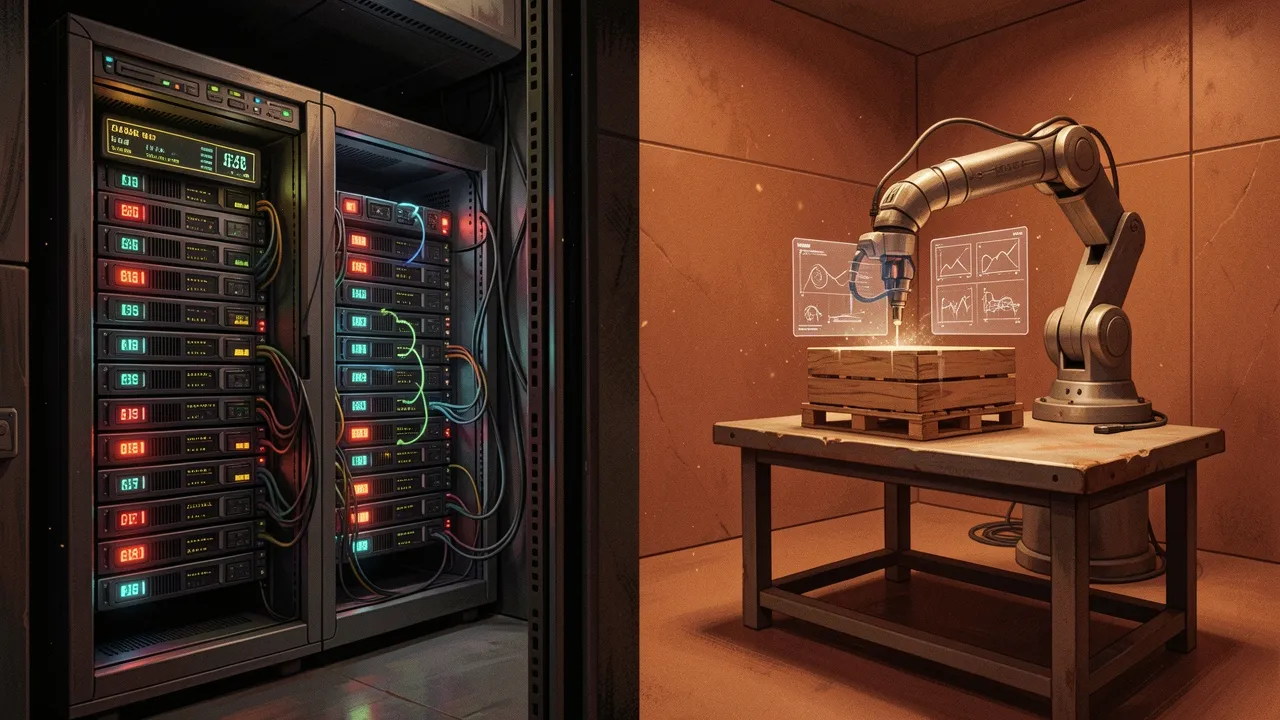
Today's Overview
DeepSeek dropped V4 this week, and the pricing is forcing everyone to recalculate. At $1.74 per million input tokens and $3.48 per million output tokens, it undercuts Claude and GPT-4o significantly. The model brings a 1 million token context window, MIT licensing, and dual modes (thinking and non-thinking). For teams building AI agents at scale, this changes the cost basis of the entire operation. One developer running it in production since launch reports that the long-context tasks are finally viable-full conversation logs without truncation. That matters for stateful agents that need to remember across sessions.
What's Shifting in Agent Development
The interesting part isn't just the benchmarks. OpenAI's Noam Brown said it plainly this week: intelligence is now a function of inference compute, not training compute. You can't compare models by a single number anymore. What matters is intelligence per token, or intelligence per dollar. This flips the strategy. For years, American labs optimised for "more compute, better benchmarks." Chinese labs, constrained by chip embargoes and capital limits, asked a different question: how much real capability can we deploy per token? DeepSeek's answer is shipping in production now.
Builders testing V4 Pro report better function calling reliability and faster reasoning mode-8-15 seconds for multi-step planning versus V3. For agent automation workflows where you're running thousands of tasks monthly, the cost difference between V4 Pro and Claude Sonnet 4.6 (which costs 3x more on input, 4x more on output) compounds quickly. That's not a benchmark improvement. That's a spreadsheet improvement. Hiring decisions change on spreadsheet improvements.
Robot Tooling Accelerates
On the robotics side, validation and simulation are getting faster. A developer validated a NASA humanoid robot model (Robonaut 2) in minutes using RoboInfra-no ROS setup, no Blender, no local infrastructure. URDF validation, kinematic analysis, and 3D preview all happened in the browser. This is the opposite of the robot industry's traditional friction. You used to need weeks of environment setup before you could even check if your model had joint misalignment. Now: upload, validate, iterate. That's how you catch chain issues early.
ABB Robotics launched the PoWa cobot family this week targeting the gap between traditional cobots and industrial robots. Higher payloads (7-30 kg), faster speeds (5.8 m/s), compact design. The market is growing 20% annually, and manufacturers want automation without the operational complexity. PoWa runs on ABB's OmniCore controller with no-code programming and one-hour unboxing-to-operational setup. This is cobots moving into real manufacturing work, not just assembly tasks.
The common thread: tools are removing friction from the slow parts of technical work. Agent development used to require expensive reasoning compute; now it's 4x cheaper and more reliable. Robot validation used to require full local environments; now it's browser-first. Neither solves the hard problem, but both compress the time between idea and test. That matters more than most benchmarks.