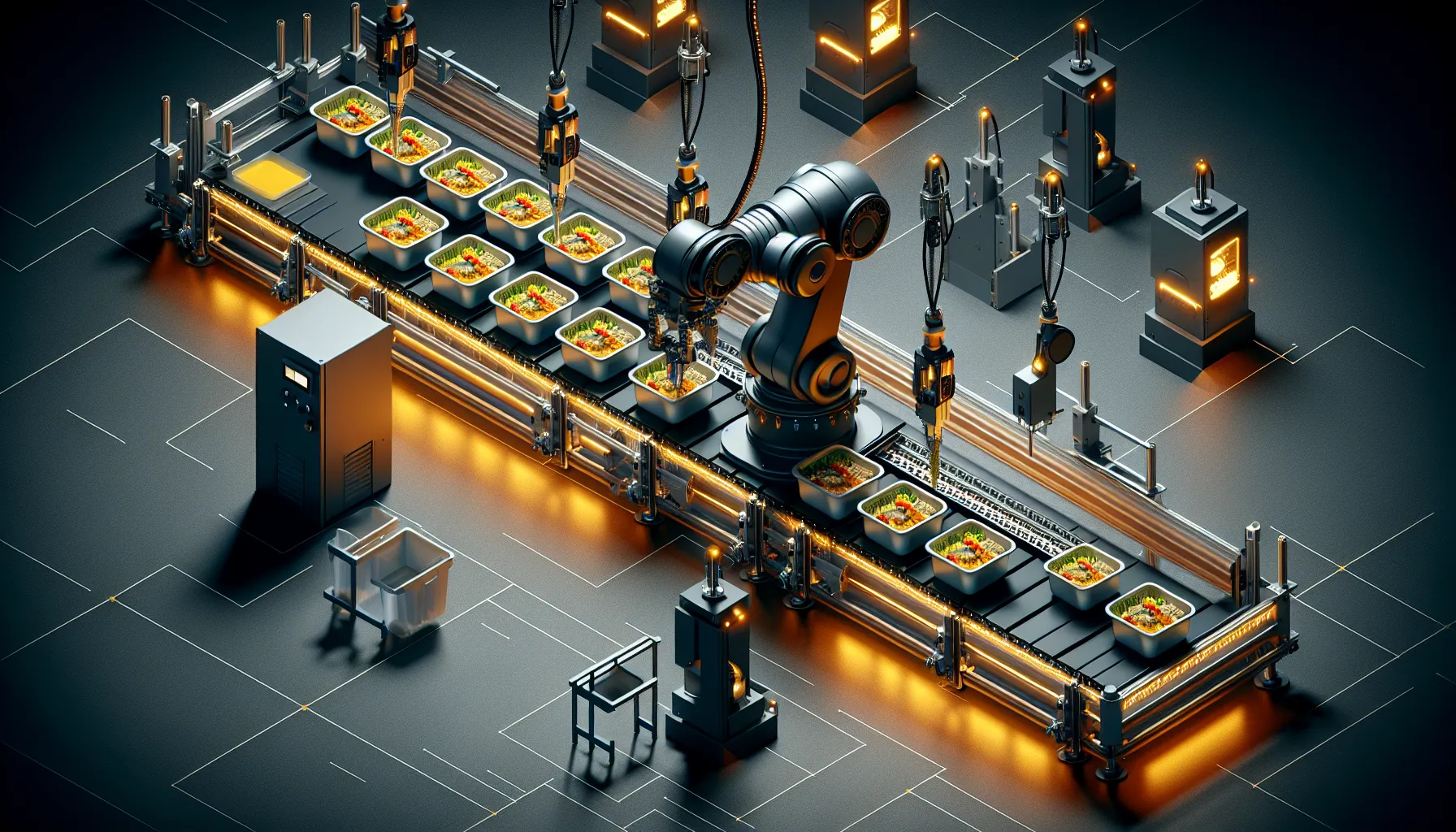
A robot at Chef Robotics just plated its 100 millionth meal. That milestone arrived faster than anyone expected - the company doubled its cumulative servings in under a year. But the number itself isn't the story. It's how they got there.
Most robotics companies train their systems in simulation, building virtual kitchens where digital robots flip thousands of burgers before touching real food. Chef Robotics did the opposite. They deployed robots into production facilities and let them learn by doing actual work - assembling meals on real assembly lines, handling real ingredients, dealing with real mess.
The result is what the company calls the largest real-world food-manipulation dataset in existence. Not virtual data. Not lab conditions. Millions of data points from production environments where temperature fluctuates, ingredients vary, and humans work alongside machines.
Why Food Is Harder Than It Looks
Pick-and-place robots have been sorting components in factories for decades. Food breaks those systems. A screw is a screw - consistent weight, predictable grip points, identical every time. A scoop of pasta salad is never the same twice. Different moisture content. Variable density. Sticky bits. Fragile ingredients that can't be crushed.
Traditional robotics handles variation by constraining the environment. Pre-portion everything. Use standardised containers. Control every variable. Chef Robotics went the other direction - they built robots that adapt to the chaos of real kitchens.
The advantage of training on production data is specificity. The robot doesn't just learn "how to scoop" in the abstract. It learns how to scoop this particular grain bowl when the quinoa is slightly overcooked and the container is 15% fuller than usual. It learns the difference between fresh guacamole and day-old guacamole. Small details that simulation misses.
What 100 Million Servings Actually Means
Context matters here. This isn't 100 million meals served to customers in restaurants. These are production facilities - the places that assemble meal kits, prep food for cafeterias, package salads for supermarkets. The work is repetitive, physically demanding, and difficult to staff.
A human worker assembling meal components all day faces real limits. Fatigue. Repetitive strain injuries. The brain fog that comes from doing the same motion 500 times. Robots don't get tired. They don't need breaks. They maintain consistent portion sizes at 3pm the same as 9am.
For food companies, that consistency translates directly to margins. Over-portioning costs money - too much chicken in every bowl adds up over millions of servings. Under-portioning risks quality complaints. Robots hit the target weight every time.
The Humans in the Loop
These systems don't replace entire kitchens. They slot into existing workflows, handling specific tasks while humans do the rest. A production line might have robots portioning proteins while workers add garnishes, seal containers, and run quality checks. The robot handles the repetitive bit. The human handles variation and judgment calls.
That division of labour matters for adoption. Food companies aren't ripping out their operations and rebuilding around robots. They're adding robots to lines that already work, solving specific bottlenecks without disrupting everything else.
What This Opens Up
The dataset Chef Robotics built - millions of real-world food interactions - is the moat. Competitors can build robotic arms. They can write control software. They can't replicate years of production data without years of production deployment.
That data compounds. Every new facility adds more edge cases. Every new ingredient type makes the system more robust. The robot that struggled with sticky rice six months ago now handles it smoothly because it's seen 50,000 variations of sticky rice in real conditions.
For business owners in food production, this crosses a threshold. The technology isn't experimental anymore. 100 million servings is proof of durability. These robots survive real kitchens - heat, moisture, 24-hour shifts, the occasional dropped tray. They're not lab equipment. They're production tools.
The question now isn't whether robots can handle food assembly. It's which parts of the process make sense to automate, and how quickly the economics pencil out for mid-sized producers who can't afford custom automation.
Chef Robotics doubled their servings in under a year. That acceleration suggests they've moved past early adoption into genuine scale. The next 100 million will come faster.