Today's Overview
Something fundamental shifted in how teams build with AI this year, and it's worth understanding if you're working with language models at any scale. For years, the standard approach was straightforward: write a detailed prompt, tweak it endlessly, hope it works consistently. But as systems got more complex and teams grew larger, that approach started breaking under its own weight. Anthropic's Skills framework, launched early this year, isn't a minor update-it's a recognition that prompts themselves had become the bottleneck.
From Prompts to Structured Capability Units
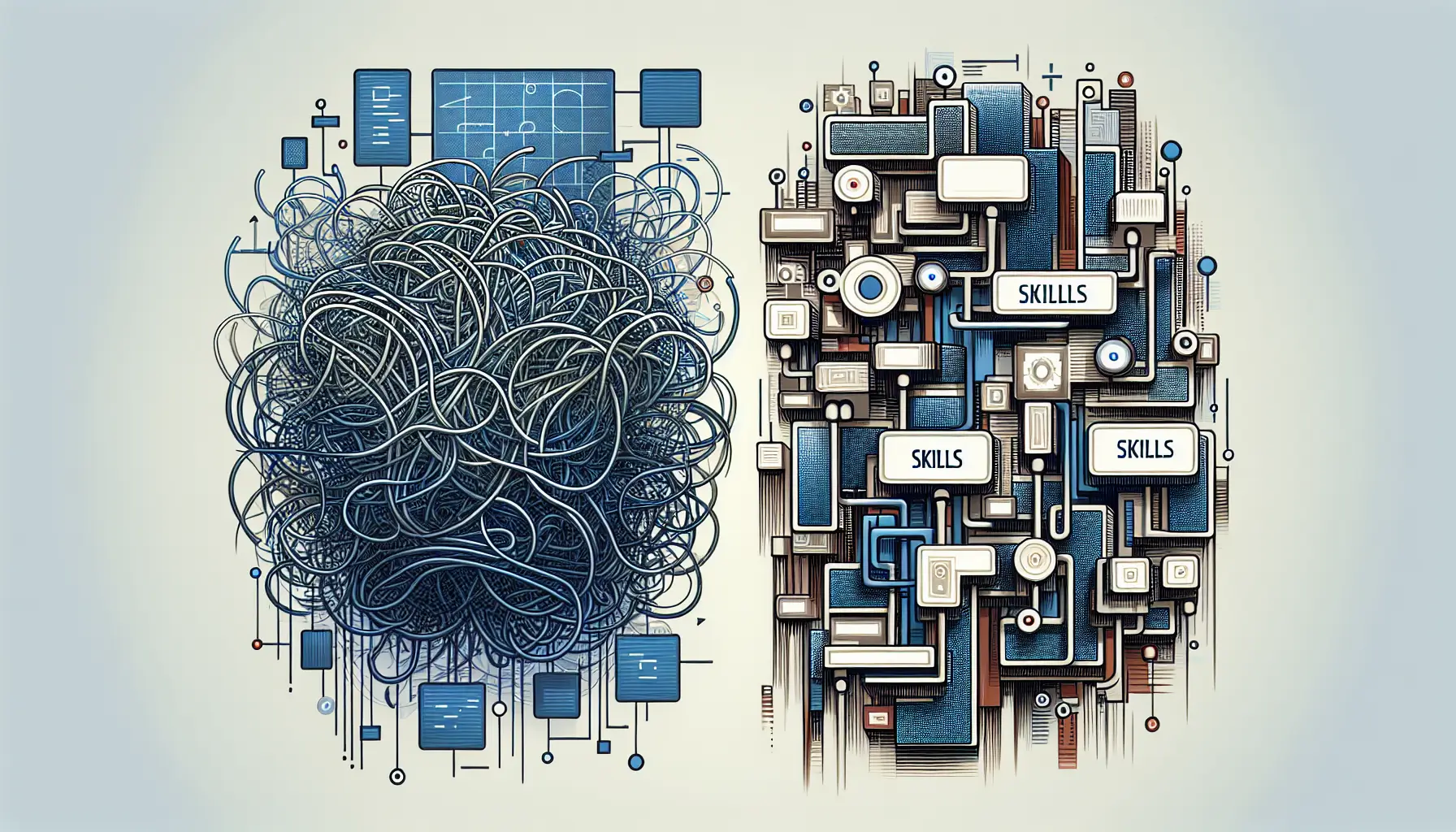
The distinction matters. Prompts are conversations-flexible, intuitive, but fragile at scale. You stuff all your instructions into a system message, hope the model remembers them all, and deal with context bloat that eats away at actual useful information. Skills, by contrast, are contracts-structured, modular, auditable. They tell a model exactly what to do through declarative task specifications, not persuasive natural language. A well-written Skill can be reused across platforms, versioned properly, and composed with other Skills like building blocks. This isn't just cleaner code-it's fundamentally different engineering.
What's driving the shift? Three pain points became impossible to ignore. First, long prompts accumulate noise. Models drift on key constraints mentioned early in massive instruction blocks. Second, reusability collapsed. A prompt tuned for one use case rarely transferred anywhere else without starting from scratch. Third, you couldn't control execution precisely. You had to trust the model to figure out when to call tools, what to do with ambiguity, whether to stop-unacceptable in regulated domains like finance or healthcare. Skills fix all three by introducing progressive disclosure (only expose relevant information at each step), true composability (build hierarchies of small, focused capabilities), and explicit control (define preconditions, execution steps, and outputs upfront).
What This Means for Builders
If you're managing teams building production AI systems, the shift to Skills matters now. Organizations still stacking long prompts are accumulating technical debt quietly. Those building Skills infrastructure early are creating competitive moats that will be hard to replicate. For developers, this means learning to decompose problems with modularity in mind-each Skill does one thing well. For product teams, it means your AI capabilities become reusable assets across products instead of locked into single implementations.
The practical win is time-to-production and stability. Less time tuning prose, more time on actual engineering. Code review works. Version control actually means something. Team collaboration becomes possible because everyone's not writing prompts in wildly different styles scattered across the codebase. Prompts won't disappear-they're still the fastest path for one-off exploration-but for anything running in production, anything that needs to scale, anything your team collaborates on: Skills have already become the practical choice.