Today's Overview
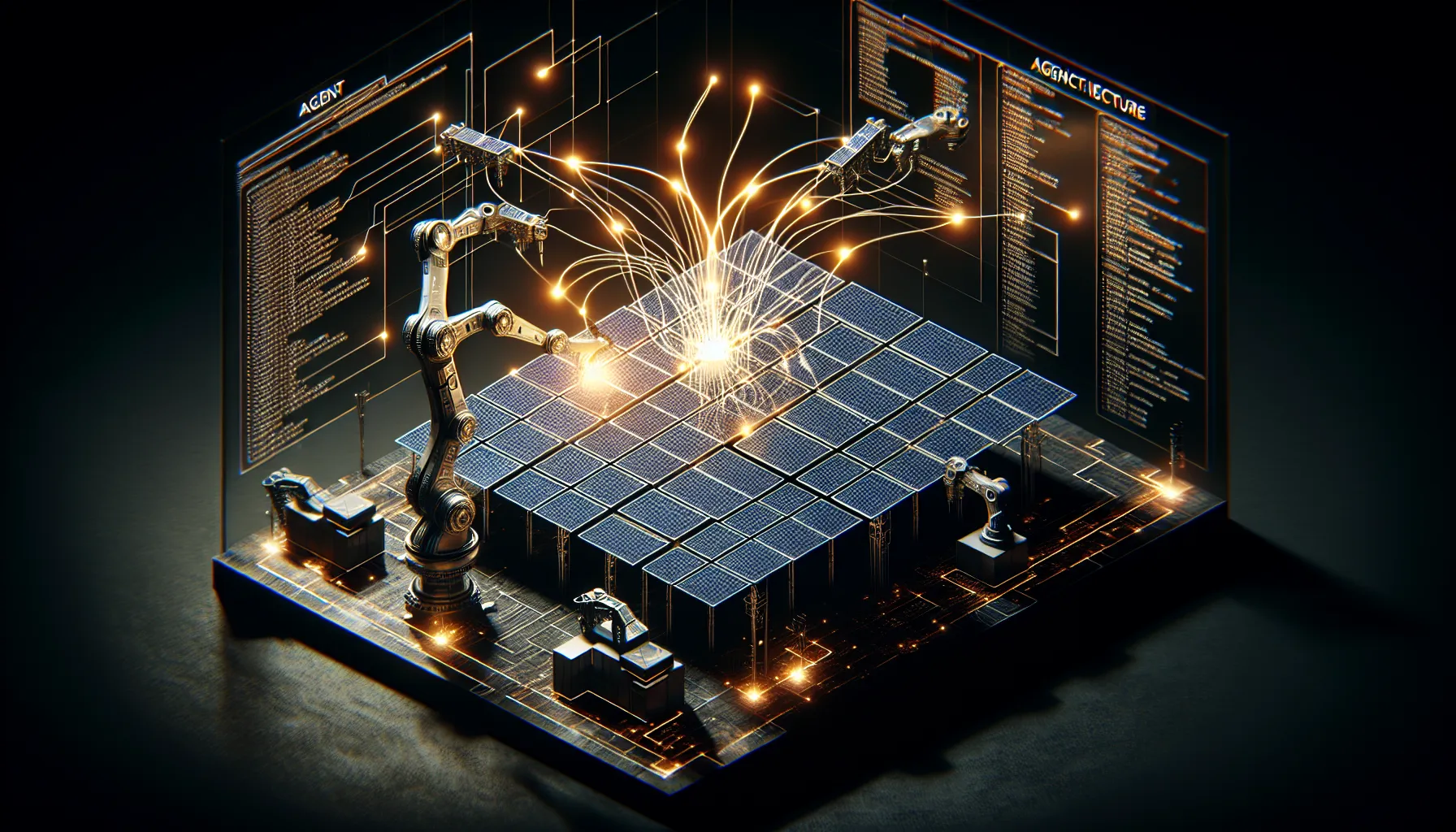
A robotics startup incubated by energy company AES just installed 100 megawatts of solar capacity using autonomous robots at a California facility. The system uses AI vision to handle real-world challenges-dust, wind, glare-and can place panels with submillimeter accuracy. Crews installed as many as 24 modules per shift hour per person, nearly double traditional methods in the region. It's the kind of work that's physically demanding, highly repetitive, and exactly what robots should be doing.
The Agent Architecture That Changes Everything
Marc Andreessen released a must-listen podcast this week where he articulated something that's been quietly reshaping how people think about AI systems. The breakthrough isn't just bigger models or faster inference-it's agents built on Unix principles. An agent, he argues, is simply: a language model plus a shell plus a filesystem plus markdown plus a cron job. No fancy protocols. No complex middleware. Just the latent power of systems we've understood for 50 years, now unlocked by AI that can actually use them. Your agent stores its state in files. It can inspect and modify its own code. It can migrate to different runtimes. It can extend itself. This isn't science fiction-people are already giving their agents bank accounts and watching them rewrite firmware on robot dogs.
Open Models Everywhere, Restrictions Starting
Google released Gemma 4 this week under Apache 2.0-a real open-weights release with 26B sparse mixture-of-experts models running locally on consumer hardware, and 31B dense models for serious workloads. The ecosystem was ready on day one: support landed immediately in vLLM, llama.cpp, Ollama, Unsloth, and across hardware from Intel Xeon to Apple Silicon. But the same week, Anthropic announced it's restricting Claude subscriptions from using third-party harnesses like OpenClaw, requiring separate pay-as-you-go billing starting April 4. The move is about capacity management, but it signals tension between open tooling and closed platforms competing for the same compute resources.
What's striking is the speed of the shift. Six months ago, the question was whether open models could compete with closed ones. Now it's about whether anyone can actually access the closed ones-and whether open alternatives running locally matter more than raw capability.