Today's Overview
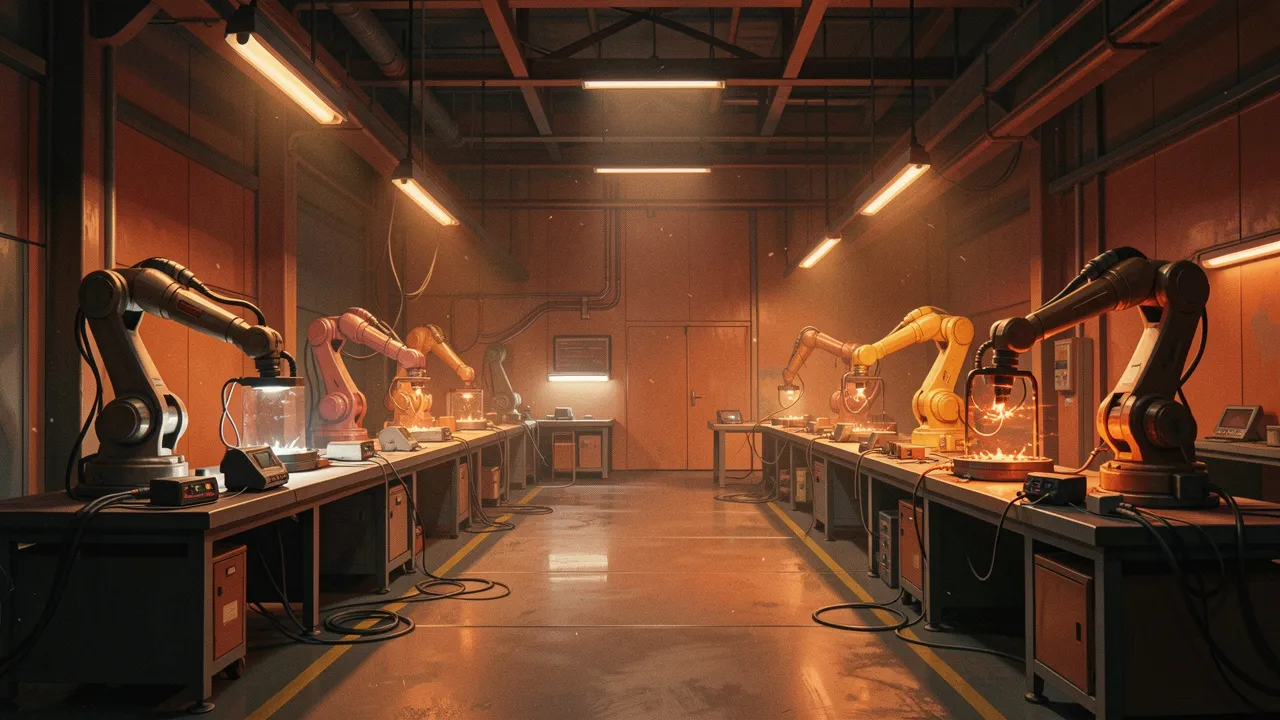
Figure AI hit a milestone this week that matters more than the headline numbers suggest: they're now producing one humanoid robot per hour at their BotQ facility, up from one per day in 120 days. That's not just throughput-it's proof that the manufacturing problem for physical AI is solvable. They've built 150 networked workstations, implemented 50+ inspection points, and achieved 80% first-pass yield at end-of-line. Each unit gets run through 80 functional tests including thousands of cycles of squats and presses. This is the unglamorous work that separates research from industry.
The Economics of Scale Are Breaking
Meanwhile, the inference cost structure everyone built their pricing models around just collapsed. DeepSeek released V4 Pro at roughly 90% cheaper than competing frontier models, with vision capabilities that rival or beat GPT-5.4 and Claude on certain benchmarks. They're using Huawei chips and optimising for what matters in 2026: cheap inference at scale, not training. The ripple effect is already visible-pricing frameworks built around $0.10 per 1K tokens don't work when someone's offering $0.001. This forces a reckoning: either you compete on cost (which means either cutting margins or finding a moat that pricing can't touch), or you compete on something else entirely: reliability, specific domain performance, or embedding into workflow that makes switching expensive.
Stripe's approach to usage-based billing for AI companies shows where the market is heading. Traditional SaaS pricing-seats, tiers, annual contracts-breaks down when your actual cost per user varies wildly based on model choice, context window length, and inference type. The companies winning are the ones building flexible billing that aligns charge metrics with true customer value, not just GPU burn.
Infrastructure Choices Harden
On the robotics side, we're seeing the same pattern: infrastructure decisions are locking in. Teradyne is expanding its footprint by deploying Universal Robots cobots and Mobile Industrial Robots (MiR) into Flex's own production facilities worldwide. It's a signal about which automation platforms are winning the enterprise integration game. Equally telling: Pudu Robotics raised nearly $150M at a $1.5B+ valuation, pivoting from consumer delivery toward industrial applications where the unit economics actually work.
The ROS community published a systematic comparison of global path planners-Dijkstra, A*, Theta*, and SMAC2D-across 3,000 randomised navigation tasks. The finding: there's no universal winner. Dijkstra and A* offer perfect reliability but slower computation. Theta* is fastest but fragile in cluttered spaces. SMAC2D balances speed, smoothness, and robustness. This matters because it kills the idea of a single "right" algorithm and forces teams to choose based on their actual constraints. That's how mature engineering works.
What's shifting underneath is the nature of the problem being solved. Production scaling for humanoids, cost-based competition in inference, infrastructure standardisation in enterprise robotics, and rigorous benchmarking of real-world algorithms-these aren't research problems anymore. They're engineering problems. And engineering problems have no shortcuts.