Today's Overview
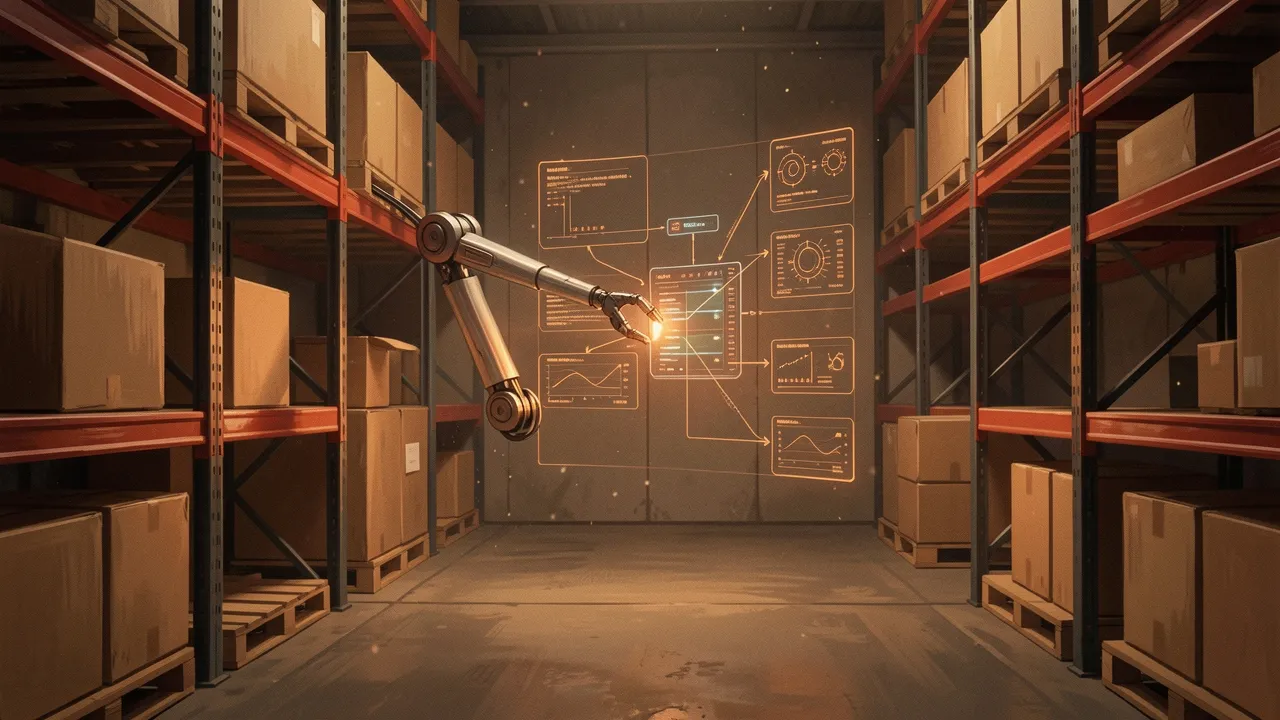
A humanoid robot walks through a warehouse in Duisburg, Germany. It inspects pallets, flags damaged products, and reports directly into the SAP system. No script. No fixed task list. Just visual inspection and real-time feedback. This is Accenture, Vodafone, and SAP's warehouse pilot-and it marks the moment physical AI stops being a research problem and becomes an operational one. The robot spent weeks training in a digital twin. Now it's working alongside humans, finding inefficiencies that static systems miss.
Two models, one week, two very different philosophies
OpenAI dropped GPT-5.5 on the same week DeepSeek released V4 Pro. They're not the same answer to the same problem-they're answers to different problems entirely. GPT-5.5 is built for speed and token efficiency. Perplexity built an internal tool in under an hour that would have taken days. Token usage dropped 56% on the same workflows. For anyone running production agents or real-time systems, that math changes hiring decisions. You need fewer machines. Fewer API calls. Smaller margins. DeepSeek V4 Pro takes the opposite bet: 1M context window, 1.6T parameters, MIT licensed, $1.74 per million input tokens. The play here isn't speed on short tasks-it's long-context reasoning that used to require hiring a senior engineer to think through the problem. Both are shipping with working code. Both are in production. The difference is who they serve: OpenAI is optimizing for the person running 10,000 small requests per day. DeepSeek is optimizing for the person who needs to hold an entire codebase in memory and reason about it.
What speed actually costs
The real story this week isn't the models themselves-it's what they reveal about the economics of inference. Azeem Azhar documented how Ukraine's drone units moved from seven-year weapon cycles to seven-day iteration loops. Not because their engineers were smarter. Because they removed the layers between the person who saw the problem and the person who could fix it. Direct feedback. Parallel experiments. Weekly redesigns. The cost per kill dropped from $60,000 to $1,000. The same principle runs through this week's AI releases. GPT-5.5 is a token-efficiency play: fewer tokens per task means fewer dollars per task means you can run more experiments, iterate faster, deploy cheaper. DeepSeek's long context is an architectural play: if you can fit the entire problem in one shot, you eliminate the round-trip latency between human and machine. Both compress the feedback loop. Both make the expensive part-thinking-cheaper and faster.
For anyone building systems that need to reason, decide, or optimize at scale, this matters. The robots in that Duisburg warehouse work because they were trained in simulation and deployed with real feedback. The agents running your code spend less time token-thrashing and more time solving. The models getting cheaper to run mean more people can afford to experiment with automation instead of waiting for a vendor to build the exact feature they need. That's not a marginal improvement. That's the difference between automation for the Fortune 500 and automation for the rest of us.