Today's Overview
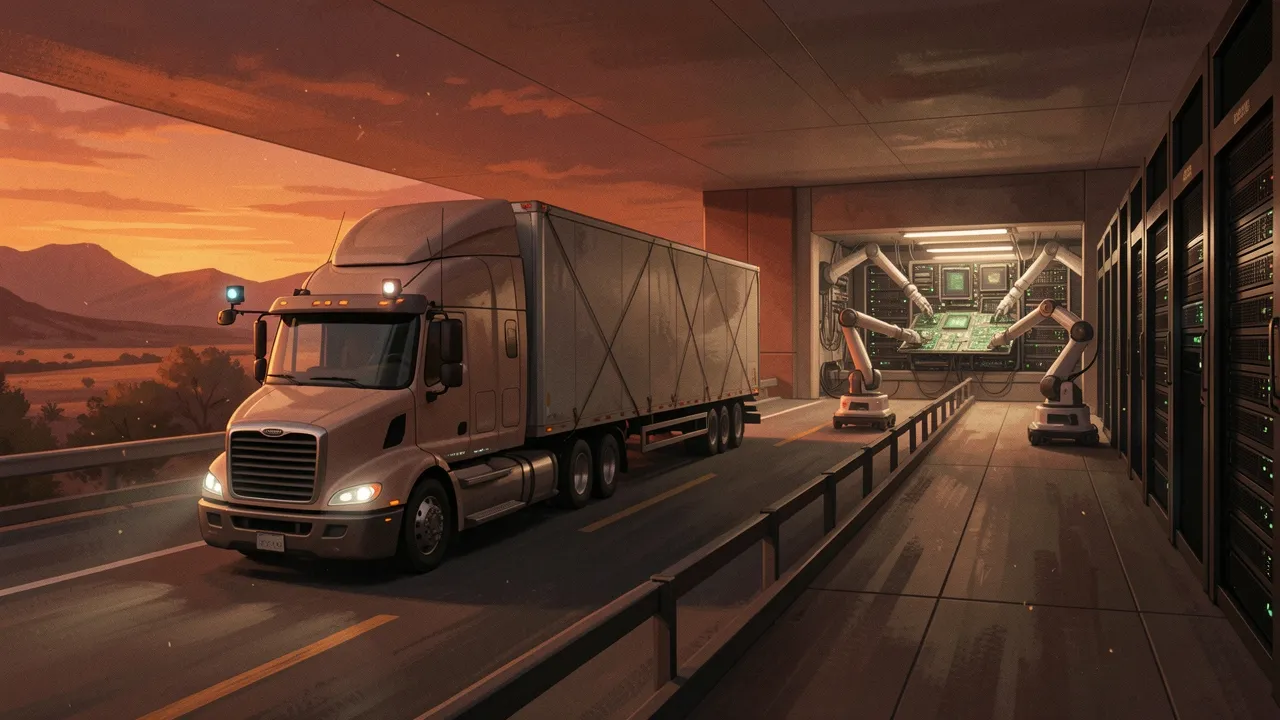
California just removed a major barrier for autonomous trucks. The state's Department of Motor Vehicles adopted new regulations allowing heavy vehicles (10,001 lbs and above) to test and deploy statewide for the first time. This isn't just policy theatre-it's a concrete signal that autonomous trucking is moving from pilot zones into operational reality. The rules require companies to demonstrate safety through structured testing phases, but once cleared, they can operate on California roads with Highway Patrol oversight. For logistics companies watching this, the timeline just got clearer.
Agents Are Now Doing More Than Code
The shift from "coding agents" to "general-purpose computer-use agents" accelerated this week. OpenAI released a substantial Codex update framed explicitly as "for everyone, for any task done with a computer." The update isn't just faster (42% faster computer use, according to their engineering notes)-it's broader. Codex now handles workflows across documents, slides, spreadsheets, and research tasks, with role-based onboarding guiding non-technical users. This matters because it signals a redefinition of what agent systems are for. They're not specialist tools anymore; they're becoming the interface between human intent and system execution.
Robotics Momentum in Manufacturing and AI Infrastructure
Teradyne Robotics reported $91 million in Q1 2026 revenue-their fourth consecutive quarter of growth. More interesting than the headline number: AI-related products now account for approximately 15% of quarterly sales, up from minimal contribution two years ago. The company's collaborative robots and mobile robots are seeing deployment across e-commerce warehouses, semiconductor manufacturing, and data centers. Teradyne is explicitly marketing robotics as infrastructure for AI data centers, positioning physical automation as essential to the compute scaling that everyone's betting on.
What connects these three threads is a practical reality: autonomous systems are moving from research into deployment. California's truck rules, OpenAI's agent expansion, and Teradyne's growth all point to the same momentum. Systems that were described as "emerging" a year ago are now embedded in operational workflows-carrying goods, processing documents, assembling hardware. For businesses watching these developments, the question isn't whether AI and robotics matter. It's whether you're positioned to use them before they become table stakes.