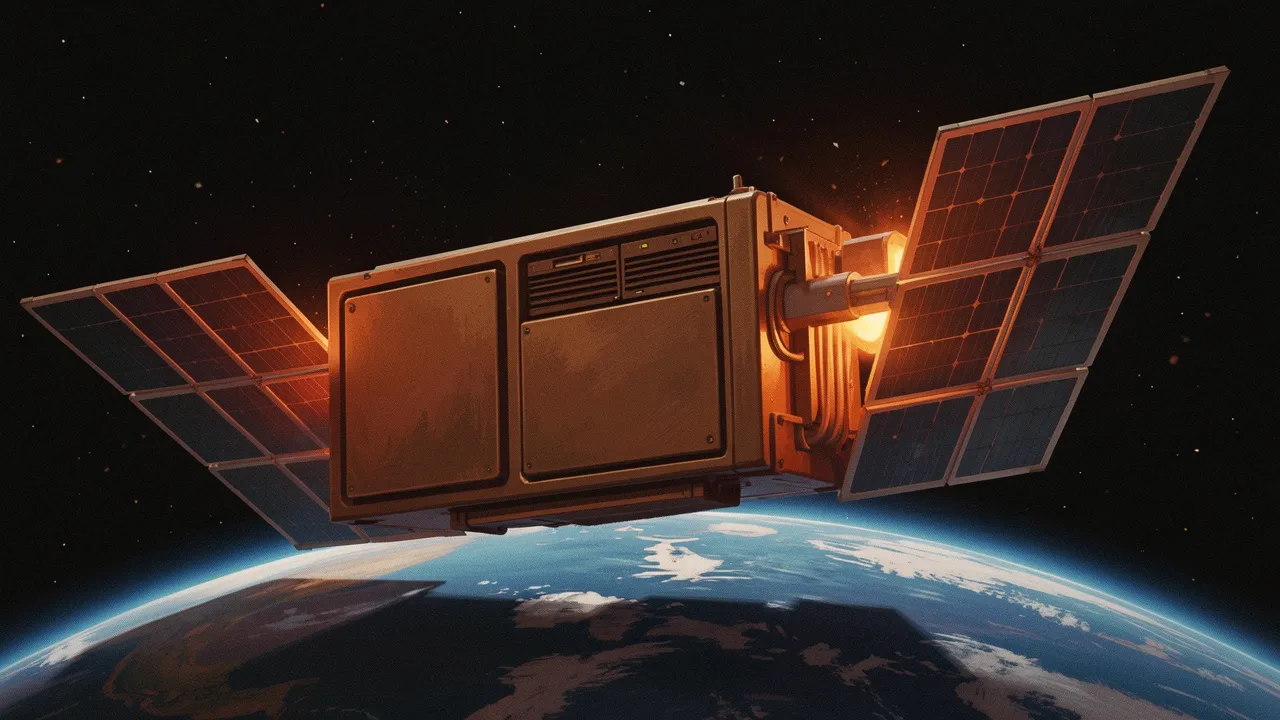
SpaceX is reportedly eyeing a $2 trillion valuation for its IPO. On current revenue - mostly satellite launches and Starlink subscriptions - that number makes no sense. But Ben Thompson has a theory that makes it plausible: space-based data centers for agentic AI inference.
It sounds like science fiction. It might be the only logical next move.
The Constraint Nobody's Talking About
Data centers are running into walls. Not technical walls - physical ones.
Power constraints: A single hyperscale data center can draw 100+ megawatts. Finding sites with access to that much electricity, close to fibre backbone, without triggering grid instability or local opposition, is getting harder. Utilities are saying no. Municipalities are saying no. The best sites are already taken.
Zoning constraints: Even when power is available, building permits take years. Noise complaints, environmental reviews, cooling water access - every new facility is a regulatory negotiation. The timeline from "we need capacity" to "the racks are online" is measured in multiple years, not quarters.
Cooling constraints: AI inference generates heat. Lots of it. Cooling that heat requires water or sophisticated air-handling systems, both of which add cost and complexity. In warm climates, cooling can consume nearly as much energy as the compute itself.
These aren't problems you solve with better chips or smarter software. These are hard limits imposed by geography, politics, and physics.
Why Space Solves the Wrong Problems Better
Orbital data centers sound absurd until you map them against terrestrial constraints:
Power: Solar panels in space receive uninterrupted sunlight - no night, no clouds, no seasonal variation. Energy density per square metre is higher, and there's no competing use for the "land" the panels occupy.
Cooling: Space is cold. Radiant cooling works without water, without fans, without the thermodynamic inefficiencies of atmospheric heat exchange. You're radiating waste heat into a 3-Kelvin background. It's not free, but it's simpler than any terrestrial system.
Zoning: There are no neighbours to complain about noise, no water rights to negotiate, no environmental impact statements for local ecosystems. Regulatory overhead shrinks to launch approvals and orbital slot coordination.
The trade-off, obviously, is latency. For most workloads - web requests, database queries, streaming video - orbital data centers are a non-starter. Round-trip time to low Earth orbit is 5-10 milliseconds. That's fine for batch processing, but terrible for interactive applications.
Agentic Inference Changes the Equation
Here's where it gets interesting. Agentic AI workloads - long-running reasoning chains, multi-step planning, background analysis - don't need sub-10ms responses. These are jobs that take seconds or minutes, not milliseconds.
An agent summarizing a legal document, researching a technical question, or planning a logistics route doesn't care if the compute happens 400 kilometres above the planet. The user submits a request, the system queues it, and the result arrives when it's ready. Latency-tolerant, high-compute, long-duration - exactly the profile that fits orbital infrastructure.
If the future of AI shifts from interactive chat to background agents handling complex tasks, the latency penalty of space stops mattering. What matters is cost per compute, energy efficiency, and the ability to scale capacity without waiting for municipal approval.
The Unit Economics
Thompson's argument hinges on whether orbital compute can be cheaper than terrestrial alternatives. Right now, it's not even close. Launch costs, radiation hardening, limited hardware lifespans - the economics are prohibitive.
But SpaceX has two advantages that change the math:
1. Starship's payload capacity: If launch costs drop to $10-20 per kilogram (Starship's stated goal), getting a rack of servers to orbit becomes economically viable. Current launch costs are orders of magnitude higher, but reusable heavy-lift capability rewrites the equation.
2. Starlink's network infrastructure: Inter-satellite laser links already connect Starlink nodes. A data center in orbit could use that mesh for low-latency cross-facility communication and ground-station downlinks without building new infrastructure.
The question isn't whether it's cheaper today. The question is whether the trajectory points toward cost parity within a decade. If it does, and if agentic workloads become the majority of AI compute demand, then orbital data centers stop being speculative and start being inevitable.
Why a $2 Trillion Valuation Might Make Sense
If SpaceX controls both the launch capability and the orbital infrastructure, they're not just a launch provider. They're the platform for off-world compute. That's a different business entirely.
Terrestrial data center operators - AWS, Azure, Google Cloud - are constrained by physics and politics. SpaceX wouldn't be. The first company to make orbital inference economically viable doesn't just capture a market. They create one that didn't exist before.
That's the kind of asymmetry that justifies absurd-sounding valuations. Not because the revenue is there today, but because the constraints everyone else faces don't apply. Whether it happens is still speculation. But the incentives are aligning in a way that makes it worth taking seriously.