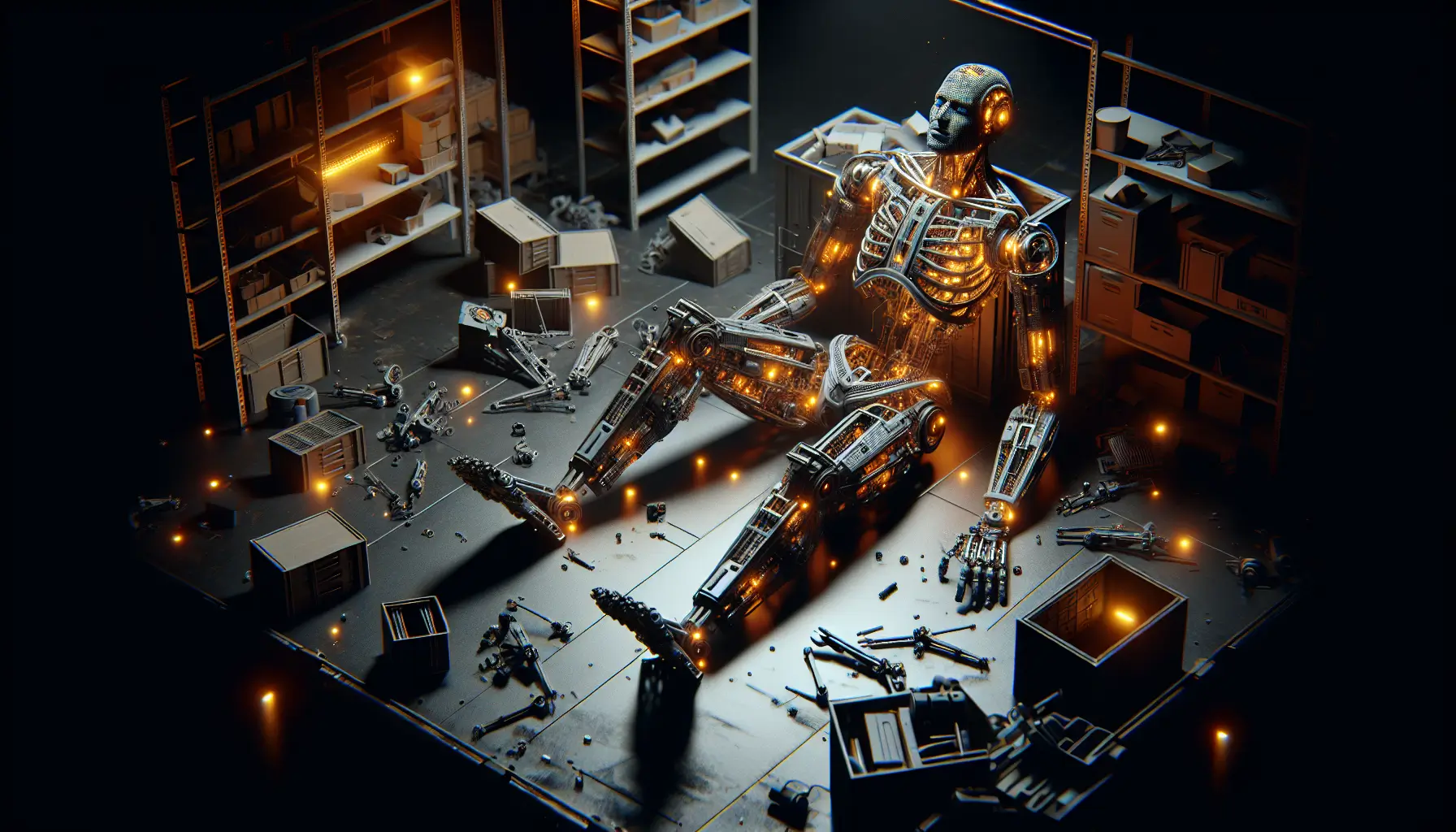
A robotics startup promised affordable humanoid robots. Six months later, it was dead. The former COO of K-Scale Labs just published a brutal post-mortem, and it's one of the most honest accounts of startup failure I've read in years.
This isn't about running out of funding or market fit. This is about the gap between Silicon Valley software thinking and the brutal physics of building actual robots.
The AI-will-fix-it trap
Here's where it started going wrong: K-Scale believed AI could replace proper hardware engineering. The thinking went - if the AI is smart enough, the hardware can be simpler. Get something moving, let the software compensate for mechanical imperfections.
In practice? The robot couldn't stand up reliably. No amount of clever algorithms could fix fundamental mechanical design flaws. You can't software your way out of physics.
This is the seductive lie of the AI era: that intelligence can substitute for engineering rigour. It can't. A wobbly joint is a wobbly joint, no matter how smart your control system.
Timeline fantasy vs manufacturing reality
The second mistake was timelines. K-Scale set aggressive deadlines based on software development cycles, not manufacturing realities. When you're building physical products, especially robots, everything takes longer than you think - then double that.
Supply chain relationships matter. Component lead times matter. Testing cycles matter. You can't iterate on hardware like you push code to GitHub. Every change means new parts, new assembly processes, new testing. The COO describes suppliers losing trust as K-Scale kept changing specs and missing payment schedules.
Once you burn those bridges, you're done. Manufacturing runs on relationships and predictability. Show up chaotic and cash-strapped, and you go to the back of the queue.
The overconfidence problem
But here's the deeper issue: overconfidence in what AI can actually do right now. K-Scale wasn't alone in this. The whole robotics space is drunk on the idea that foundation models have solved embodied intelligence.
They haven't. Language models are brilliant at language. Vision models are brilliant at vision. But making a robot navigate real-world physics, balance on two legs, manipulate objects without breaking them - that's a different problem entirely. And it's much, much harder than the hype suggests.
The COO's reflection is stark: they underestimated hardware complexity and overestimated AI capability. That's not a niche mistake. That's the defining mistake of the current robotics boom.
What actually works in robotics
Compare K-Scale to companies that are succeeding. Boston Dynamics spent decades perfecting Atlas before it could do backflips. Tesla's Optimus is backed by billions and realistic timelines. Even then, it's not in production.
The companies making progress have a few things in common: deep pockets, patient timelines, and respect for hardware engineering as a discipline unto itself. They're not treating robots as software problems with inconvenient physical constraints.
The real lesson
This failure matters beyond K-Scale. Right now, there's a flood of robotics startups pitching the same story: AI has changed everything, humanoid robots are finally viable, we can do it cheaper and faster than anyone before.
Maybe some of them are right. But K-Scale's post-mortem is a reminder that building robots is still really, really hard. AI hasn't eliminated that difficulty - it's just made it easier to convince yourself you can skip the fundamentals.
For anyone building in this space, or investing in it, the lessons are clear. Respect physics. Respect manufacturing timelines. Respect the engineering discipline that comes before the AI gets bolted on. And maybe don't promise affordable humanoids in six months.
The hardware has to work first. Everything else is commentary.