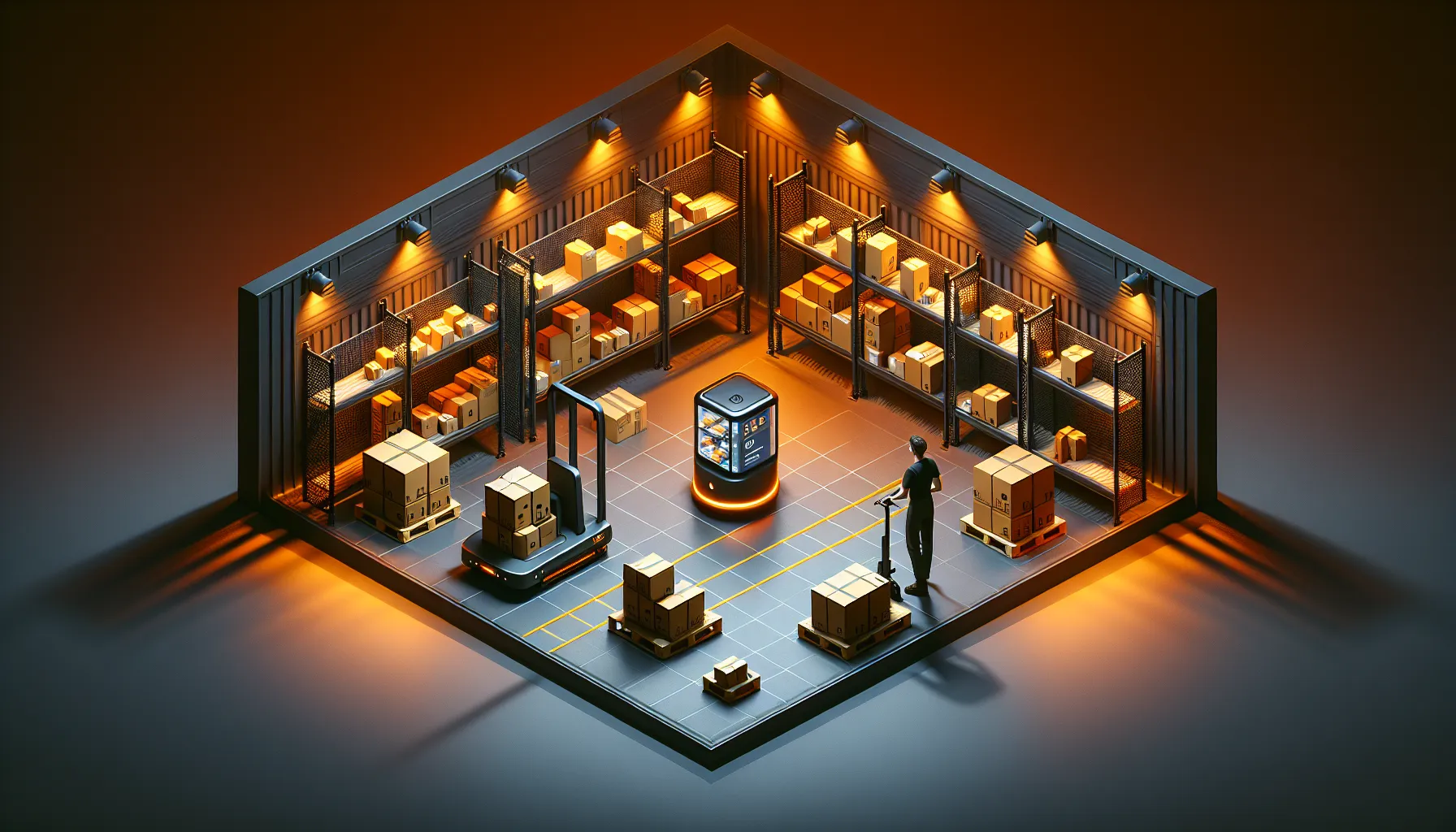
Most warehouse automation stories follow a familiar script: company deploys robots, productivity soars, workers get displaced. But there's a different story emerging from the warehouses that actually work.
At the upcoming Robotics Summit, Robust.AI's CEO will talk about something the robotics industry rarely discusses openly - why workers accept some robots and sabotage others. Not the specifications. Not the payload capacity. The human bit.
The Integration Problem Nobody Mentions
Here's what makes warehouse automation hard: you're not building for a clean room. You're integrating into a facility running three shifts, processing thousands of orders daily, using software installed in 2008. The robots need to work with that, not replace it.
The warehouses that succeed treat robots as collaborative partners, not replacement machines. The difference shows up in adoption rates. Workers in collaborative setups use the robots voluntarily. In replacement-focused facilities, robots get "accidentally" blocked by pallets, their sensors mysteriously covered, their routes inexplicably obstructed.
It turns out people are quite good at passive resistance when they feel threatened.
What Actually Makes Workers Accept Robots
The successful deployments share common patterns. The robots handle the repetitive, physically demanding tasks - moving heavy loads, covering long distances, working overnight shifts. Workers handle exceptions, quality decisions, and anything requiring judgment.
This isn't just good ethics. It's good engineering. Human judgment is still better than computer vision for spotting damaged goods. Human problem-solving still outperforms autonomous systems when something unexpected happens. Which is constantly, in a real warehouse.
The smart operations lean into this. They design workflows where robots amplify human capability rather than replace it. A picker covers twice the ground because a robot brings products to them. A quality checker processes more items because they're not also doing the lifting.
Productivity goes up. Injury rates go down. Worker satisfaction improves. The robots don't get sabotaged.
The Legacy System Reality
Every warehouse automation vendor promises seamless integration. Few deliver it. The problem is that "legacy systems" is code for "the entire operation". The warehouse management software, the inventory tracking, the order processing, the shipping integration - it all predates modern APIs and cloud infrastructure.
The vendors who succeed are the ones who accept this reality upfront. They build robots that can work with barcode scanners from 2010. They create interfaces that talk to ancient database systems. They deploy gradually, proving value before demanding wholesale system replacement.
This takes longer. It's less impressive in demos. But it actually gets deployed, which turns out to matter more than the demo.
Why This Matters Beyond Warehouses
The lessons from warehouse automation apply everywhere we're deploying AI and robotics. Healthcare facilities run on legacy systems and depend on worker expertise. Manufacturing floors have decades of institutional knowledge embedded in human operators. Retail operations blend technology with interpersonal service.
The technology-first approach fails in all these contexts. The human-centred approach - designing systems that amplify rather than replace, integrating with what exists rather than demanding replacement, proving value through adoption rather than mandate - works.
It's slower. It requires more listening and less engineering hubris. The resulting systems look less futuristic in promotional videos.
But workers don't sabotage them. Managers actually deploy them. The productivity gains are real and sustained, not a spike that fades as workarounds emerge.
The warehouses that work have figured this out. The ones still struggling are usually trying to impose the future on people doing the work today. The gap between those approaches shows up in retention rates, error rates, and whether the robots are actually running or sitting idle while everyone works around them.
Sometimes the most advanced thing you can do is ask the people doing the work what would actually help.