Colin Angle spent two decades teaching robots to vacuum floors. Now he's building one that does absolutely nothing useful - and that's the entire point.
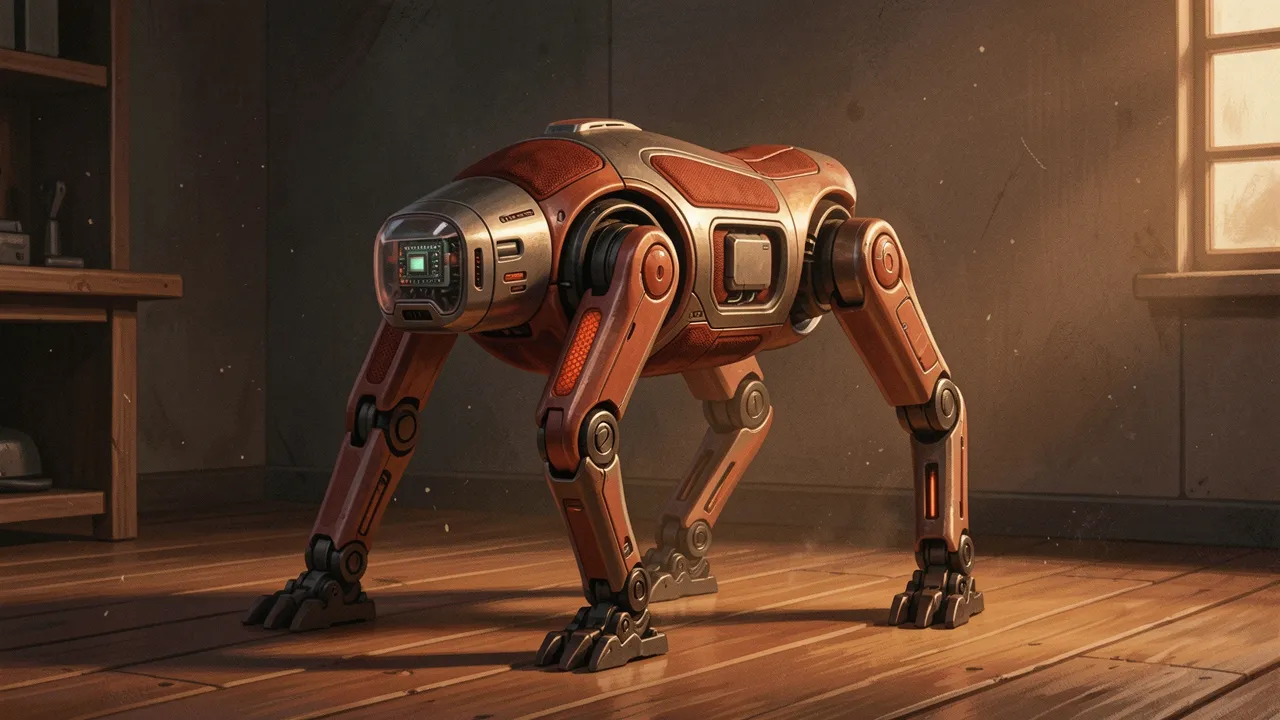
His new company, Familiar Machines & Magic, is developing a quadruped companion robot called a 'familiar'. Not a personal assistant. Not a home automation hub. A machine designed purely for emotional connection.
The Roomba worked because it solved a problem people genuinely hate - vacuuming. But Angle's bet here is different. He's betting people want company from something that isn't trying to be useful.
Twenty-Three Degrees of Freedom and Zero Screens
The familiar has 23 degrees of freedom in its movement. That's more than most industrial robots. It uses touch-sensitive materials across its body so it can feel when you're holding it. It runs edge AI to develop personality over time, learning patterns without sending data to the cloud.
What it doesn't have: a screen. No display. No voice interface competing for conversational space. It won't remind you about meetings or order your shopping. It won't even tell you the weather.
This is a deliberate constraint. Angle's argument is that companion robots fail when they try to be smart. They can't out-talk Alexa. They can't out-think ChatGPT. But they might win on emotional consistency - showing up, being present, responding to touch in ways that feel organic rather than programmed.
It's the inverse of every AI product pitch from the last three years. Instead of adding capabilities, they're stripping them away. The familiar's job is to be there, not to do things.
Edge AI and the Personality Problem
Running AI on-device is the technical play here. The familiar's personality develops locally - how it moves, how it responds to being picked up, how it behaves when you're stressed versus calm. No cloud dependency means no latency, no privacy concerns, and no subscription model tied to API costs.
But the harder problem is making that personality feel real. Every companion robot to date has hit the same wall: novelty wears off. People engage for a week, maybe a month. Then the robot becomes furniture.
Angle's counter is that previous companion robots were too functional. They promised utility and delivered a bad voice assistant. The familiar promises nothing except presence. That's either brilliant or completely backward - and we won't know which until people live with one for six months.
What This Actually Means
For builders, this is a case study in constraint-driven design. Every feature is an opportunity to disappoint. The familiar works by having fewer features, not more. That's hard to fund, hard to market, and hard to defend in investor meetings where 'it just sits there' sounds like a non-starter.
For the broader robotics space, it's a different approach to the companion robot question. Most companies are racing toward humanoid forms and conversational interfaces. Familiar is going quadruped and silent. If they're right, it suggests the market wants presence over productivity. If they're wrong, it's an expensive reminder that people buy solutions, not feelings.
The Roomba worked because cleaning is a chore everyone understands. The familiar's challenge is that loneliness isn't solved by a product. But maybe - maybe - it's eased by something that shows up consistently, doesn't demand anything, and responds to being held.
Colin Angle built the most successful home robot in history by making it stupid enough to work. Now he's betting the next one succeeds by being useless enough to matter.