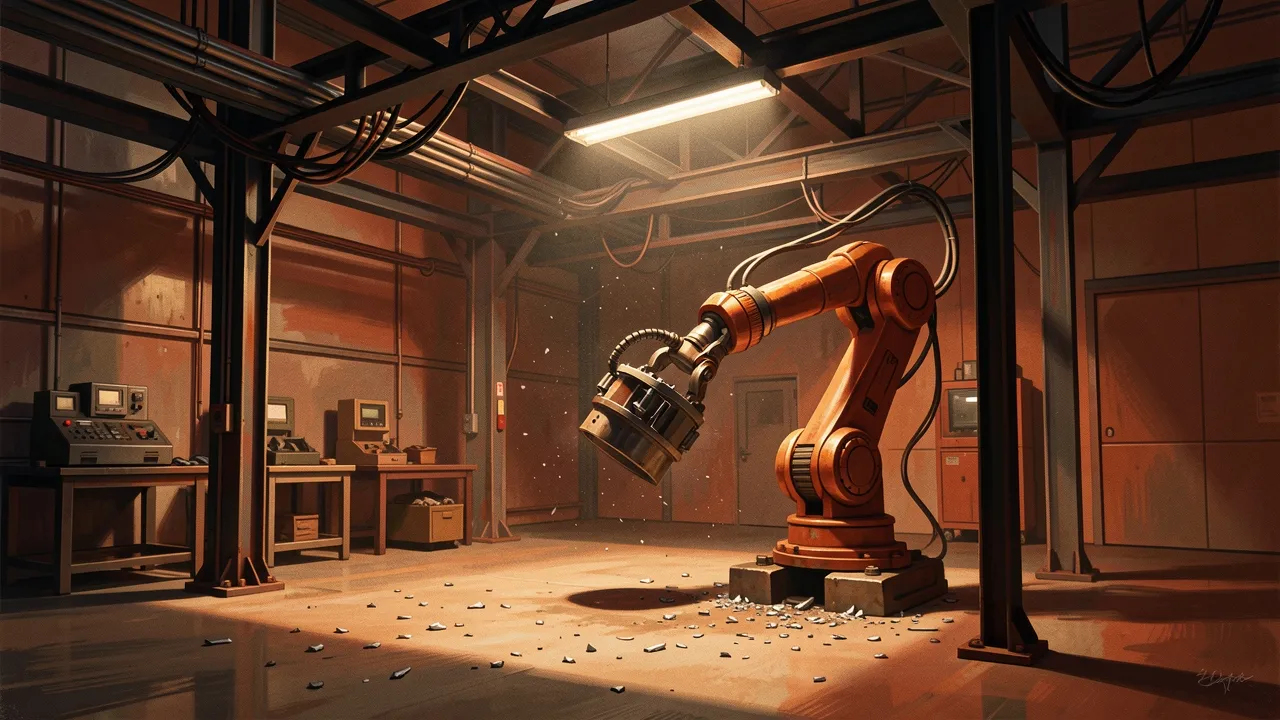
Physical AI sounds like the future. Robots that can see, adapt, and learn on the fly. Manufacturing floors that respond to change in real time. The technology works. The demos are convincing. But here's what nobody's talking about: the bottleneck isn't the intelligence. It's the physical systems those brains need to live in.
Companies are scrambling to deploy robots with perception and adaptation capabilities - what the industry now calls Physical AI. These aren't the old programmable arms that repeat one motion forever. These are systems that can handle variation, recognise objects, adjust to imperfect environments. The AI side of the equation has matured fast. What hasn't kept up is everything else.
The Supply Chain Reality Check
Building a robot isn't like deploying software. You can't push an update and scale to a million users overnight. Every unit needs motors, sensors, actuators, controllers - all sourced through supply chains that swing wildly between abundance and scarcity. The Robot Report notes that companies winning in this space aren't the ones with the cleverest algorithms. They're the ones treating hardware engineering with the same discipline as software development.
That means planning procurement six months out. Designing for component substitution when primary sources dry up. Testing extensively before committing to production runs. The software industry got comfortable with iteration and rapid deployment. Physical AI forces a return to old engineering disciplines - because you can't A/B test a factory floor with thousands of units already installed.
Legacy Factories Weren't Built for This
The other problem is integration. Most manufacturing facilities weren't designed with AI-driven robotics in mind. They were built around fixed automation - systems that do one thing reliably, forever. Retrofitting those environments to support adaptive robots means rethinking layouts, power distribution, data infrastructure, and safety protocols.
A robot that can perceive and adapt needs constant connectivity. It generates data. It needs compute at the edge or low-latency access to cloud resources. Legacy factories often lack the network backbone for this. The AI might be ready, but the building isn't. And upgrading a working factory while keeping production running is a logistical nightmare with real costs.
What This Means for Builders
If you're developing Physical AI systems, the hard truth is this: your competitive advantage won't come from the model alone. It'll come from how well you handle the messy, unglamorous work of hardware reliability, supply chain resilience, and integration complexity.
The companies pulling ahead are the ones investing in hardware-software co-design - building AI that works within the constraints of real manufacturing environments, not ideal lab conditions. They're designing systems that degrade gracefully when components fail. They're building modular architectures that allow field upgrades without ripping out entire installations.
This isn't the flashy part of AI. It's not what gets covered in product launches or keynote demos. But it's the difference between a working prototype and a system that actually ships at scale. The manufacturing revolution isn't happening because the AI got good. It's happening because some companies figured out how to make the AI work inside all the constraints the real world imposes.
The hype cycle loves to focus on intelligence. The reality is that physical systems are hard, supply chains are volatile, and legacy infrastructure doesn't bend easily. The winners will be the ones who respect that.