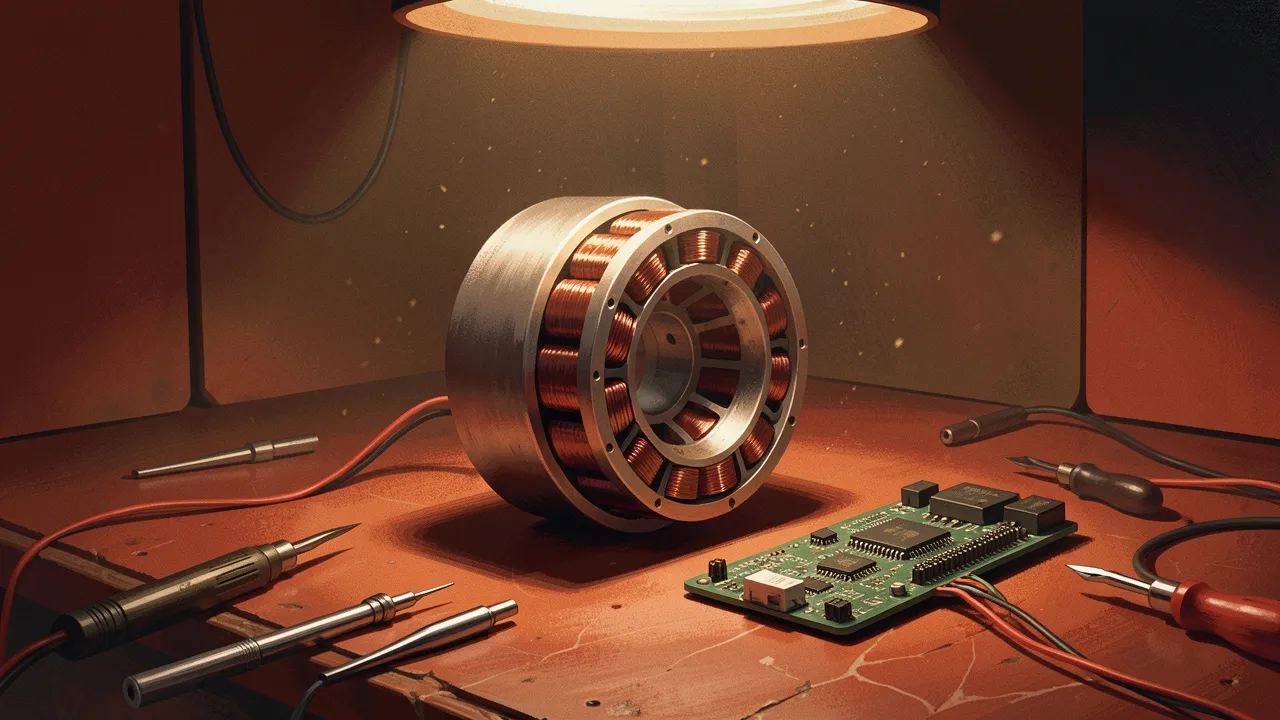
A researcher cracked open the Unitree Go2 robot dog this month and did something the manufacturer never intended - extracted the firmware from its proprietary motors and made them work without vendor lock-in.
The reverse engineering effort targeted the GO-M8018-6 motor, a high-torque actuator that's genuinely good hardware. The problem? It only talks to Unitree's own controllers. If you wanted to use these motors in your own robotics project, you were stuck in their ecosystem.
Not anymore.
Why This Matters for Builders
High-quality robot actuators are expensive. The cheap ones overheat or lack precision. The precise ones cost thousands. Unitree found a middle ground - capable motors at a price hobbyists can afford - but kept them locked behind proprietary firmware.
The researcher bypassed the bootloader, pulled the encrypted firmware, and decrypted it. That's the technical achievement. The practical achievement is what comes next: open-source alternatives that let anyone use these motors with standard robotics controllers.
For the broader robotics community, this unlocks a component that was previously off-limits unless you were building within Unitree's walled garden. University labs, hobbyist builders, small companies prototyping new designs - they all just got access to hardware they couldn't use before.
The Pattern Here
This isn't the first time someone has reverse-engineered robotics hardware, but it's a good example of what happens when capable components hit the market at accessible prices, then get locked down artificially. Builders find a way around it.
Unitree's Go2 robot dog is popular precisely because it's affordable and well-engineered. But vendor lock-in creates friction. Open up the motors, and suddenly the same hardware becomes useful in applications the manufacturer never imagined - prosthetics, industrial automation, research projects with custom control systems.
The risk for Unitree is that open alternatives could eat into their own sales. The opportunity for everyone else is that a $150 motor just became a building block instead of a black box.
What Happens Next
Expect documentation and code repositories to appear. That's the next step after a successful reverse engineering effort - making the knowledge accessible so others can replicate it without starting from scratch.
For builders watching this space, the lesson is clear: capable, affordable actuators are no longer locked behind proprietary systems. If you've been waiting to prototype a legged robot or a custom manipulator, the component you need just became available.
And for manufacturers? This is a reminder that locking down good hardware creates demand for someone to unlock it. The question isn't whether it will happen. It's how long it takes.