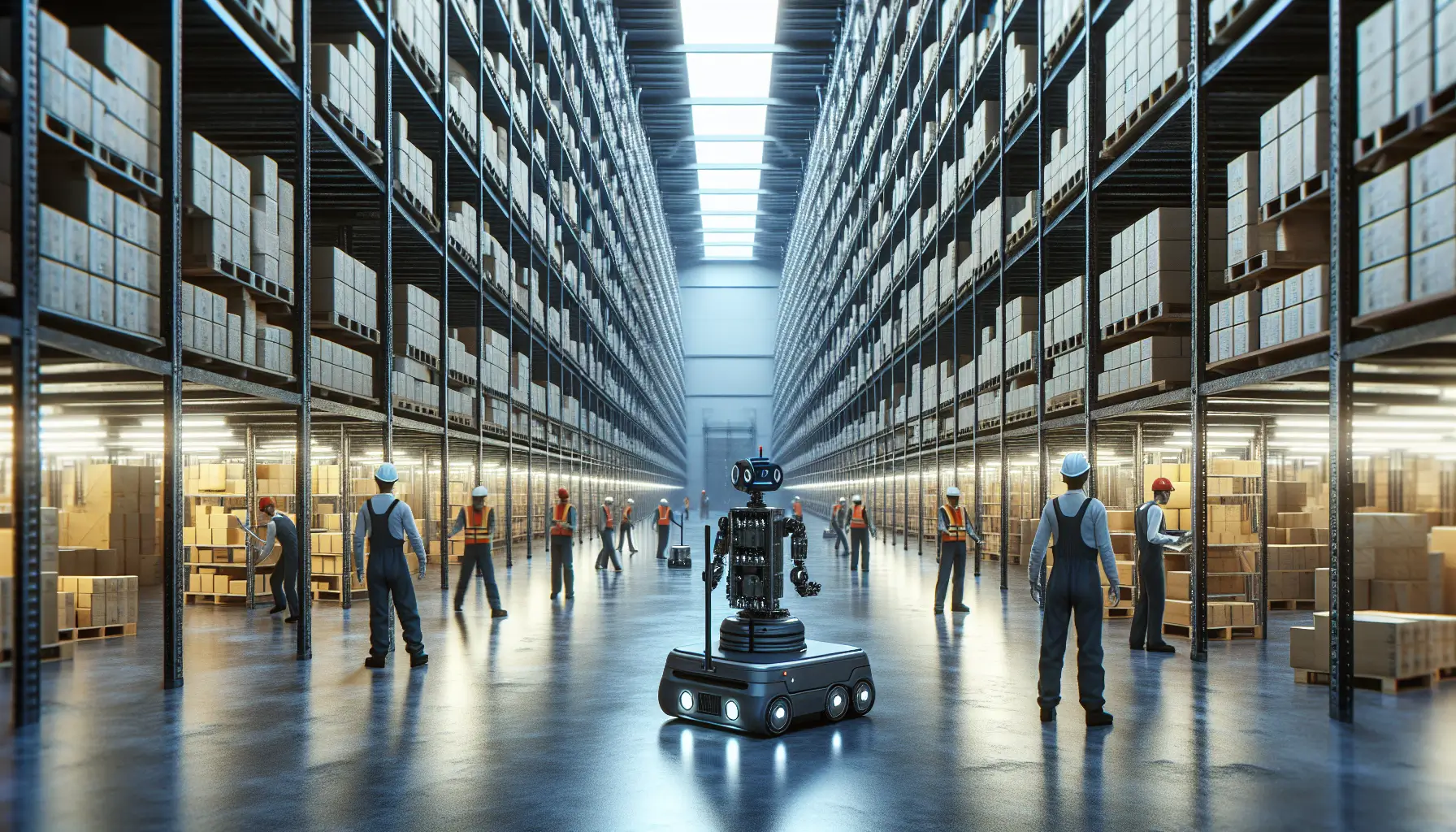
Most robotics companies train their AI models in simulations, then hope the results transfer to the real world. Seoul-based startup RLWRLD is doing the opposite - training its foundation models directly inside working warehouses alongside human workers and forklifts.
The company just raised $26 million in Series 2 funding for an approach that sounds almost recklessly practical: skip the simulation, train in the chaos of actual logistics environments from day one.
Training Where the Real Problems Live
RLWRLD's robot foundation models learn by operating in real industrial facilities with partners like CJ Logistics. Not test environments. Not controlled labs. Actual warehouses where humans walk unpredictable paths, packages arrive in inconsistent states, and lighting changes throughout the day.
The technical term is "physical AI" - systems trained on real-world physics, spatial reasoning, and the kind of edge cases that only emerge when you're moving actual boxes for actual customers. In simpler terms, these robots learn by doing the job, not by practising a perfect version of it.
This matters because simulation-trained robots often struggle when reality doesn't match their training data. A simulated warehouse has perfect lighting, predictable obstacles, and boxes that always arrive in neat stacks. Real warehouses have none of those guarantees.
From MOUs to Joint Validation
What caught my attention isn't just the funding - it's that RLWRLD has moved beyond memorandums of understanding into joint validation phases with logistics partners. That's the shift from "let's see if this works" to "we're testing this in production environments."
For business owners in logistics, this signals something practical: robotics companies are finally building systems alongside the people who'll actually deploy them. The traditional model - build in isolation, then try to sell - creates products that solve theoretical problems beautifully but struggle with real ones.
Training in real environments means the robot learns to handle the problems logistics companies actually face: damaged packaging, oddly-shaped items, congested aisles, human workers who need right-of-way. These aren't edge cases in a real warehouse. They're Tuesday.
Foundation Models for Physical Tasks
The "foundation model" framing is worth unpacking. In AI, a foundation model is trained on broad, general data, then adapted for specific tasks. GPT-4 is a foundation model for language. RLWRLD is building foundation models for physical manipulation and spatial reasoning.
The bet is that a robot trained across multiple real-world environments - different warehouse layouts, varying product types, diverse operational rhythms - develops generalised capabilities that transfer to new situations faster than task-specific training.
This isn't about replacing humans. It's about handling the repetitive, physically demanding tasks that contribute to injury rates in logistics work. The robot doesn't get tired. It doesn't need to lift 50 boxes in a row. It just needs to understand how to navigate a space where humans are doing their jobs safely.
What This Means for Logistics
For companies considering robotics, the RLWRLD approach suggests a question worth asking vendors: where was your system trained? If the answer is "entirely in simulation," that's not necessarily a dealbreaker - but it does mean expecting a learning curve when the system hits your actual facility.
Real-world training doesn't eliminate challenges. It shifts them earlier in the development process, where they're cheaper to solve. A robot that's already encountered unpredictable human movement patterns in training is less likely to freeze up or make unsafe decisions when deployed.
The $26 million funding round suggests investors believe this approach has commercial legs. Seoul's robotics ecosystem is increasingly focused on practical deployment rather than research spectacle. RLWRLD fits that pattern - less interested in showing off what robots could theoretically do, more focused on what they can reliably do today in environments that won't wait for them to catch up.
We're watching robotics shift from a simulation problem to an integration problem. The technology works. The question now is whether it works in your warehouse, with your team, on your operational rhythm. Training in real environments from the start is one way to close that gap.