Pudu Technology just closed a $150 million funding round with a valuation north of $1.5 billion. That's significant not because of the number - plenty of robotics companies raise that kind of money - but because of what they're building toward.
The Chinese robotics firm made its name with service robots. The ones you see delivering food in restaurants or shuttling supplies through hotels. They're good at it. They've shipped more units than almost anyone in that space. But service robots are a known market with known margins. Industrial delivery and manufacturing is where the real scale lives.
From Service to Industry
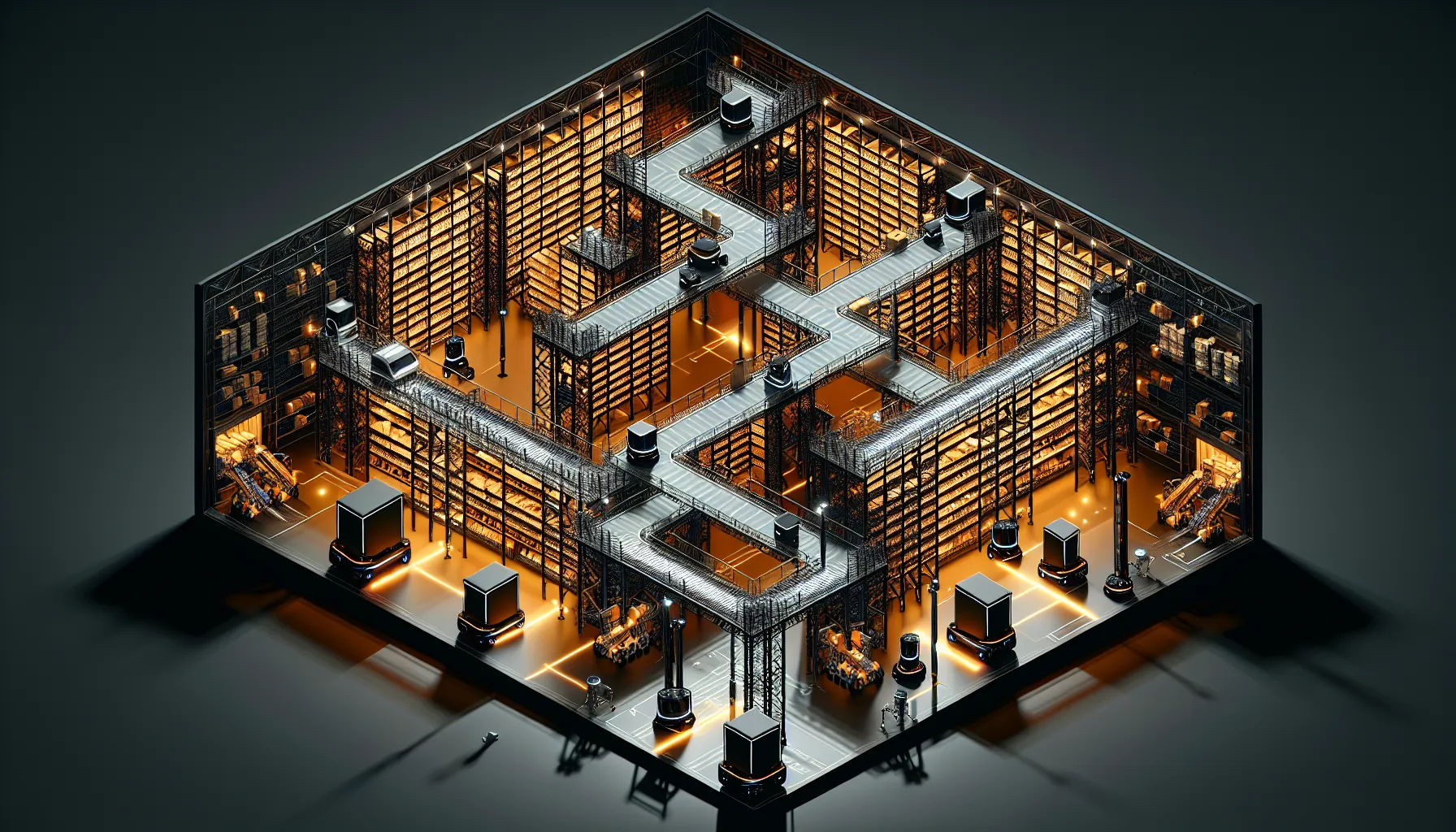
Pudu is moving into warehousing, logistics, and manufacturing environments. That means heavier payloads, more complex navigation, and robots that need to work reliably in spaces designed for humans who aren't always predictable. It's a harder problem than restaurant delivery, and the stakes are higher. A robot dropping a tray in a restaurant is an inconvenience. A robot failing in a warehouse line stops production.
The funding accelerates what Pudu calls "embodied AI development" - robots that don't just follow pre-programmed routes but adapt to their environment in real time. That's the part I'm watching. Most industrial robots today are rigid. They do one task in one place under controlled conditions. Embodied AI promises robots that can handle variance: a box in the wrong spot, a person walking through unexpectedly, a route that's temporarily blocked. Those are the conditions that break most automation.
What This Means for Manufacturing
If Pudu pulls this off, the target market is massive. Warehousing alone is a $500 billion industry globally, and most of it is still manual. Amazon's been automating for years and they're still hiring tens of thousands of warehouse workers every quarter. The bottleneck isn't willingness to automate - it's finding robots that can handle the chaos of real-world logistics without constant supervision.
Manufacturing has the same problem at a different scale. Car factories use robots extensively, but they're bespoke, expensive, and inflexible. Retooling a line for a new model can take months and cost millions. Robots that adapt quickly, learn new tasks without reprogramming, and cost less than current solutions would change the maths on what gets automated and when.
Pudu's advantage is they've already shipped thousands of robots into messy, human-occupied spaces. Restaurants aren't controlled environments. People move unpredictably, floors get wet, layouts change. If their tech handles that, industrial environments become easier, not harder. The question is whether they can scale the hardware for heavier work and longer operating hours. Service robots run shifts. Industrial robots run continuously.
The Competitive Landscape
They're not alone in this space. Boston Dynamics, Fetch, and a dozen well-funded startups are all chasing industrial automation. But Pudu's production volume gives them a cost advantage. They're already manufacturing at scale. Most competitors are still in the "expensive prototype" phase. If Pudu can bring industrial robots to market at service-robot pricing, that reshapes the competitive landscape entirely.
The other piece is global expansion. The funding specifically mentions accelerating international growth. China's manufacturing sector is already robot-dense. The real opportunity is North America, Europe, and Southeast Asia - markets where labour costs make automation economically compelling but adoption is still patchy. Getting a foothold in those markets before competitors do is what this funding round is really about.
For business owners watching this space, the timeline matters. Industrial robotics moves slowly. Design, test, deploy, iterate. Even with $150 million, Pudu's industrial products are likely 18-24 months from broad availability. But when they arrive, the pricing will set the baseline for everyone else. If they come in at half the cost of current solutions, every competitor has to match or justify the premium. That's when adoption accelerates.
The last thing worth noting: Pudu's valuation suggests investors believe this transition is viable. $1.5 billion is a bet on execution, not just potential. They've already proven they can ship robots that work in the real world. Now they're scaling that capability into environments where failure costs real money. Whether they succeed will set the pace for industrial automation across multiple sectors. If they don't, someone else will - but Pudu just bought themselves a significant head start.