A pacemaker implanted today might run for 15 years. By 2040, quantum computers could break the encryption protecting it. That's not a theoretical risk - it's a design flaw with a long fuse.
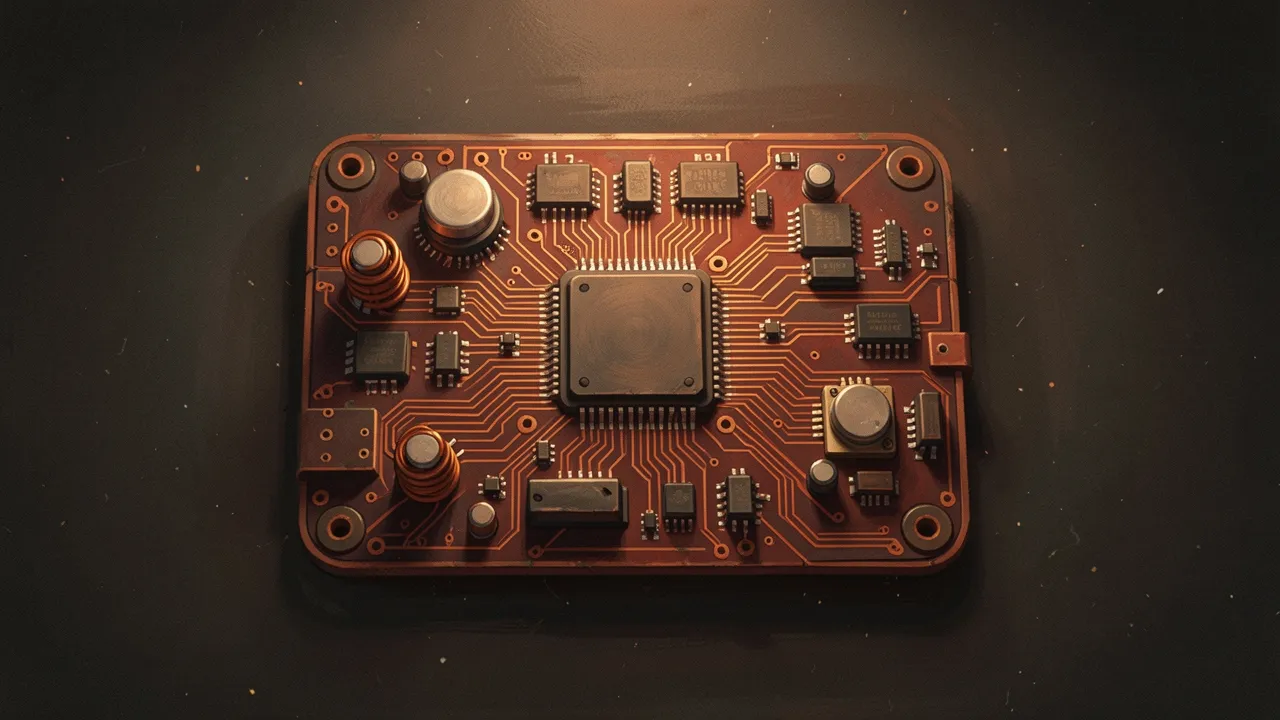
MIT researchers just built a chip that solves this problem. It implements post-quantum cryptography - algorithms resistant to quantum attacks - while consuming power budgets tight enough for wireless biomedical devices. The kind of devices that can't afford to waste milliwatts on heavyweight cryptography because every extra watt shortens battery life by months.
This isn't about protecting servers or laptops. It's about making sure the devices we put inside people's bodies stay secure for their entire operational lifespan, even as the threat landscape transforms around them.
The Quantum Clock
Current encryption standards - RSA, elliptic curve cryptography - rely on mathematical problems that classical computers struggle to solve. Factoring large numbers takes too long. But quantum computers can solve these problems efficiently using Shor's algorithm. Once a sufficiently powerful quantum computer exists, today's encryption becomes trivially breakable.
The timeline matters. Medical implants aren't smartphones - you don't upgrade them every two years. A pacemaker or insulin pump deployed in 2025 needs to remain secure until 2040 or beyond. If quantum computers capable of breaking RSA arrive in 2035, every device using legacy cryptography becomes vulnerable mid-deployment.
Post-quantum cryptography solves this by using different mathematical problems - lattice-based, hash-based, or code-based algorithms that resist quantum attacks. NIST recently standardised several post-quantum algorithms, giving the industry a clear target. But standardisation doesn't automatically make these algorithms practical for power-constrained devices.
The Power Problem
Post-quantum algorithms are computationally heavier than the encryption they replace. Larger key sizes. More complex operations. That translates directly into power consumption - a problem when your device runs on a coin-cell battery that needs to last a decade.
MIT's chip tackles this through hardware acceleration. Instead of running post-quantum algorithms on a general-purpose processor (expensive in power terms), they built dedicated silicon optimised for lattice-based cryptography. The chip handles the mathematical heavy lifting efficiently, keeping power draw within the tight margins biomedical devices demand.
The result: quantum-resistant encryption that doesn't drain the battery or require bulkier power sources. That's the difference between a theoretical solution and a deployable one. Post-quantum security becomes something you can actually ship in a pacemaker without compromising its operational life.
Beyond Implants
The immediate application is medical devices, but the same constraints apply elsewhere. Wireless sensors in industrial environments. Remote environmental monitors. Any embedded system that needs to run for years on minimal power and maintain security against future threats.
These devices face a coordination problem. Upgrading firmware remotely is possible, but risky - a failed update can brick a device in the field. Better to build quantum resistance into the hardware from the start, ensuring the device stays secure without requiring over-the-air patches years into deployment.
This also changes procurement decisions. If you're deploying sensors or medical devices today, you're committing to a security posture that needs to hold for the device's entire lifespan. Choosing hardware with native post-quantum support means one less vulnerability to manage down the road.
The Deployment Question
Quantum computers powerful enough to break RSA don't exist yet. That makes post-quantum cryptography feel premature to some engineers. Why add complexity and power overhead for a threat that's still theoretical?
The counterargument is deployment timelines. By the time quantum computers pose a real threat, you want your devices already using quantum-resistant algorithms. Waiting until the threat materialises means a generation of vulnerable devices already in the field, some of them inside people's bodies.
The "harvest now, decrypt later" risk makes this more urgent. Adversaries can intercept encrypted communications today and store them, waiting for quantum computers to arrive before decrypting. Medical data, once harvested, doesn't expire. If a pacemaker's telemetry is intercepted in 2025 and decrypted in 2038, the patient is still identifiable and the data still sensitive.
For implantable devices specifically, this creates an ethical obligation. You can't reasonably expect a patient to have their pacemaker surgically replaced because quantum computers broke its encryption. The device needs to be secure for its entire operational life at the moment of implantation. That makes post-quantum cryptography a forward-looking insurance policy, not optional future-proofing.
What Changes
MIT's chip doesn't just make post-quantum cryptography feasible for low-power devices - it makes it practical. Feasibility is a lab demo. Practicality is a power budget that works in production.
This shifts the conversation from "we should consider quantum resistance" to "we can deploy it now." Device manufacturers no longer have to choose between security and battery life. Regulators can start requiring post-quantum protections for long-lived medical devices without imposing impossible engineering constraints.
The quantum threat still has an uncertain arrival date. But the devices we're deploying today have a fixed operational lifespan. Getting ahead of that timeline means building quantum resistance into hardware now, while the cost is a chip redesign rather than a field-wide recall.