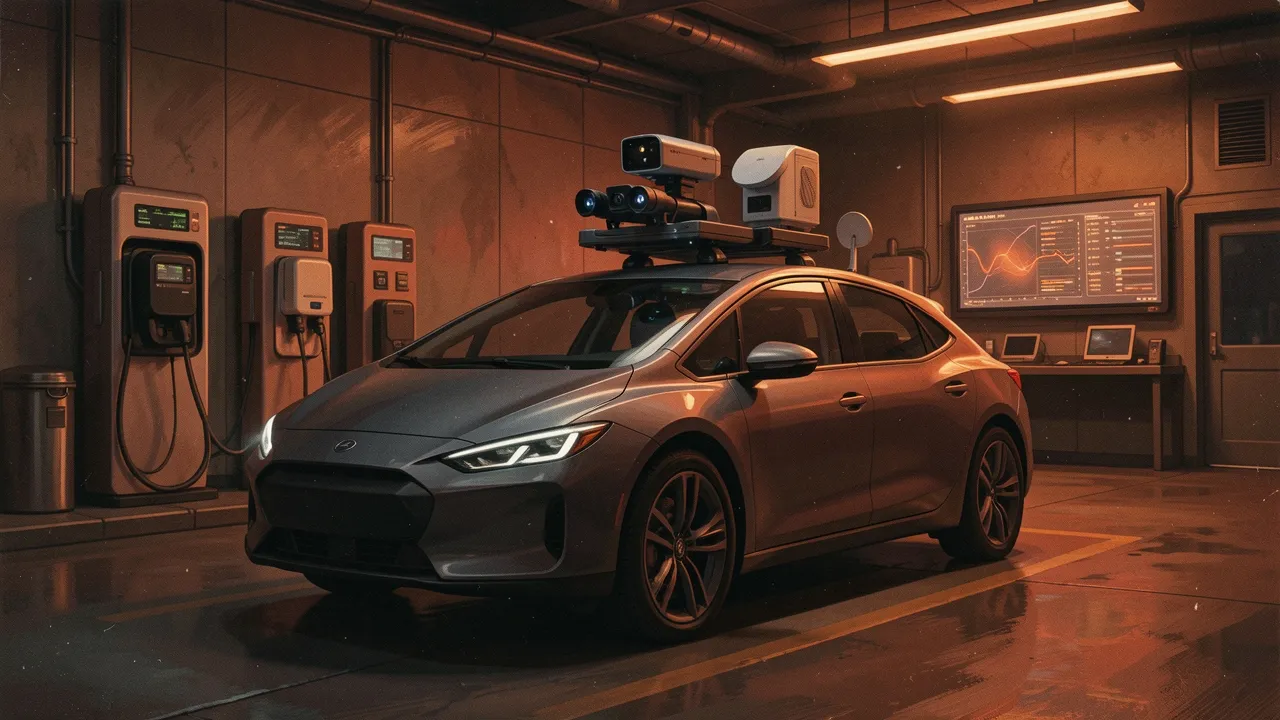
Jensen Huang doesn't use the word "deployment" lightly. When NVIDIA's CEO says robotaxis are moving from demos to real-world operation, it's worth paying attention to what's actually happening on the ground.
The shift isn't about one company hitting a milestone. It's about an ecosystem of L4 autonomous vehicle builders - companies developing full self-driving systems - now running on NVIDIA's infrastructure globally. Not test fleets in California. Revenue-generating services in China, Europe, the Middle East.
What Changed
The robotaxi story has cycled through hype and disappointment for a decade. Waymo has been running paid rides in San Francisco and Phoenix since 2020. Cruise collapsed spectacularly in 2023 after a pedestrian dragging incident and subsequent regulatory shutdown. Tesla's "Full Self-Driving" remains L2 - driver must stay engaged - despite years of promises.
What Huang is signalling isn't that autonomous driving suddenly works everywhere. It's that the economics of compute have shifted enough for multiple companies to justify deployment beyond controlled test zones. NVIDIA's DRIVE platform - the hardware and software stack powering these vehicles - has reached a price-performance point where operators can make the maths work on real routes with real customers.
The companies building on NVIDIA's infrastructure aren't household names in the West. They're firms like WeRide in Guangzhou, running autonomous minibuses and taxis across multiple Chinese cities. They're partners in the UAE launching driverless shuttles in controlled urban zones. The pattern is emerging markets and greenfield developments - places where regulatory friction is lower and infrastructure can be purpose-built.
Why This Matters for Builders
The robotaxi deployment wave creates second-order opportunities that matter more than the vehicles themselves. Every autonomous fleet generates data - petabytes of sensor feeds, routing decisions, edge cases. That data needs infrastructure: storage, processing, labelling, model training.
NVIDIA's bet is that compute moves to the edge. Each vehicle runs inference locally - making driving decisions in milliseconds without cloud latency. But training the models that power those decisions? That happens in data centres, on NVIDIA GPUs. The more vehicles deploy, the more training compute gets sold. It's the classic platform play: make the picks and shovels, let others dig for gold.
For developers and founders, the infrastructure layer is wide open. Simulation tools for testing edge cases. Monitoring dashboards for fleet operators. Data pipelines for turning raw sensor logs into training datasets. The autonomous vehicle stack is complex enough that no single vendor builds it all - and NVIDIA knows this. Their platform approach is designed to let others build on top.
The UK Angle
Here in the UK, autonomous vehicle regulation remains cautious. The Automated Vehicles Act 2024 created a legal framework, but deployment timelines are measured in years, not quarters. No robotaxi services are live on British roads yet. The government's focus is safety-first - understandable given the density of pedestrians and cyclists in UK cities - but it means commercial rollout will lag China and the US.
The opportunity for UK builders isn't in launching fleets. It's in exporting tools and expertise to markets where deployment is happening now. British AI companies are already selling perception algorithms to Chinese EV makers. British simulation firms are building virtual test environments used globally. The compute-heavy parts of the stack - where UK academia and industry have genuine depth - travel well.
Huang's confidence isn't based on one breakthrough. It's based on watching an ecosystem mature across dozens of companies, each solving pieces of the autonomy puzzle on NVIDIA hardware. The robotaxi moment isn't a single launch event. It's the point where enough pieces align - regulation, compute cost, sensor reliability, insurance models - that deployment becomes economically rational in specific contexts.
We're not at "robotaxis everywhere" yet. We're at "robotaxis somewhere, profitably." That's the harder milestone - and the one that actually scales.