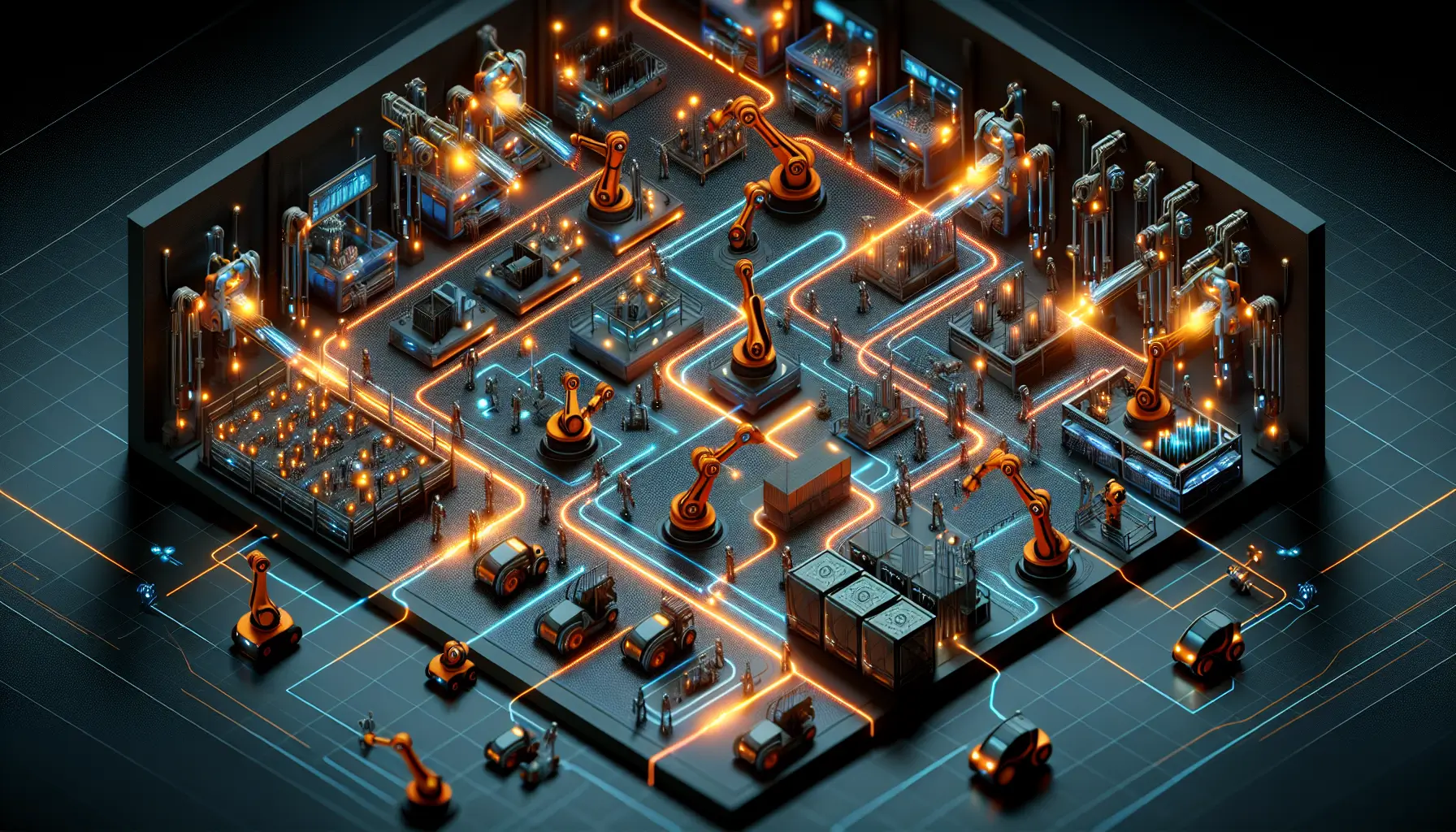
NVIDIA announced partnerships with 110 robotics companies this week, positioning itself as the connective tissue between industrial automation giants, humanoid startups, and warehouse operators. The partnerships centre on Isaac simulation tools and Jetson edge computing modules - hardware and software that companies like ABB, FANUC, and Yaskawa are now integrating into production systems.
This isn't NVIDIA launching its own robots. It's something potentially more significant: building the infrastructure layer that makes different robots work the same way underneath. The announcement signals a shift from bespoke robotics systems to standardised platforms - the kind of consolidation that accelerates an industry.
The platform play
NVIDIA's approach mirrors what happened with smartphones. Before iOS and Android, every phone manufacturer built its own operating system. Standardisation changed everything - suddenly developers could build once and deploy everywhere. NVIDIA is attempting the same pattern for robotics.
Isaac simulation lets companies test robot behaviour in virtual environments before deploying physical hardware. Jetson modules provide the onboard computing power for real-time decision-making. Together, they create a full stack: train in simulation, deploy on standardised hardware, run the same AI models across different robot types.
The 110 partners span warehouse automation (what most people actually encounter), industrial manufacturing (where the volume lives), and humanoid robotics (where the attention goes). The breadth matters more than the individual names - this is about ecosystem momentum, not single deployments.
What this means for builders
For developers, this consolidation is useful. Right now, building for robotics means learning different toolchains for different manufacturers. If NVIDIA's platform becomes standard, you build once and deploy across ABB factory arms, warehouse logistics robots, and potentially humanoid systems using the same underlying tools.
The practical impact: smaller teams can enter robotics without maintaining multiple codebases. A logistics company can prototype in Isaac simulation, test on one robot type, then scale to different hardware without rebuilding from scratch. The barrier to entry drops significantly when the platform layer stabilises.
This also means NVIDIA's GPU architecture - already dominant in AI training - extends into edge deployment for robotics. The same company powers the cloud training and the physical inference. That's remarkable market positioning, and it should make anyone building in this space think carefully about platform dependencies.
The robotics consolidation pattern
Industrial players like FANUC and Yaskawa adopting these tools suggests the market is maturing past the experimental phase. These companies move slowly and deliberately - their involvement indicates confidence that the technology works at production scale. When established manufacturers integrate new platforms, it's usually because customer demand is already pushing them in that direction.
Humanoid robotics gets the headlines, but the real deployment volume is in warehouses and factories. That's where the economic pressure exists to automate repetitive tasks, and where the return on investment is clearest. NVIDIA's positioning across both industrial automation and humanoid development means they're not betting on one future - they're building infrastructure for multiple robotics trajectories simultaneously.
The question isn't whether physical AI becomes real - that's already happening in constrained environments. The question is how quickly it scales beyond controlled settings. Platform standardisation accelerates that timeline significantly. When 110 companies use the same tools, best practices propagate faster, talent moves more easily between projects, and the learning curve for new entrants flattens.
For business owners watching these developments, the takeaway is simple: robotics is moving from custom engineering projects to platform deployment. The economics change completely when you can test virtually, deploy on standardised hardware, and scale across different robot types. That shift makes automation accessible to companies that couldn't previously justify the engineering investment.
NVIDIA isn't promising robots will do everything. They're building the infrastructure to make specific, practical automation cases work reliably. That's less exciting than the humanoid future everyone talks about, but it's the foundation that makes any of it economically viable. Infrastructure is never the sexy story - but it's what determines which technologies actually scale.