Here's a problem most people outside manufacturing never think about: what happens when you need to make 50 different products on the same production line?
High-mix, low-volume production - making lots of different things in small batches - has been manufacturing's awkward middle child. Too varied for traditional automation, too expensive to do entirely by hand. Tesollo and Techman Robot think they've found the middle ground.
The Adaptive Gripper That Actually Adapts
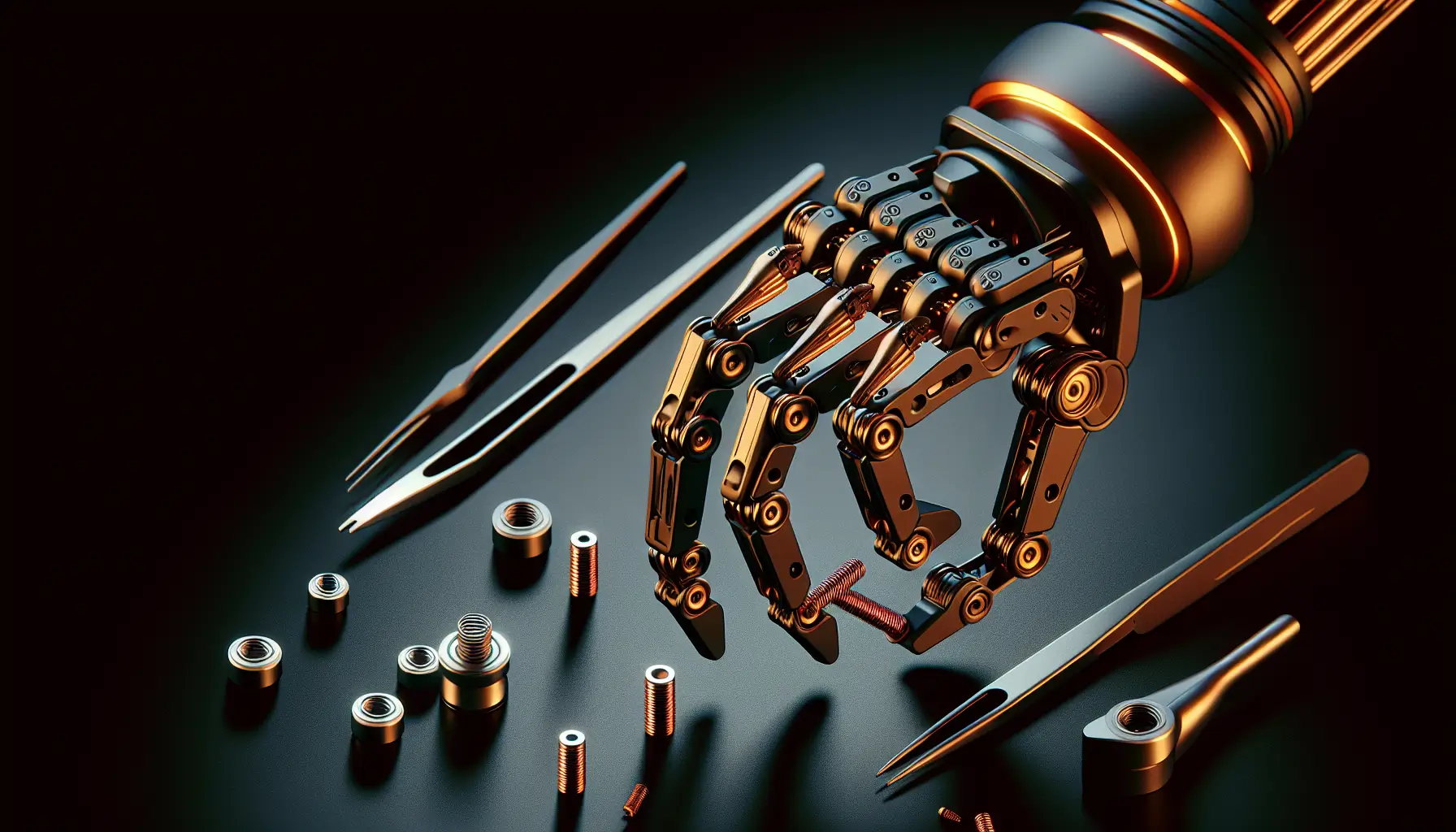
The DG-3F-M gripper paired with Techman's TM5S cobot isn't trying to be significant. It's trying to be practical. Three articulated fingers that adjust grip pressure and angle based on what they're holding. The kind of thing a human hand does without thinking.
What makes this interesting isn't the technology itself - adaptive grippers exist. It's the target use case. Bin picking, kitting, assembly work. The messy, varied tasks that have resisted automation because they require too much flexibility.
In simpler terms: imagine reaching into a bin of mixed parts, identifying what you need, picking it up without crushing it, and placing it precisely where it needs to go. Humans do this easily. Robots... haven't. Until recently.
Why This Matters for Small Manufacturers
Large-scale manufacturers solved automation decades ago. They make millions of the same thing, so the investment in custom tooling pays off. Small manufacturers - the ones making 50 units of Product A, then 30 of Product B, then 100 of Product C - have been stuck.
The math hasn't worked. Retooling a traditional robot for each product change costs more than just hiring people. But labour shortages are real, consistency matters, and people shouldn't be doing repetitive physical work when machines can.
This is where collaborative robots (cobots) with adaptive grippers start making sense. They're designed to be reprogrammed quickly, work alongside humans safely, and handle the kind of variation that used to require human judgement.
The TM5S is relatively lightweight - 5kg payload capacity - which limits its applications but also makes it safer and easier to redeploy. You're not bolting down a massive industrial arm. You're positioning a tool that can move between workstations.
The Real Test: Production Constraints
Here's what I want to know: how long does changeover actually take? Marketing materials always show the best case. The real question is whether a shop floor supervisor can retask this thing in 10 minutes or whether it still requires an engineer and half a day.
The promise of cobots has always been flexibility. The reality has often been "flexible, but only if you have a robotics expert on staff." If Tesollo and Techman have genuinely simplified the programming and changeover process, that's significant.
The other constraint nobody talks about enough: maintenance. A three-fingered gripper with multiple articulation points has more failure modes than a simple two-jaw gripper. Small manufacturers don't have in-house robot repair teams. If this breaks, how fast can it be fixed?
Where This Is Heading
The interesting pattern here is the convergence of hardware and software. The gripper hardware is sophisticated, but it's the control software - the bit that decides how much pressure to apply, how to adjust the grip angle, when to abort and try again - that makes it useful.
We're seeing this across robotics: the hardware is good enough. The software is what determines whether it's practical. Vision systems that identify parts, motion planning that adapts to obstacles, force feedback that prevents damage. These are software problems being solved with increasingly capable onboard compute.
For businesses watching this space: the question isn't whether flexible automation will work. It's when it becomes cost-effective for your specific production needs. High-mix, low-volume manufacturing is a massive market that's been under-served by traditional automation. Solutions like this are testing the boundaries of what's economically viable.
The real adoption will come when a mid-sized manufacturer installs one of these systems, runs it for six months, and shares honest numbers about uptime, changeover time, and return on investment. That's the data that drives decisions. Until then, this is a promising development in a space that desperately needs more practical tools.