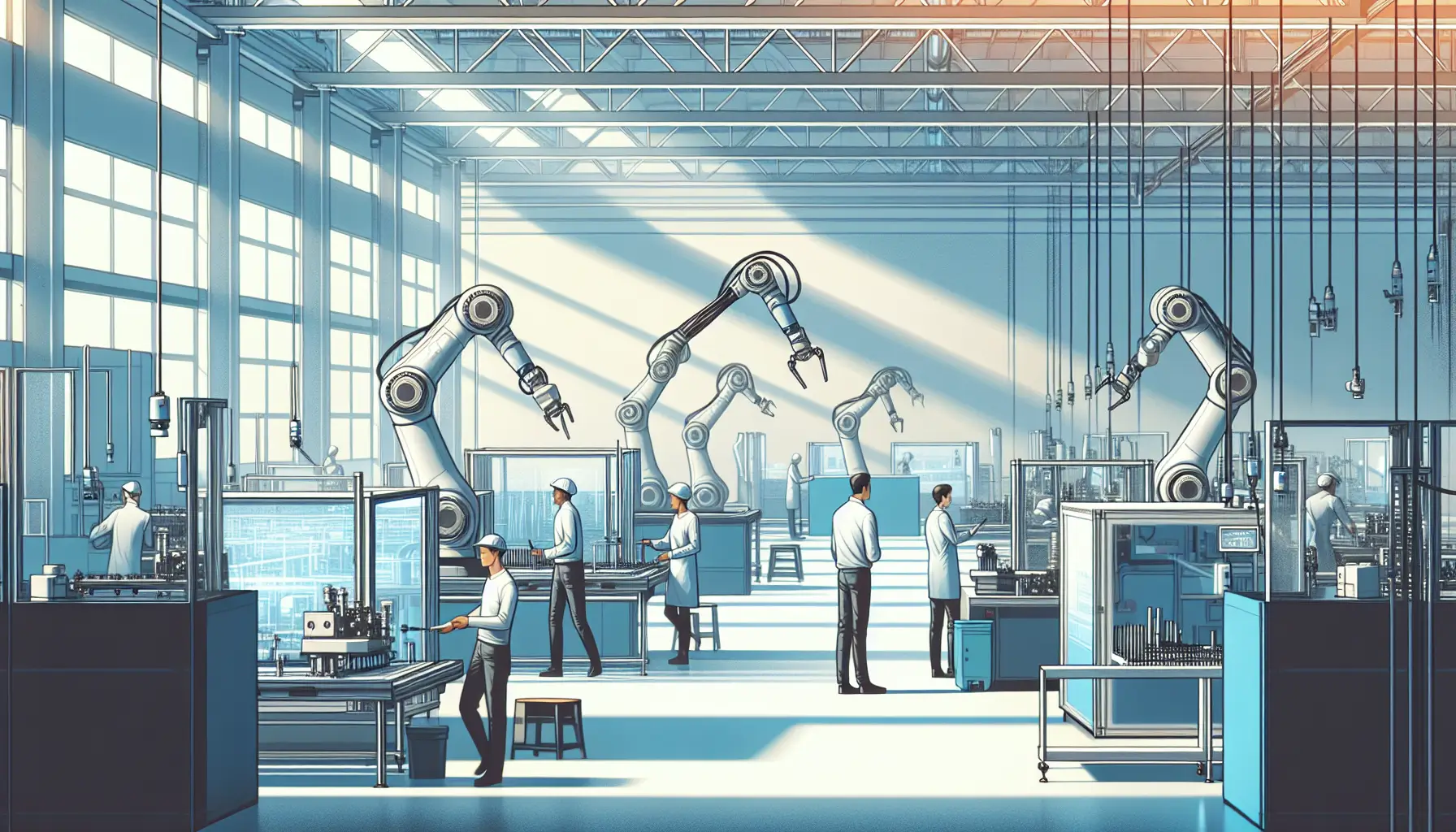
Five years ago, Alphabet spun out a robotics startup called Intrinsic. The idea was to build software that could teach robots to work in messy, unpredictable environments - factories, warehouses, logistics hubs. The kind of places where rigid automation falls apart.
This week, Intrinsic is coming back. Not quietly folding back into the parent company, but joining Google as a distinct group with a clear mandate: advance physical AI in robotics.
The timing matters. We are seeing a pattern across the industry - companies that spun out AI projects in the 2010s are now pulling them back in. Not because they failed, but because the opportunity has grown too big to leave on the periphery.
What Intrinsic Actually Built
Intrinsic focused on the software layer that makes robots adaptable. Traditional industrial robots are programmed for specific tasks in controlled environments. Change the layout, swap a component, introduce a new product line - and you are reprogramming from scratch.
Intrinsic's approach was different. Their tools let robots learn from demonstration, adapt to variations, and work alongside humans without needing perfect conditions. For manufacturers, this means robots that can handle small-batch production runs, not just endless repetition of a single task.
The integration with Google brings two immediate advantages: Gemini models for reasoning and Google Cloud for scaling deployments. Intrinsic's robotics expertise combined with Google's AI infrastructure creates something neither could build alone.
Physical AI Becomes Core Business
The announcement signals something broader. Physical AI - systems that interact with the real world through robotics - is no longer experimental. Google is treating it as core business, alongside search and cloud computing.
This shift is happening because the economics have changed. Language models made AI useful for knowledge work. Now, the same techniques are making robots useful for physical work. The market for manufacturing automation alone is worth hundreds of billions annually, and most of it still relies on fixed, inflexible systems.
For business owners watching these developments, the question is not whether robotics will become more capable - that is certain. The question is when the tools become accessible enough for businesses outside the Fortune 500 to deploy them.
What This Means for Builders
The pattern we are seeing - startups spinning back into big tech - tells you where the leverage is. Building robotics software requires deep integration with AI models, cloud infrastructure, and hardware partnerships. That stack is easier to assemble inside Google than outside it.
But the opportunity for independent builders is not in competing with that infrastructure. It is in building on top of it. As these platforms mature, the real value will be in application-layer tools - software that takes general-purpose robotics platforms and makes them useful for specific industries.
Think inventory management systems that can direct warehouse robots in real time. Quality control software that can teach vision systems to spot defects. Scheduling tools that coordinate humans and robots on a factory floor.
Google is building the foundation. The applications are still wide open.
There is something quietly significant about this move. We are watching the shift from AI as a software phenomenon to AI as a physical presence in daily work. That changes the stakes, the opportunities, and the kinds of problems we can solve.
For anyone building in this space, Intrinsic's return home is a signal: the infrastructure is maturing. What you build on it matters more than ever.