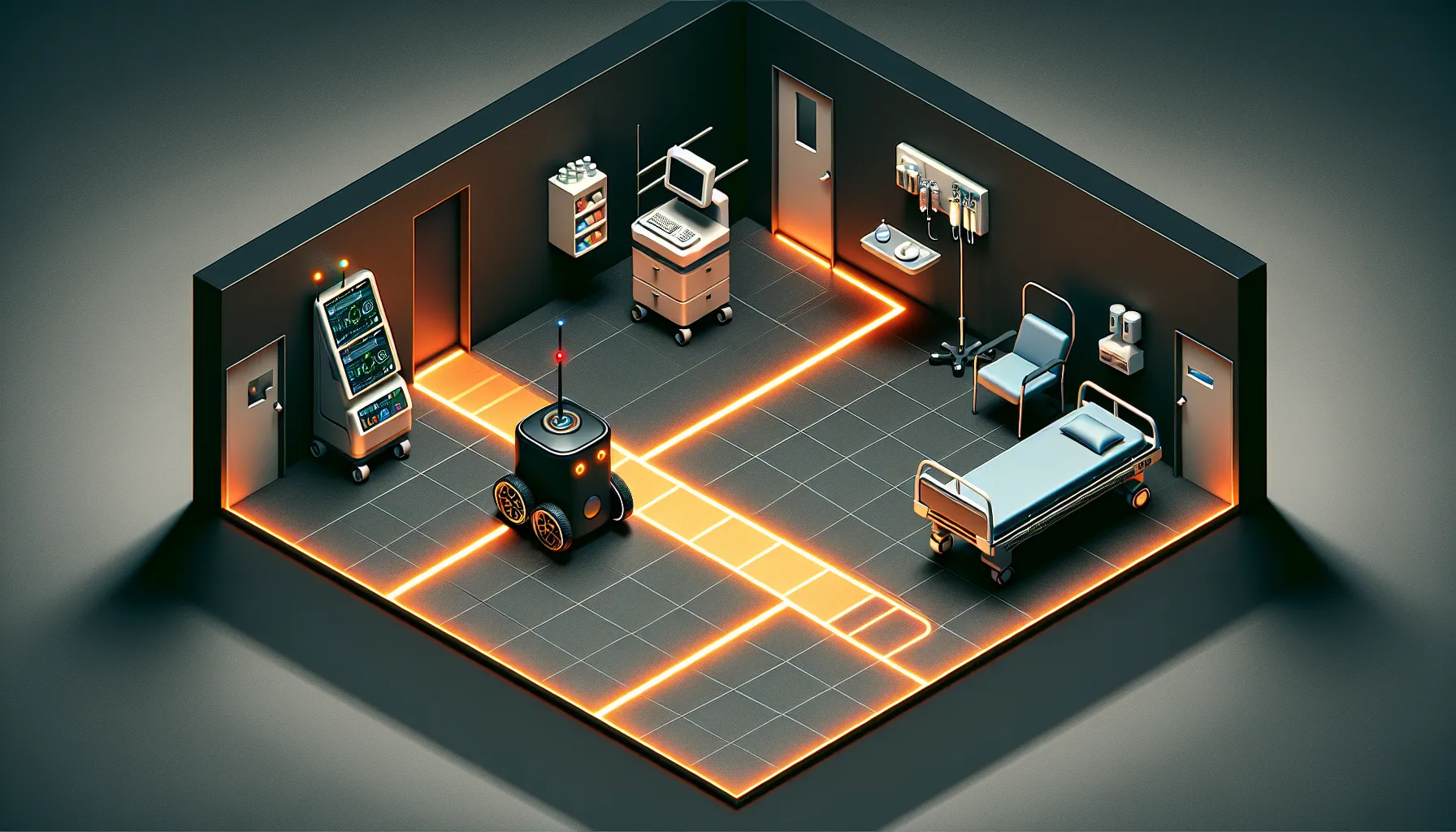
Morton Plant Hospital in Clearwater, Florida, has become the testing ground for something that sounds futuristic but looks... surprisingly mundane. Autonomous robots, built by Rovex, are learning to navigate hospital corridors. Not ferrying patients around just yet - this seven-month pilot is far more careful than that.
BayCare Health System is taking what they call a "phased approach", which means the robots start in controlled, quiet areas where they can map workflows without getting in anyone's way. Think empty hallways at 3am, not the chaos of a Friday night emergency department. The idea is to prove the tech works in sterile conditions before introducing it to the messier reality of a working hospital.
What They're Actually Testing
Right now, these robots aren't transporting patients. They're learning routes, understanding traffic patterns, figuring out where lifts are and how long they take. The goal is eventually autonomous patient transport - moving people between departments, to imaging, to surgery - but that's phase three or four thinking. Phase one is "can it get from A to B without blocking a trolley".
This caution makes sense. Hospitals are unpredictable environments. A corridor that's clear at 2pm might be gridlocked by 2.05pm when three patients arrive at once. A robot needs to handle that variability, and the only way to teach it is to let it observe for months before giving it real responsibility.
The phased rollout mirrors how autonomous vehicles entered warehouses - start in controlled zones, expand gradually, never skip steps. BayCare isn't rushing this, which suggests they've seen what happens when healthcare tech gets deployed too fast. The seven-month timeline is deliberate. They're mapping edge cases, not just happy paths.
The Bigger Picture
Hospital transport is one of those invisible problems that eats resources. Porters move patients, equipment, samples, medications - all day, every day. It's physically demanding work, often understaffed, and mistakes (wrong sample to wrong lab, delayed transport to imaging) have real consequences.
Autonomous robots could handle the predictable, repetitive routes - freeing human staff for the tasks that need judgement and care. A robot can take bloods to pathology at 4am. It can't reassure a nervous patient or make a call about whether someone's stable enough to move. The question is whether hospitals can integrate both without one undermining the other.
What's interesting here is the partnership model. Rovex isn't selling robots to BayCare - they're co-developing the deployment strategy. That suggests this is as much about learning how to introduce robots into healthcare as it is about proving the tech works. If the pilot succeeds, the real output might be a playbook other hospitals can follow.
Another robotics story. Brilliant. Just brilliant. But unlike the flashier stuff - surgical robots, care bots with faces - this one solves a genuine logistics problem without trying to replace human connection. It's boring in the best possible way. Boring means it might actually get used.
What Happens Next
Seven months gives BayCare time to surface problems nobody's thought of yet. What happens when a robot needs to use a lift and there's a medical emergency? Does it wait, or does someone manually override it? What if it breaks down mid-corridor during a shift change? These aren't hypotheticals - they're the edge cases that determine whether this scales or stays a pilot forever.
If the pilot works, expect more hospitals to watch closely. Healthcare moves slowly for good reason, but logistics problems are universal. A robot that can navigate Morton Plant can probably navigate most hospitals. The value isn't in the first deployment - it's in the tenth, when the kinks are ironed out and the cost-benefit case is clear.
For now, it's a quiet test in Florida. No patient transport yet. No grand claims. Just a robot learning to get from radiology to pathology without blocking a crash team. If that sounds unexciting, it probably means they're doing it right.