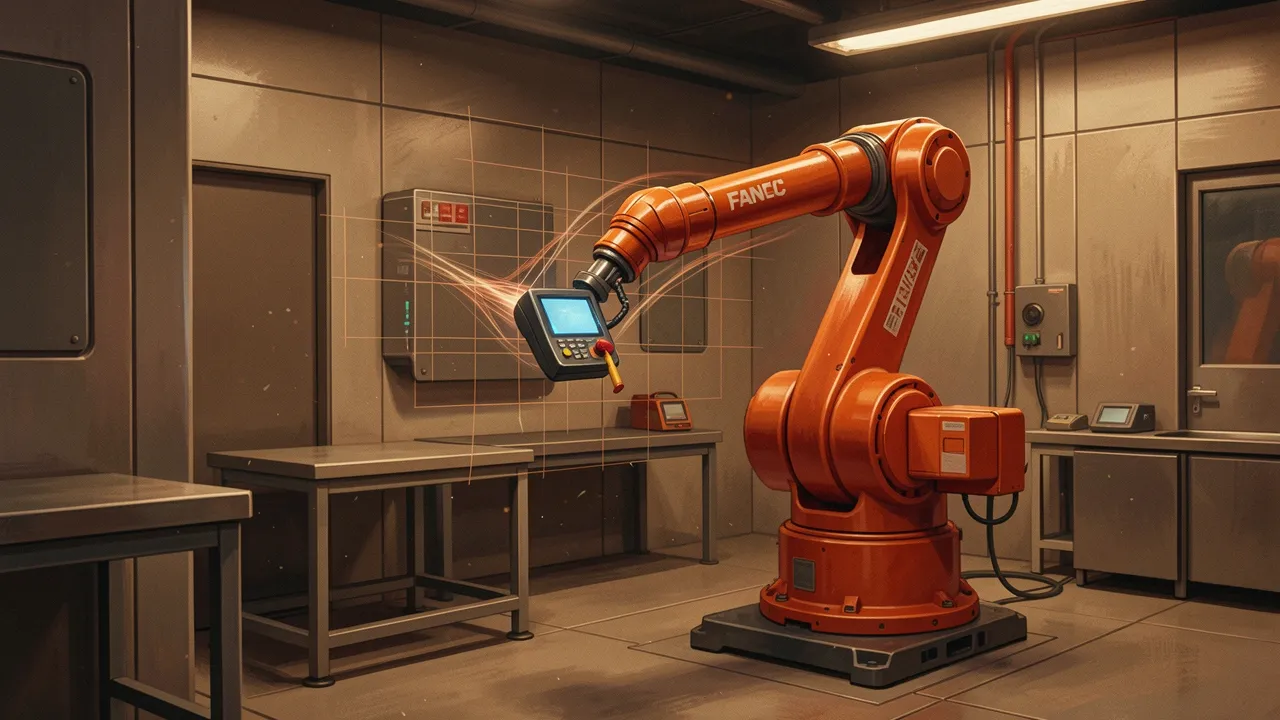
Industrial robotics just got a simulation upgrade. FANUC, the world's largest industrial robot manufacturer, has deepened its integration with NVIDIA's Isaac Sim platform - and the implications go beyond faster prototyping.
The integration ties FANUC's ROBOGUIDE software directly into Isaac Sim's virtual environment. Engineers can now operate robots in simulation using the same teach pendants they'd use on a factory floor. That matters because it removes the cognitive leap between virtual testing and physical deployment.
Imitation Learning at Industrial Scale
The real shift here is access to NVIDIA's GR00T N foundation model for imitation learning. This isn't programming through code - it's teaching robots through demonstration. Show a robot how to fold a T-shirt in simulation, and the model translates that into executable motion patterns.
Flexible tasks like fabric handling have historically been robotics nightmares. Fabric doesn't behave predictably. It crumples, stretches, and slides. Traditional robotic systems struggle with anything that isn't rigid and predictable. Imitation learning changes the game - instead of pre-programming every edge case, you demonstrate the task and let the model figure out the motion.
FANUC's trajectory replication is unusually accurate. Virtual robot movements now match physical robot behaviour closely enough that engineers can trust simulation results. That cuts the iteration loop - prototype in software, validate once in hardware, ship.
What This Means for Manufacturers
For businesses running FANUC equipment, this is about deployment speed. Reconfiguring a production line traditionally means stopping the line, reprogramming robots, and testing on real hardware. With accurate simulation, much of that work moves offline. Program the new task in Isaac Sim, validate the motion paths virtually, then deploy to the physical robots.
The imitation learning layer also lowers the skill barrier. Training a robot through demonstration is faster than writing motion control code. That matters when factory layouts change or product lines shift - which, in modern manufacturing, is increasingly often.
There's a broader pattern here. Industrial robotics is moving from deterministic programming toward adaptive behaviour. Teaching robots through demonstration, running those models in accurate simulation, then deploying to physical hardware - that's a workflow shift. FANUC's Isaac Sim integration is an early example of what that looks like at industrial scale.
The question is adoption speed. Industrial environments move slowly for good reason - downtime costs real money. But the cost of NOT adapting is rising. Businesses that can reconfigure production lines quickly have an edge. This integration gives FANUC customers that capability.