A Czech startup called RoboTwin has just secured €2.3 million in EU funding for something that sounds simple but changes the entire economics of factory automation: letting workers teach robots through demonstration instead of code.
Here's why that matters. Right now, programming an industrial robot requires specialist engineers, weeks of setup time, and costs that only make sense for large-scale production runs. Small manufacturers - the ones making custom parts, short batches, or rapid prototypes - can't justify the expense. They stick with manual labour not because it's better, but because automation is too expensive and too rigid.
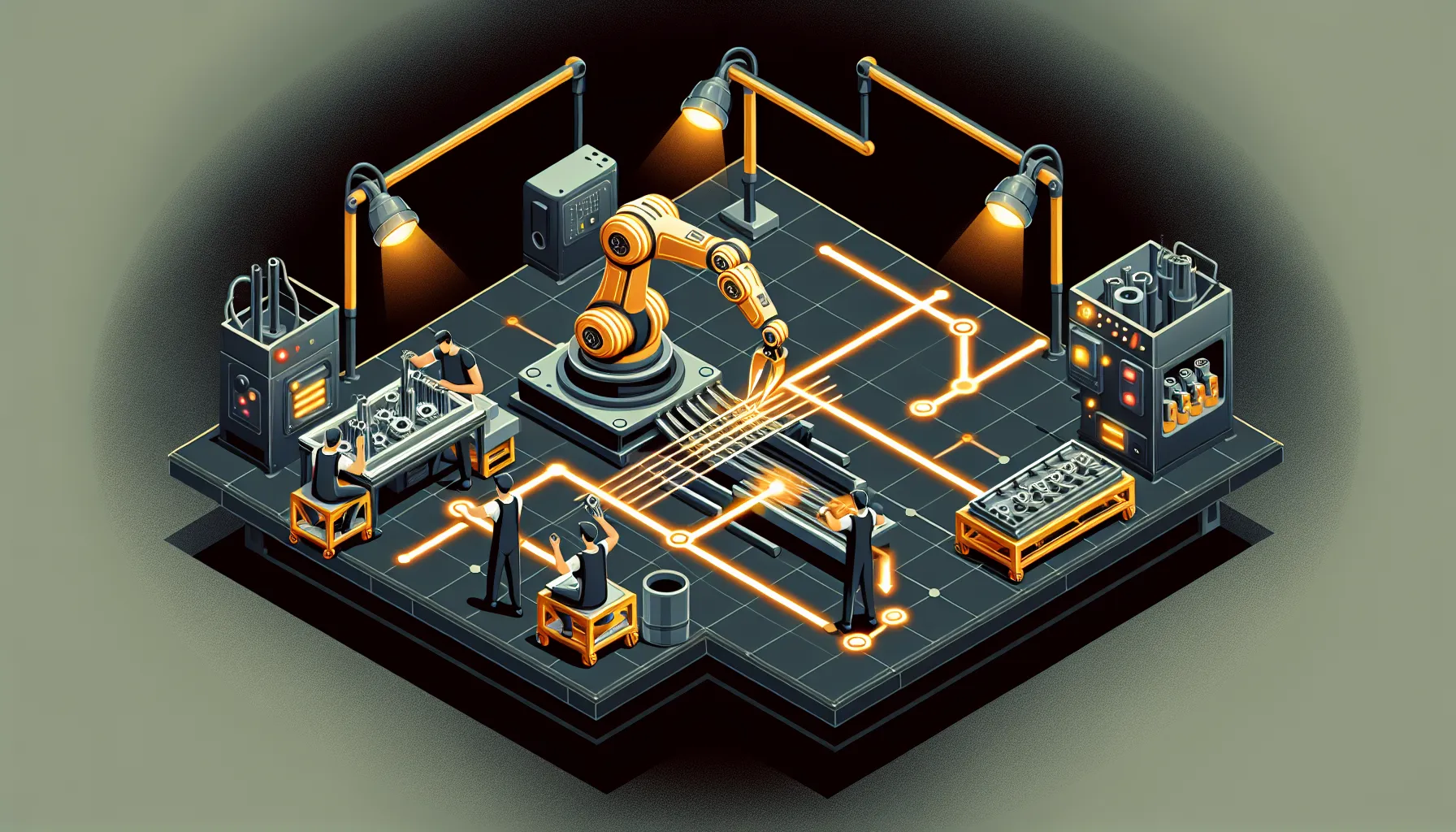
RoboTwin's approach flips that model. A factory worker shows the robot what to do, the system learns from the demonstration, and the robot replicates the task. No programming language. No specialist engineers flown in from headquarters. Just watch, learn, replicate.
How Demonstration-Based Learning Works
The technical term is learning from demonstration, and it's been a research area for years. What's changed is the execution. Modern vision systems can track human movements with enough precision to translate them into robotic actions. The robot doesn't just record positions - it learns the intent behind the movement: where pressure matters, where speed matters, where precision is critical.
For small manufacturers, this is the difference between automation being impossible and automation being practical. A worker who's spent years perfecting a welding technique or assembly process can now transfer that skill directly to a machine. The knowledge doesn't leave when the worker retires. The robot learns once, then repeats the task with consistent quality.
The Economics of Small-Batch Automation
Large factories automate because they run the same task thousands of times. The upfront cost of programming a robot gets spread across massive production volumes. But what if you're making 50 units? Or custom parts that change every week?
That's where demonstration-based systems make sense. Setup time drops from weeks to hours. You don't need a robotics engineer on staff. You don't need to halt production while someone codes a new routine. The worker who knows the task teaches the robot, and production continues.
This isn't about replacing workers - it's about removing the repetitive, physically demanding parts of their jobs. The tedious stuff. The bits that cause strain injuries after 20 years on the line. Workers move into supervisory roles, quality control, or training new robots as product lines shift.
What the EU Funding Means
The €2.3 million from the EU isn't just validation - it's a signal that small and medium-sized manufacturers are a policy priority. Europe has thousands of specialist manufacturers who can't compete with the scale of Chinese or American factories. Their advantage is flexibility and craftsmanship. If they can automate without losing that flexibility, they stay competitive.
RoboTwin plans to use the funding to refine their system and deploy it across multiple industries. Early pilots have focused on assembly and material handling, but the approach works for any task that can be demonstrated visually. Welding, painting, inspection, packaging - if a human can show it, the robot can learn it.
The Bigger Shift in Robotics
This is part of a broader pattern in robotics: moving intelligence from engineers to end users. For decades, robots have been powerful but inflexible. You needed expertise to deploy them, expertise to maintain them, and massive production volumes to justify them. That worked for car factories. It didn't work for most manufacturers.
Demonstration-based learning, visual programming tools, and improved sensors are changing the access equation. Robots are becoming more like software - adaptable, user-configurable, and economically viable at smaller scales. The question isn't whether small manufacturers will automate. It's how quickly the tools become simple enough for them to do it themselves.
RoboTwin's approach doesn't just lower the technical barrier. It respects the knowledge already in the building. The worker who's mastered a complex assembly process over years doesn't get replaced - they become the teacher. Their expertise gets encoded into the system, then replicated with mechanical precision.
That's a different story than the usual automation narrative. And it's the one that might actually work for the thousands of manufacturers who've been priced out of robotics until now.