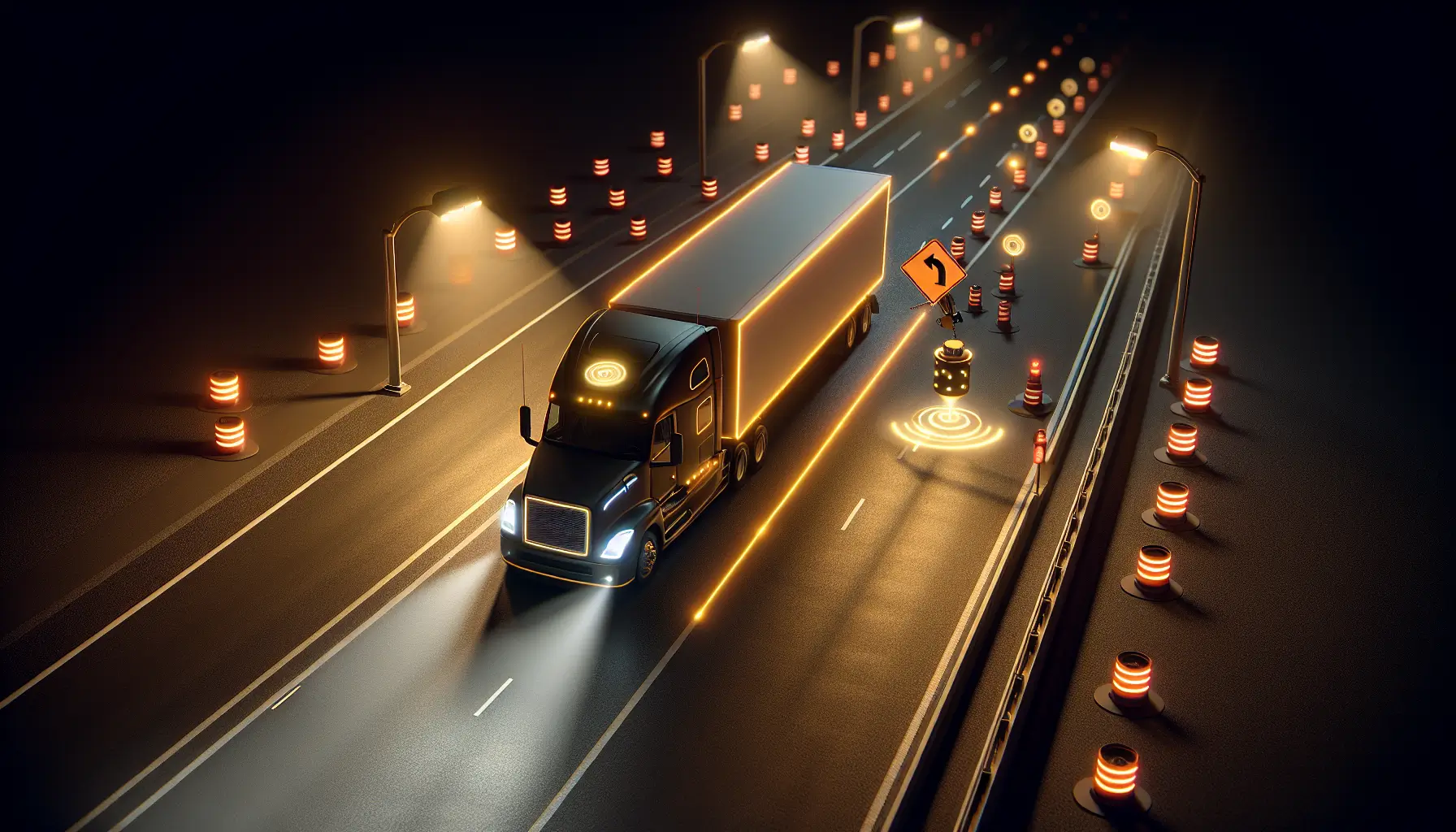
While most of us picture self-driving vehicles as some distant sci-fi future, freight trucks are already running autonomous routes in Texas right now. PlusAI's SuperDrive 6.0 doesn't just navigate highways in daylight anymore - it handles night driving, construction zones, and the messy reality of commercial freight operations.
The Unglamorous Reality of Autonomous Freight
Here's what caught my attention: this isn't a demo or a pilot programme. These trucks are operating commercially. Not "testing on closed courses" or "with safety drivers for show" - actually moving goods, making money, running routes that human drivers would otherwise cover.
The technical leap is significant. Night driving means the system has to work without the visual cues that make daytime navigation easier. Construction zones are chaotic - temporary signage, lane shifts, workers moving unpredictably. These are scenarios where human drivers still excel because we adapt to ambiguity. SuperDrive 6.0 apparently handles both.
What matters more than the capability itself is what it signals: autonomous freight has moved past the "can it work?" phase into "how fast can we scale it?"
The Economics Are Shifting Faster Than Expected
Two numbers stood out: 90% faster AI training and 66% lower labelling costs. These aren't minor optimisations. Faster training means the system improves more rapidly from real-world data. Lower labelling costs mean the economic barrier to creating better autonomous systems just dropped dramatically.
For context, labelling training data - having humans annotate images and scenarios so the AI can learn from them - has always been one of the most expensive parts of building autonomous systems. Cutting that cost by two-thirds changes the math entirely. More companies can afford to compete. Existing players can iterate faster.
The freight industry is also brutally practical. If autonomous trucks weren't reliable enough to move goods profitably, they wouldn't be operating commercially in Texas. Someone did the calculation and decided the technology was ready for prime time.
What 24/7 Operations Actually Mean
PlusAI mentions 24/7 operations launching imminently. That's the bit that matters for business owners and logistics managers. Human drivers have legal limits on consecutive driving hours. Autonomous systems don't. A truck that can run continuously - pausing only for fuel, maintenance, and loading - fundamentally changes delivery economics.
Overnight routes become viable without paying night shift premiums. Long-haul routes get faster because the truck doesn't stop for mandated rest breaks. Capacity increases because the same vehicle covers more miles per day.
This isn't theoretical. It's about to be standard practice on certain routes. The freight industry moves slowly by necessity - safety regulations, insurance requirements, and the need for proven reliability mean new technology gets adopted cautiously. That SuperDrive 6.0 is already operating commercially suggests the technology has cleared those hurdles.
The Practical Questions Nobody's Answering Yet
What happens when something goes wrong at 3am on a remote stretch of highway? Who's monitoring these trucks remotely, and what can they actually do if the system needs human intervention? How does insurance work when there's no driver in the cab?
These aren't hypotheticals. They're operational realities that PlusAI and other autonomous freight companies are solving right now. The fact that we're not hearing much about these issues might mean they've been solved quietly, or it might mean we're about to learn some expensive lessons.
For builders and developers watching this space, the interesting opportunity isn't in competing with PlusAI on autonomous driving - that ship has sailed. It's in the infrastructure around autonomous freight: remote monitoring systems, predictive maintenance tools, route optimisation software that accounts for autonomous capabilities, insurance tech for driverless vehicles.
The trucks are already driving themselves. The question now is what else needs to be built around them.