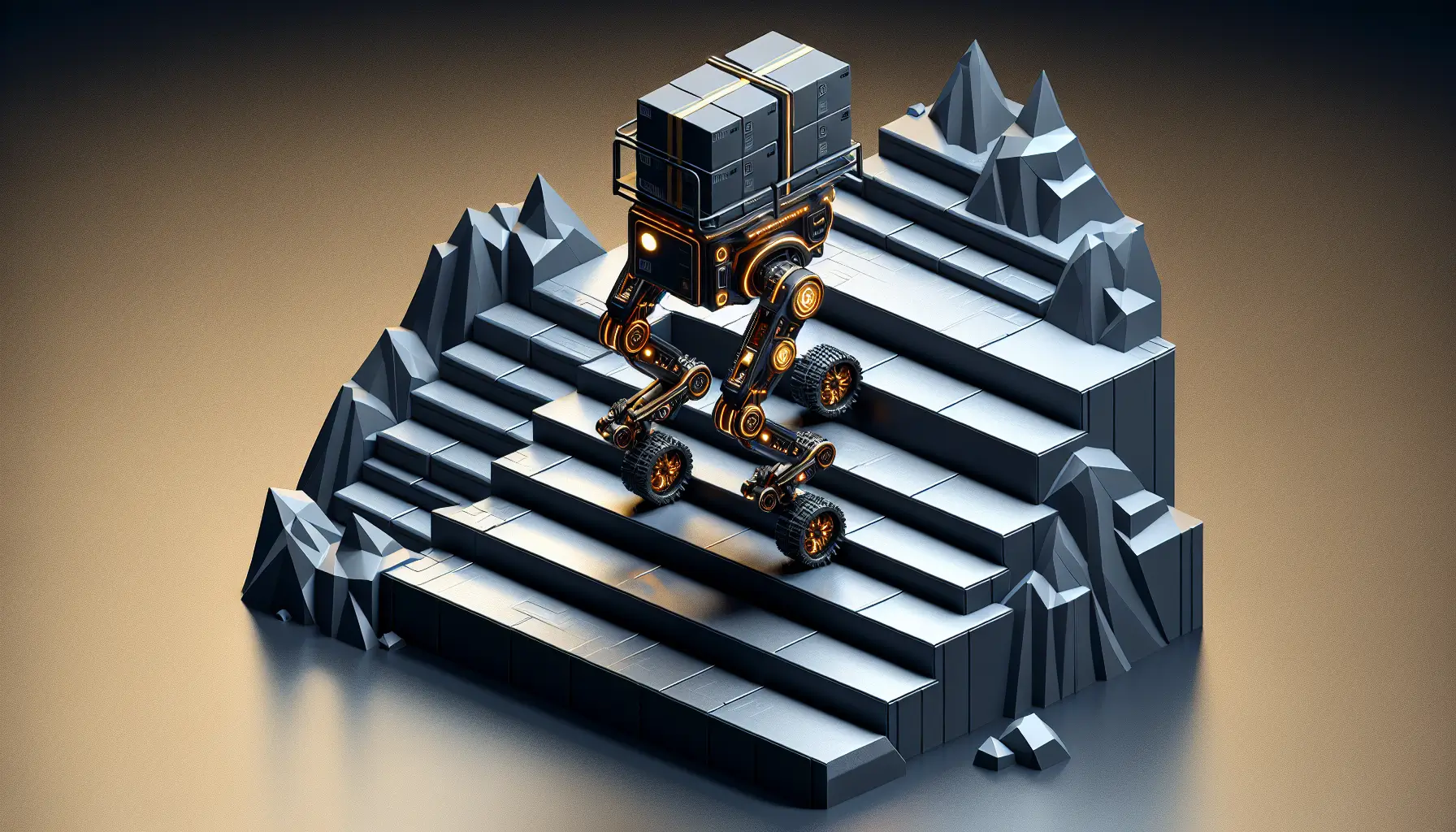
Amazon just acquired RIVR, a Swiss robotics company that builds four-legged delivery robots capable of climbing stairs and navigating real-world terrain. Not drones. Not wheeled carts that give up at the first kerb. Actual quadrupeds that can handle steps, uneven ground, and the messy reality of last-mile delivery.
This is the robotics story nobody's making a fuss about - but probably should be.
Why This Matters More Than It Sounds
RIVR's robots are wheeled-legged hybrids. They roll when the ground is smooth and switch to walking when it's not. That flexibility is what makes them useful beyond a controlled warehouse floor. According to The Robot Report, these machines are already deployed in Switzerland, delivering parcels to actual doorsteps - not just dropping them at the pavement and hoping for the best.
Amazon has been testing delivery robots for years. Remember Scout, the little wheeled box that looked like a cooler on wheels? That project quietly wound down because wheels don't work everywhere. Stairs exist. Gravel driveways exist. The real world is not a flat surface.
RIVR solves that problem. And Amazon clearly thinks the solution is worth buying outright rather than building in-house.
The Bigger Pattern - Physical AI at Scale
This acquisition sits inside a much larger shift. AI isn't just getting better at language and images anymore - it's getting physical. Robots that can perceive their environment, make real-time decisions, and adapt to unpredictable conditions are no longer research projects. They're products.
Amazon's interest isn't academic. Last-mile delivery is expensive, labour-intensive, and hard to scale. A robot that can carry a parcel up three flights of stairs without supervision changes the economics of delivery in dense urban areas. It changes what's possible in rural locations where driveways are long and uneven. It changes the cost structure of getting a package from a van to a door.
The question isn't whether this will work. RIVR's robots are already working. The question is how fast Amazon can scale it - and what happens when every major logistics company follows.
What This Means for Builders and Business Owners
If you're running a business that depends on delivery - whether that's e-commerce fulfilment, food logistics, or local services - this is a preview of where the infrastructure is heading. The cost of last-mile delivery has been stubbornly high for decades. Robots like RIVR's won't eliminate drivers overnight, but they will start handling specific routes and specific conditions where human labour is hardest to scale.
For developers and robotics builders, this acquisition is a signal about what matters. Adaptability beats optimisation. A robot that works perfectly on flat ground but fails on stairs is less useful than one that handles both reasonably well. Real-world deployment always involves compromises, and the companies winning this space are the ones solving for messy reality, not lab conditions.
And for anyone watching the AI robotics space broadly - this is the moment where physical AI stops being a curiosity and starts becoming infrastructure. Amazon doesn't buy companies for the technology alone. They buy when they see a path to deploying something at scale.
RIVR just became part of that path.