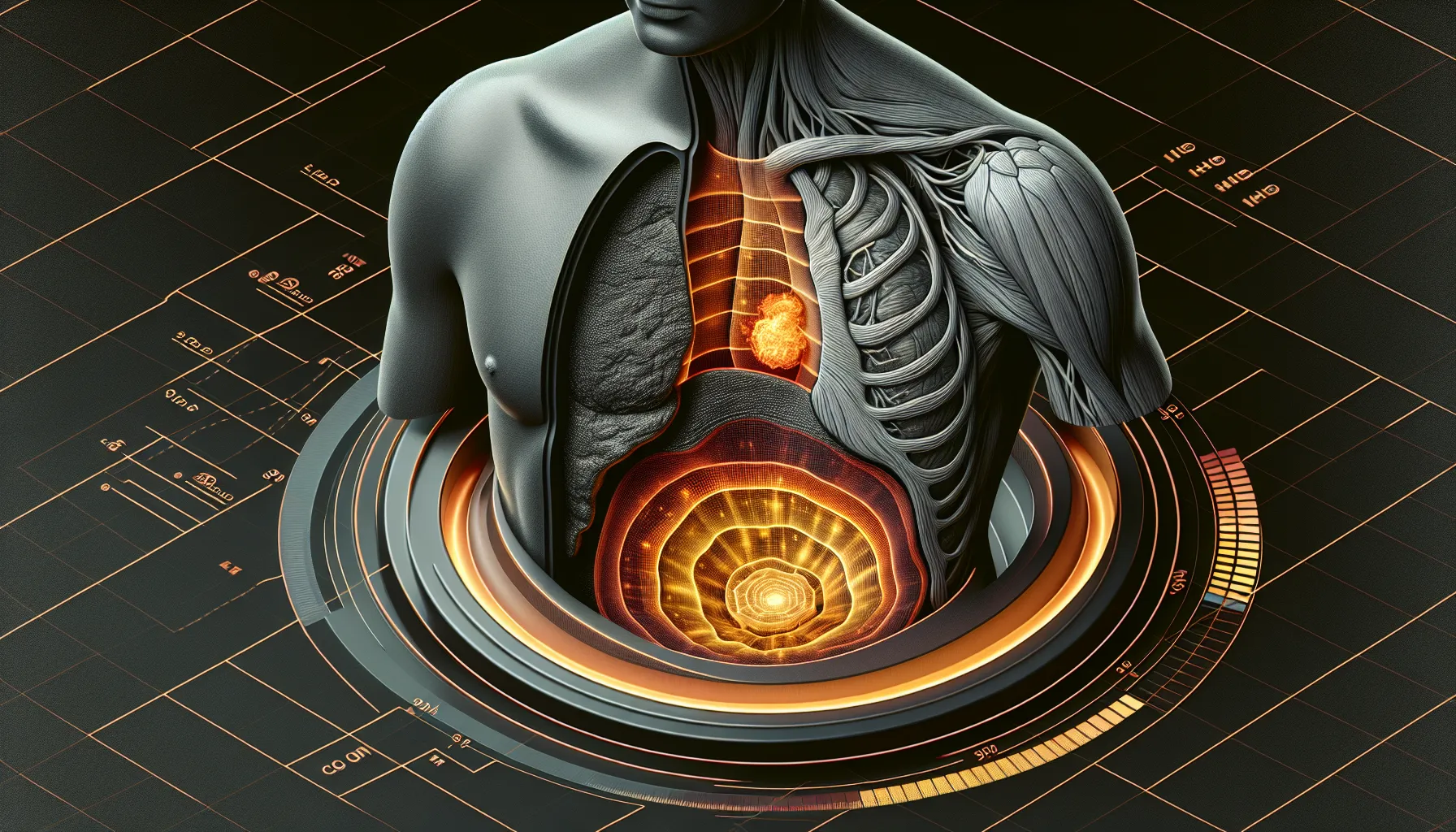
Oncologists have been working blind. A patient comes in with a tumour. The scan shows where it is and roughly how big. But inside that mass, some cells are aggressive, some are dormant, some are hypoxic and radioresistant. Until now, there was no way to see all of that in one go. You had to guess, escalate the dose everywhere, and hope you didn't cook healthy tissue in the process.
Multiplexed PET changes that. It images multiple biological processes simultaneously using positron-gamma emitters. One scan. Multiple tracers. You see glucose metabolism, hypoxia, cell proliferation, and blood flow at the same time. For the first time, you can map tumour heterogeneity before you start treatment.
Why This Matters for Radiotherapy
Current radiotherapy is a blunt instrument. You identify the tumour, add a margin for safety, and deliver a uniform dose across the entire volume. But not all tumour regions respond the same way. Hypoxic regions - areas with low oxygen - are notoriously resistant to radiation. You need three times the dose to get the same cell kill as well-oxygenated tissue.
The problem is, you don't know where those hypoxic pockets are. So you either under-dose them and leave resistant cells behind, or over-dose the whole tumour and damage surrounding organs. Neither option is good. Tumour control probability for many cancers sits around 60%. That means four in ten patients relapse because the treatment didn't kill every cancer cell.
Multiplexed PET fixes this by showing you exactly where the resistant regions are. You can then escalate the dose to those specific areas while keeping it lower elsewhere. Early modelling suggests this could push tumour control probability above 90%. That's not incremental. That's a different game.
How It Works
Standard PET uses positron emitters - isotopes that release a positron when they decay. That positron collides with an electron, annihilates, and produces two gamma rays that fly off in opposite directions. Detectors pick up those gamma rays and reconstruct where the event happened.
Multiplexed PET uses positron-gamma emitters instead. These isotopes release a positron and an additional gamma ray with a unique energy signature. That third photon acts as a tracer ID. The scanner picks up all three photons, matches them, and identifies which tracer produced the signal. You can inject multiple tracers at once - one for glucose uptake, one for hypoxia, one for proliferation - and separate them in post-processing.
The technical challenge was detector sensitivity. You're looking for coincidence events across three photons instead of two, and the additional gamma ray is often lower energy. But recent advances in detector design and reconstruction algorithms have made this feasible. The scans are slower than standard PET, but not prohibitively so. Twenty minutes instead of ten.
What Oncologists Can Do With This
Dose painting. That's the term for spatially varying the radiation dose based on biological targets. If you know a region is hypoxic, you escalate the dose there. If a region is well-oxygenated and slow-growing, you can back off and spare nearby tissue. You're no longer treating the tumour as a uniform blob - you're treating it as a landscape with high-risk and low-risk zones.
This also changes adaptive radiotherapy. Tumours evolve during treatment. Cells that survive the first few fractions become more resistant. Hypoxic regions can reoxygenate as blood vessels recover. With multiplexed PET, you can rescan mid-treatment and adjust the plan. You see what's responding and what's not, in real time.
For patients, this means better outcomes with fewer side effects. Less radiation to healthy tissue, higher doses where it matters, and the potential to cure cancers that currently relapse. The 60% to 90% jump in tumour control probability is not a wild projection - it's based on dosimetric modelling using actual heterogeneity maps from multiplexed PET scans.
The Path to Clinical Use
This is not science fiction. The physics works. The tracers exist. The detectors are being installed in research hospitals now. The barrier is regulatory approval and clinical validation. Oncologists need to run trials showing that dose-painted plans based on multiplexed PET actually improve survival without increasing toxicity.
Those trials are starting. The first cohorts are small - 20 to 30 patients - but early results are promising. If the data holds, we're looking at a fundamental shift in how radiotherapy is planned and delivered. Not just for one cancer type, but for any solid tumour where heterogeneity matters. Which is most of them.
The oncologists I've spoken to are cautiously optimistic. Cautious because clinical translation always takes longer than you hope. Optimistic because the biological rationale is sound and the imaging data is remarkably clear. For the first time, they can see what they're treating. That changes everything.