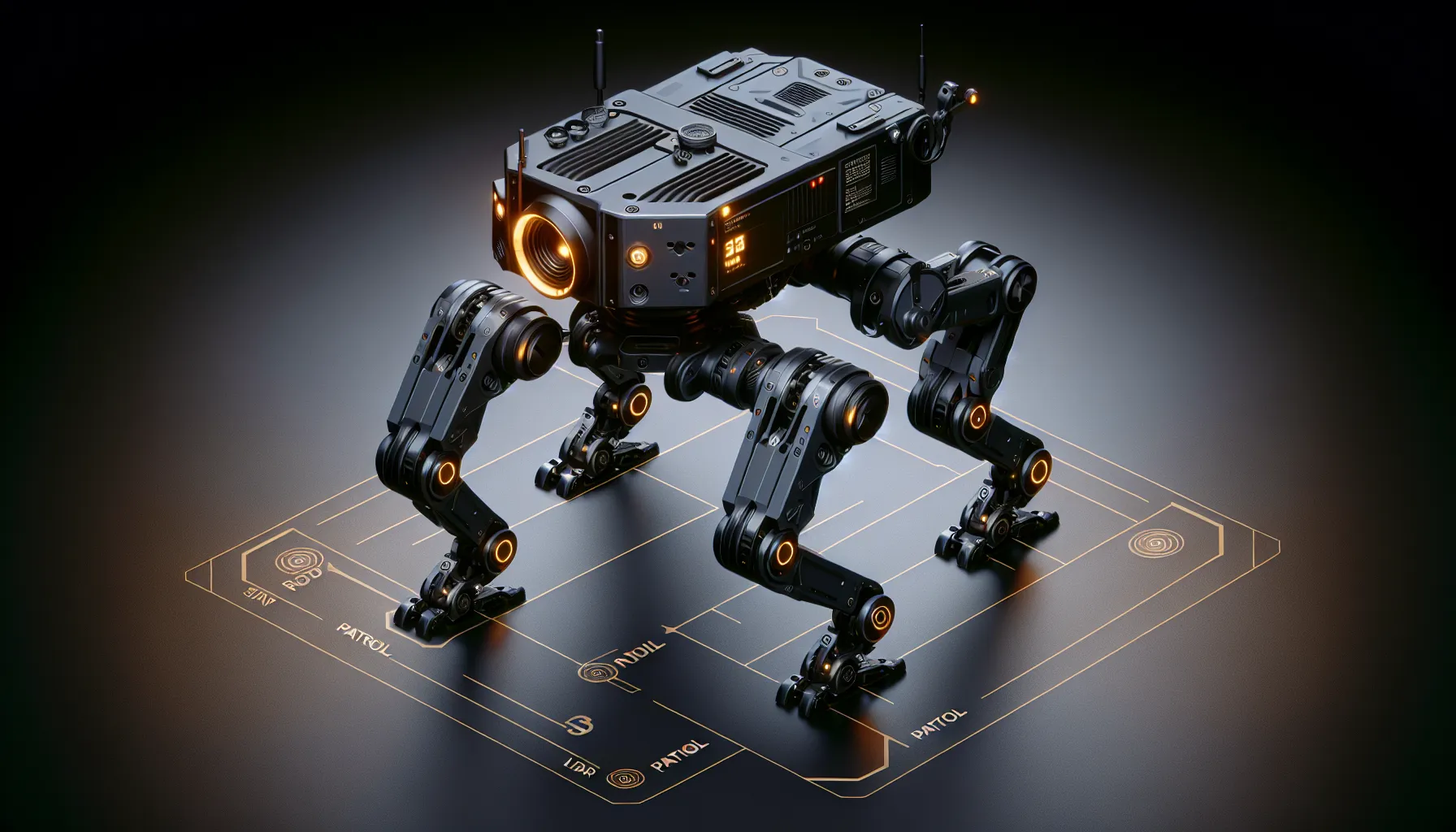
Faraday Future's Aegis quadruped just cleared FCC compliance for formal U.S. sales. Which means you can now legally buy a four-legged robot designed for security patrols and - somewhat optimistically - companionship.
The Aegis is pitched as an adaptable platform. It walks on four legs by default, but can swap to a four-wheeled configuration depending on terrain. Add lidar for navigation, plug in professional security modules for perimeter monitoring, facial recognition, thermal imaging. The hardware is modular. The use cases are still being worked out.
What's interesting here isn't the robot itself - quadrupeds aren't new. Boston Dynamics has been refining Spot for years. Unitree ships affordable versions to hobbyists. The Aegis sits somewhere in the middle: more capable than a toy, less proven than an enterprise platform.
The real question is whether compliance certification changes anything. FCC approval means the radio frequencies won't interfere with other devices. It's a safety checkbox, not a market signal. But it does mean Faraday Future is serious about commercial deployment - you don't file for certification unless you're planning volume sales.
What Security Robots Actually Do
Most security robots don't chase intruders. They patrol, record footage, flag anomalies, and call humans when something looks wrong. They're mobile CCTV with better coverage than fixed cameras. The value isn't replacing guards - it's extending their reach. One person can monitor three sites instead of one.
The Aegis is designed for exactly this. Autonomous patrol routes, obstacle avoidance, real-time alerts. It's not stopping anyone - it's buying time for a human response. Which is probably the right framing. The moment you market a robot as an enforcer, liability gets complicated fast.
The "companionship" angle is harder to parse. Quadrupeds have been pitched as assistive companions before - mostly for elderly care or disability support. The challenge is always the same: people want something that responds to them, not just follows a patrol script. Voice interaction, adaptive behaviour, genuine utility beyond surveillance. That's a different software stack entirely, and nothing in the announcement suggests Aegis is there yet.
Modular Platforms and Lock-In
The modular design is smart business. Sell the base robot, then sell upgrades. Security plugins. Better sensors. Software subscriptions for cloud analytics. It's the printer-and-ink model applied to robotics - except the printer can walk.
The risk is fragmentation. If every deployment runs custom plugins, support gets messy. If the platform is too open, third parties build competing ecosystems. If it's too closed, adoption stalls because integrators want flexibility. Faraday Future will need to find the balance - and that's harder than passing compliance.
What's not in the announcement: pricing, delivery timelines, or case studies from pilot customers. That tells you this is still early. Compliance certification is a milestone, but it's not the same as product-market fit. Plenty of robots have cleared regulatory hurdles and still failed commercially because nobody could articulate why you'd buy one.
The Bigger Pattern
This is the fourth robotics story in as many weeks. Quadrupeds clearing compliance, humanoids entering warehouses, drones getting autonomous approvals. Something has shifted. Not breakthrough capability - these platforms have existed for years. But the regulatory environment is catching up. Governments are writing rules. Insurance companies are pricing policies. Businesses are budgeting for deployments.
That's when early markets become real markets. When the infrastructure around a technology - legal, financial, operational - starts to solidify. Faraday Future's certification might not matter on its own. But as part of a broader pattern, it's a signal that robotics is moving from labs and pilot programmes into everyday commerce.
Whether that's exciting or unsettling depends on what you think these machines should be doing. And who gets to decide.