Today's Overview
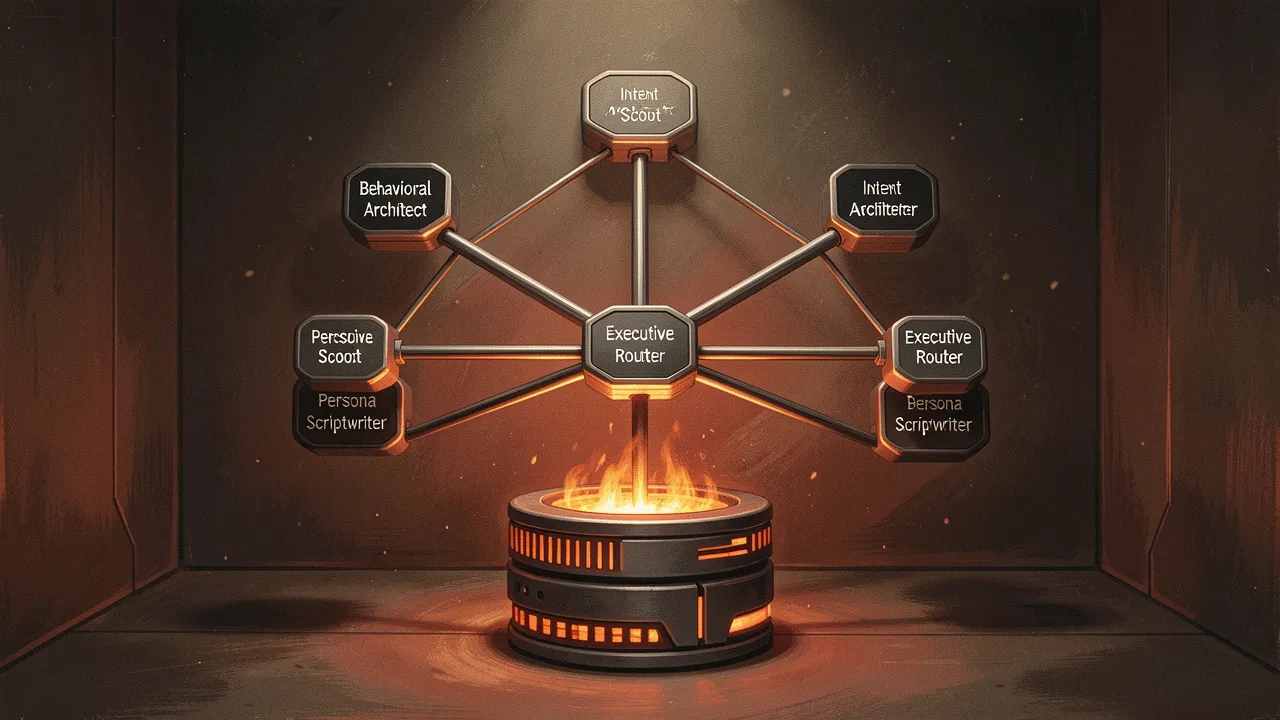
When you build a system where multiple AI agents coordinate work, the first instinct is obvious: chain them together, each passing output to the next. It fails almost immediately. The developer who built VORTEX - a seven-agent sales pipeline that turns product usage into scored leads and drafted outreach - discovered this the hard way. Agents started making routing decisions about where work should go next, conditional logic scattered across the graph, and debugging became archaeology. The fix was boring: one agent handles all routing, everything else is a leaf node. No agent talks to another except through shared state in Firestore.
This is the work that matters right now. Multi-agent systems are moving from research demos into production pipelines at places like Beisen (6,000+ enterprises using HR orchestration). The pattern VORTEX follows - star topology, normalization at the entry point, observable audit trails - is showing up everywhere. It's not flashy. It scales. The full breakdown is worth reading if you're building agentic systems. The author walks through the Hindsight observability layer that lets you reconstruct why any lead got routed the way it did - not months later, minutes later.
The Backend Conversation Has Shifted
Meanwhile, someone built an HTTPS-secured production web backend in raw C++20. No frameworks. No external libraries. Sockets, HTTP parsing, file serving - all from first principles. It's now running 24/7 on a $6 DigitalOcean droplet, proxied through Nginx, protected by Cloudflare. The binary is under 500KB. Memory footprint under 10MB. Cold start under 10ms. Why? Because understanding what's actually happening underneath matters. You learn where the real bottlenecks live, why frameworks make the tradeoffs they do, and when you actually need them. This isn't a case for everyone to write C++ backends - it's a reminder that the stack you choose reflects what you've understood, not just what you've heard is fast.
On the standards side, the Navigation API just reached baseline support across major browsers. This replaces the older History API with a unified event model for single-page navigation, proper error handling, and automatic URL updates. If you're building SPAs, this matters - cleaner code, fewer edge cases, no more fighting the browser's back button.
Quantum's Control Problem
In quantum computing, something has shifted. IBM removed pulse-level control from all production systems in February 2025. That's the layer where researchers can tweak the actual physics happening on the chip - write custom microwave pulses, optimize error correction, test new protocols. Closing it made sense for reliability, but it also closed the door on hardware-aware research across the entire IBM platform. Meanwhile, neutral-atom vendors and smaller superconducting companies are moving in the opposite direction, opening their control planes. A new survey of thirteen quantum vendors documents exactly what the field has lost - and what minimal openness would have to look like for reproducible research and cross-vendor benchmarking to still happen.
The broader pattern across all three areas - agents, backends, quantum - is the same: specificity wins. The multi-agent systems that work have explicit routing logic, not emergent behavior. The C++ backend that deployed cleanly used systemd correctly, tested each layer separately, logged observably. The quantum vendors that kept research alive didn't try to be all things to all users; they chose a side on the openness question and committed. Details matter more than scale.