Today's Overview
Three threads are weaving together this week: robotics crossing a real threshold, multimodal AI getting faster, and development itself becoming an agentic workflow.
Robot Arms Training on GPU Clusters
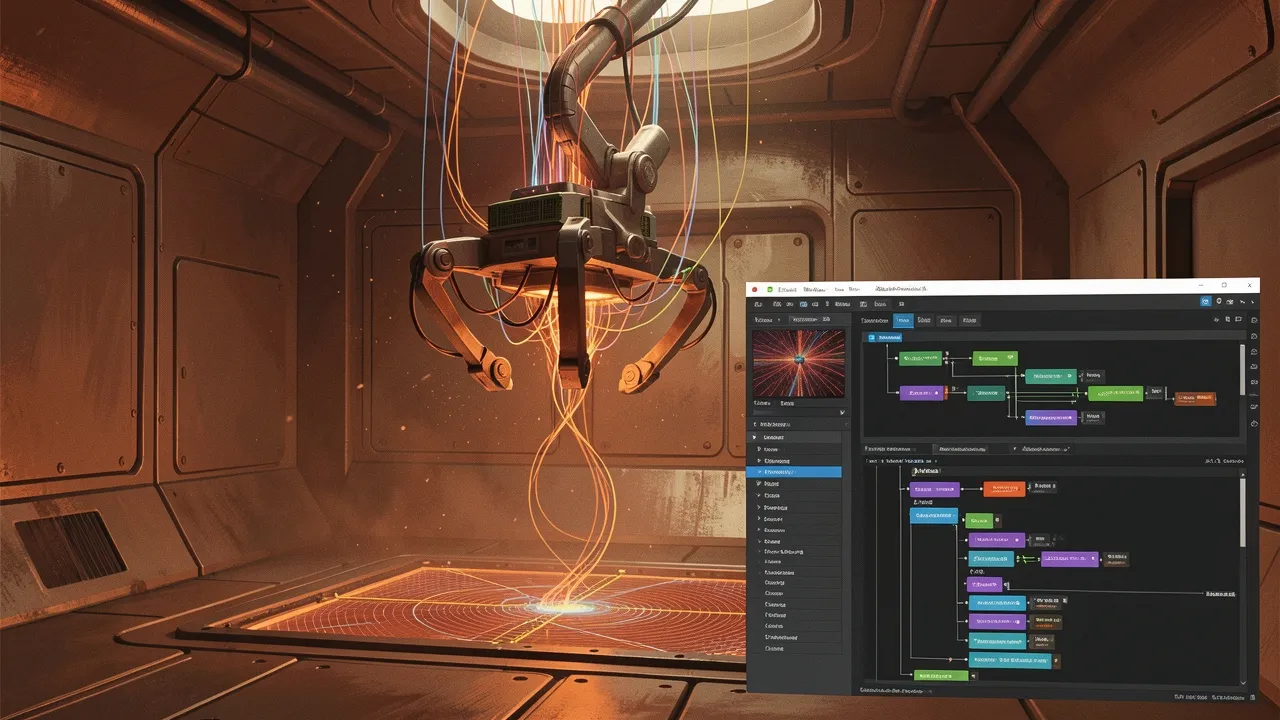
A detailed walkthrough appeared this week on building RL-based grasping systems using the Nero robotic arm and NVIDIA Isaac Lab. The work establishes a full pipeline: simulation environment in Isaac, policy training via reinforcement learning, and preparation for sim-to-real transfer. What matters here isn't the code-it's the normalisation. Two years ago, this workflow was a research project. Now it's a documented, reproducible process that an engineer can follow. The feedback loop between simulated perception and real gripper control is becoming standardised infrastructure, not bespoke work.
Gemini Omni: Video Generation That Understands Physics
Google released Gemini Omni, a multimodal model trained to generate and edit video while maintaining physical consistency. The technical signal isn't "we made a video model"-it's that the model understands scene coherence, character persistence, and how objects move. Early tests show it handles multi-turn editing where a user requests changes and the model regenerates frames while keeping the scene state intact. The speed is also noteworthy: full edits in seconds rather than minutes. This matters because it changes what's buildable. Apps that would have required manual video composition or expensive rendering can now delegate to an API.
Agents Aren't Assistants Anymore
At Google I/O, the narrative shifted decisively. Antigravity-Google's agent orchestration platform-went from "coding assistant that helps" to "execution engine that handles the work." The key architectural move: sub-agents, hosted sandboxes, and feedback loops between parallel task branches. A demo showed 93 sub-agents building a functioning OS in 12 hours, consuming 2.6B tokens and costing under $1K. Whether that's production-ready or not, the framing is the point. Development is moving from "ask AI for code" to "define goals, let agents handle the orchestration and iteration." Thales and Wipro both reported 25-40% productivity gains after adopting Gemini CLI and agentic workflows, citing eliminated context-switching and automated scaffolding work.
Each of these-robotic simulation becoming routine, video generation becoming fast enough to be practical, and development becoming agentic by default-is individually significant. Together, they suggest a system architecture is solidifying. Physical tasks train faster. Digital content generates faster. Cognitive work orchestrates via agents. The infrastructure for each piece exists. What's new is the integration.